
Someone put their name on it — and that is the whole guarantee
An anonymous product answers to nobody. A designed one carries a name, and that name is not decoration — it is accountability made public. Someone decided the height of that seat, the radius of that edge, the thickness that makes a table look light without bending; someone accepted that those decisions would be discussed for the next twenty years with their name attached. That is the difference between a piece that was designed and one that was merely produced, and it is what this page is about.
The designers gathered here — Italian and international — were commissioned by the manufacturers, not by us: a factory chooses whom to entrust with a project, and that choice says as much about the factory as the drawing says about the designer. Open any name to reach that designer's page and the pieces on our sites that came from their work, then go down to the product itself, its versions and its documentation.
Reading furniture this way changes what you buy. Not because a signature makes an object better in the abstract, but because knowing who solved a problem — and how they usually solve it — tells you whether that solution belongs in your room.
-

967arch
2 products -

Alegre Design
2 products -

Altherr Désile Park
2 products -

Andrea Steidl
2 products -

Angelettiruzza Design
1 product -

Antonio Morello
3 products -

Antti Kotilainen
1 product -

Baldanzi & Novelli
1 product -

Barber Osgerby
4 products -

Busetti Garuti Redaelli
1 product -

Cazzaniga Mandelli Pagliarulo
1 product -

Claesson Koivisto Rune
1 product -

Claudio Bellini
2 products -

Constance Guisset
1 product -

Daniele Del Missier
2 products -

Daniele Lago
1 product -

Davide Mercatali
1 product -

Dondoli & Pocci
1 product -

Dorigo Design
2 products -

Doshi Levien
3 products -

Eero Saarinen
1 product -

Elisa Ossino
2 products -

Favaretto & Partners
1 product -

Ferruccio Laviani
3 products -

Francesco Rota
2 products -

Gensler
1 product -

Giorgio Topan
1 product -

Giovanni Baccolini
1 product -

Giovanni Ingignoli
1 product -

Hella Jongerius
1 product -

Ichiro Iwasaki
3 products -

Inga Sempé
1 product -

James Irvine
1 product -

Jean-Marie Massaud
4 products -

Karim Rashid
2 products -

Konstantin Grcic
1 product -

Lievore Altherr Molina
13 products -

Luca Scacchetti
1 product -

Ludovica + Roberto Palomba
2 products -

Mario Mazzer
3 products -

Mario Tessarollo
1 product -

Mathias Seiler
1 product -

Matteo Nunziati
1 product -

Michael Anastassiades
2 products -

Natalino Malasorti
2 products -
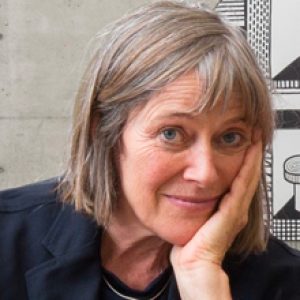
Nathalie du Pasquier
1 product -

Neri & Hu
1 product -

Niels Diffrient
2 products -

Nikolas Chachamis
2 products -

Norman Foster
2 products -

Orlandini Design
4 products -

Paolo Pampanoni
2 products -

Patricia Urquiola
7 products -

Patrick Jouin
2 products -

Patrick Norguet
1 product -

Perin & Topan
10 products -

Piero Lissoni
3 products -
Pierre Paulin
1 product -

Pinuccio Borgonovo
1 product -

Progetto CMR
3 products -

Raw Edges
4 products -

Roberto Giacomucci
1 product -

Robin Rizzini
3 products -

Ronan & Erwan Bouroullec
6 products -

Shin & Tomoko Azumi
1 product -

Snøhetta
1 product -

Stefano Boeri Interiors
1 product -

Studio SI
3 products -
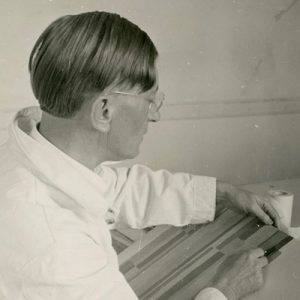
The Josef & Anni Albers Foundation
1 product -

Tokujin Yoshioka
2 products -

Umberto Asnago
4 products -

Valerio Sommella
1 product -

Vincent Van Duysen
4 products -

Yabu Pushelberg
1 product
FAQ
Who commissions these designers — you or the manufacturers?
Are all the designers listed Italian?
Where does a designer's page lead from there?
Does a designed piece cost more than an anonymous one?
Why does knowing the designer help me choose?
How to build a shortlist starting from a designer
Starting from an author instead of a category gives you coherence for free. Five steps.