
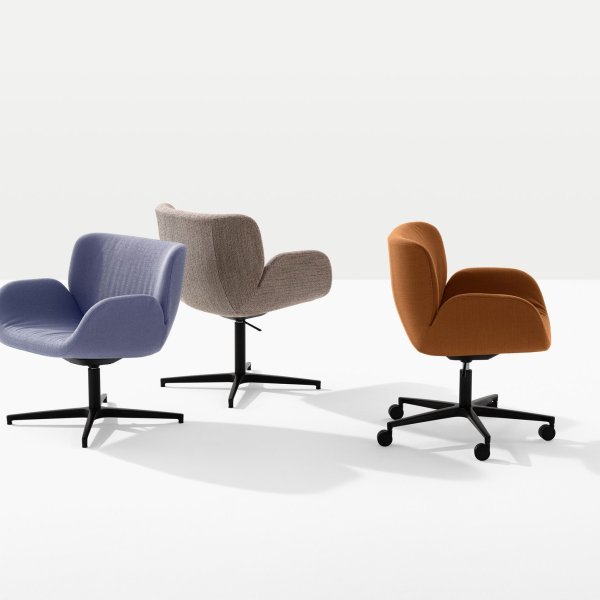
Cari
£ 1,919
Conference chairs and boardroom chairs are judged by the second hour, not the first impression. The British boardroom remains an institution — the room where the year’s most consequential conversations happen at a fixed table, in fixed seats, for as long as the agenda demands — and it asks of a chair something the task chair is never asked: static comfort. Support that holds a body attentive through a long meeting without inviting the fidget or the slump, and without a single mechanism drawing attention to itself while someone else is speaking.
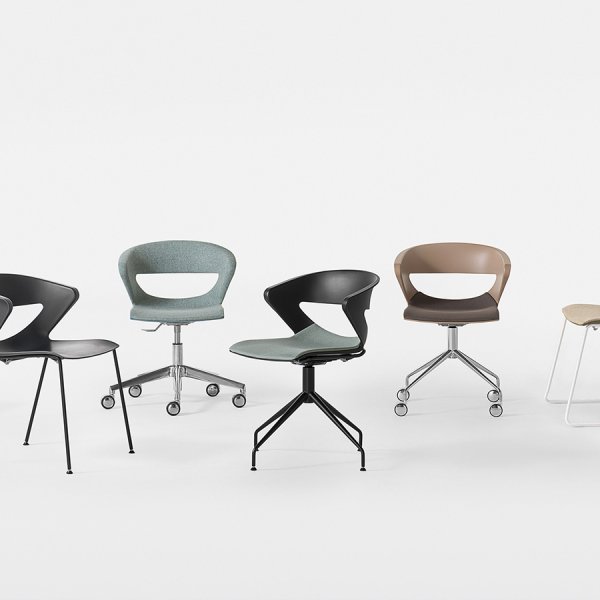
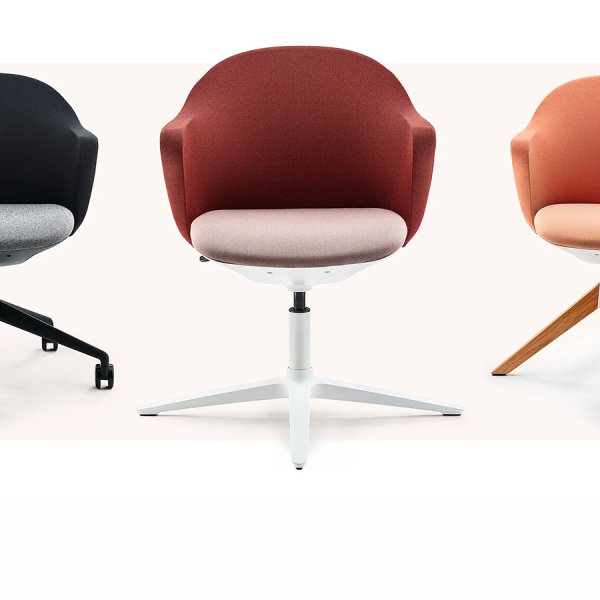
The collection here is built around that discipline. Italian conference seating with the geometry right where it matters: seat depth and foam density tuned for stillness, controlled recline where it is wanted, backs cut to keep a full table looking ordered from the doorway. Leather and technical fabrics, castors or glides to suit the floor, chairs for the twelve-seat boardroom and the training room alike.
La Mercanti supplies Italian conference and boardroom seating across the UK, coordinated with conference tables and specified with fabric, base and finish options for contract use. The table gets the photograph. The chairs decide how the meeting ends.
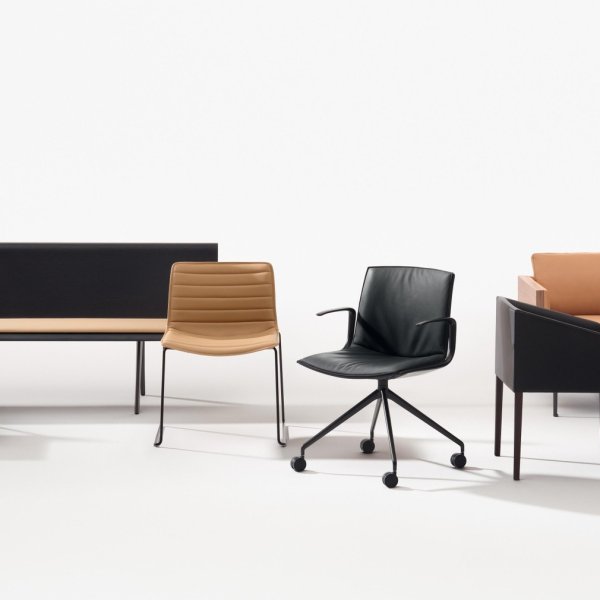
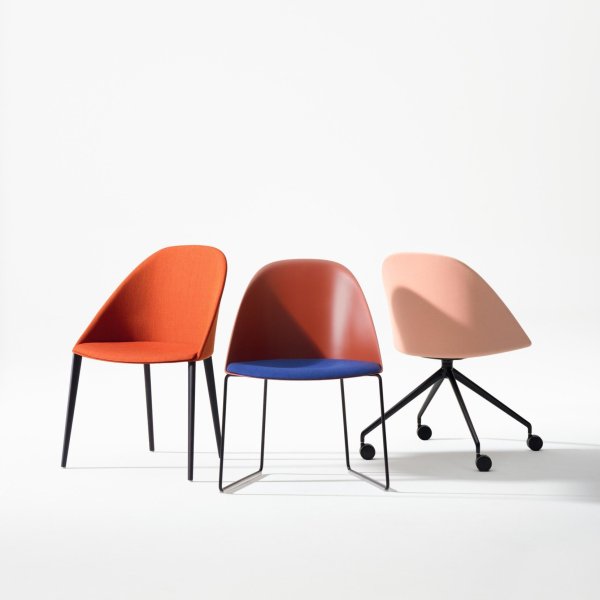
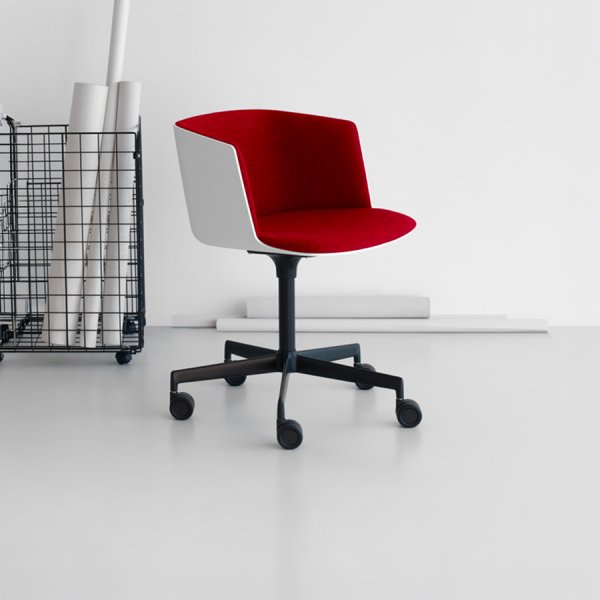
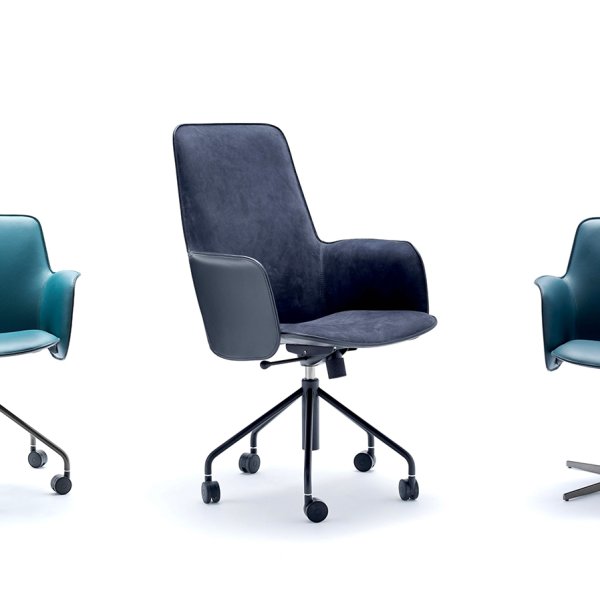
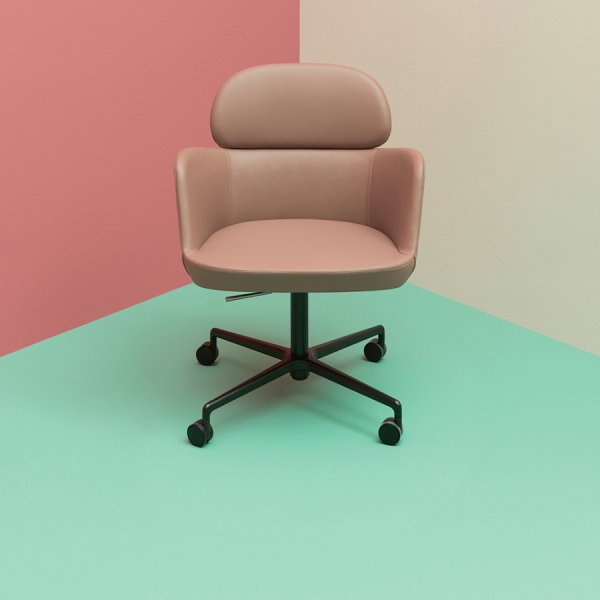

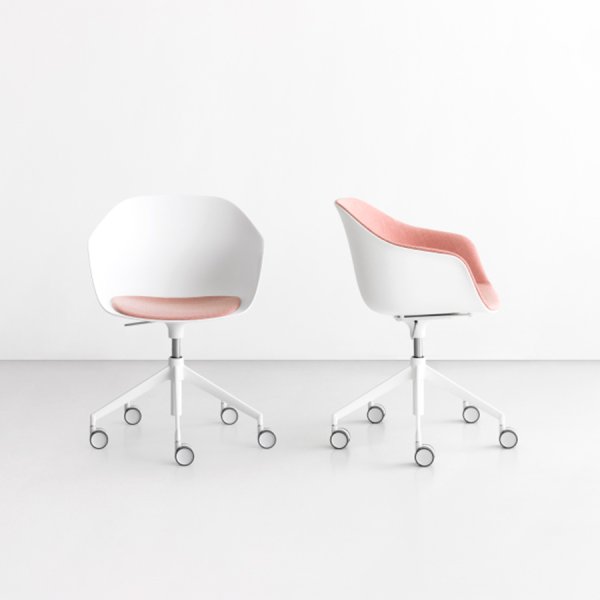
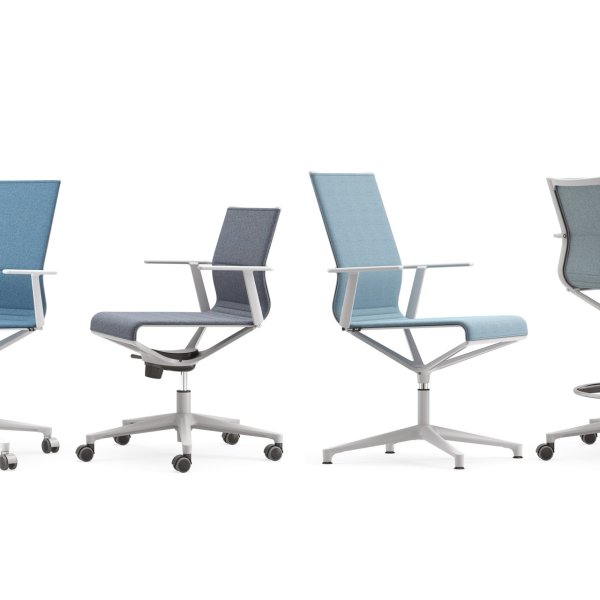
Static comfort is support that works while the body is still. A task chair assumes constant micro-movement and is engineered to encourage it; put one at a boardroom table and the same virtues become vices — occupants bounce, swivel and recline through other people’s agenda items, and the room reads restless. A boardroom chair is engineered the other way: higher-density foam profiled to spread pressure across the seat during long stillness, a deeper and more open sitting angle that keeps the spine supported without demanding posture changes, and either a fixed shell or a recline so controlled and quiet that using it is invisible across the table. Armrests carry more of the load than at a desk, because there is no keyboard posture to serve, and their height against the table edge decides whether people sit into the table or away from it. The mechanism question is really a discipline question: everything adjustable is something that clicks, drops and distracts mid-meeting. Specify the stillness deliberately — foam density and seat profile first, mechanism last, and only where the meeting culture regularly runs to half-day sessions.
The floor decides most of it, and the meeting culture decides the rest. On carpet, castors are the humane choice: chairs at a conference table are pulled out and tucked in dozens of times a day, and glides on carpet turn each of those moves into a two-handed drag that ends with the chairs scattered at angles — the untidy table that makes a serious room look casually kept. On timber, stone or resin floors the calculation reverses: hard castors mark and rumble, every departure is audible mid-sentence, and soft-wheel castors matched to hard floors, or clean glides, become the considered option. There is also the question of composure. A chair on castors moves with its occupant, which is useful at a working session and mildly chaotic at a formal board; heavier chairs on glides hold their positions and hold the room’s geometry with them. The pattern that serves most UK boardrooms: soft castors matched to the actual floor finish for the working conference room, glides and more mass for the formal board table, and a floor sample sent to the producer before confirming either. Wheel hardness is specified to the surface, never to the brochure.
Allow roughly 700 millimetres of table edge per seated place and the arithmetic answers itself: a three-metre table seats four along each side in comfort, whatever an optimistic plan may show. Squeeze the places tighter and elbows negotiate with neighbours, papers overlap, and the meeting acquires a physical tension no chairman can talk away. The clearance behind matters as much as the edge in front — a seated person occupies about half a metre beyond the table, and someone must still pass behind them without asking the row to tuck in; with much less than a metre from table edge to wall, every arrival disturbs the room. Chair width has to enter the same sum: generous conference chairs with arms need their full pitch, and a boardroom fitted with fourteen imposing chairs at a table that honestly takes twelve reads, from the doorway, as exactly the misjudgement it is. The disciplined sequence is to fix capacity from the room, size the table from the capacity, and choose the chair to the pitch that remains. Chairs bought first and table sized after is how handsome rooms end up unusable.
Identical, in the modern British reading. The elevated chairman’s chair survives in period boardrooms as heritage, and there it can stay as a feature of the culture; specifying the distinction new in 2026 sends a signal most boards have spent a decade retiring. Contemporary governance language is collegiate — non-executives, advisers and auditors sit at the same table as equals, and the furniture is expected to agree. A distinct head chair contradicts that quietly but continuously, and visitors notice: institutional investors and incoming partners read boardrooms the way surveyors read buildings. Uniformity also works practically. Identical chairs hold a straight, ordered line from the doorway — the view by which the room is judged a hundred times for every meeting held in it — and they can be rotated around the table, so wear spreads across the set rather than concentrating in favourite seats. Where hierarchy has a legitimate expression, it is the room itself: the table, the art, the address. If one chair must differ, let it differ invisibly, as the same model with a discreet mechanism upgrade, and let the table keep its democracy from the door.
Boardroom chairs are almost never tested against their real assignment: the meeting that runs past the second hour. A showroom sit lasts minutes; board meetings, strategy days and completion negotiations do not. This guide follows a long meeting chronologically and names the four failures in the order they appear — the twenty-minute seat, the first-hour back, the second-hour heat, the all-day noise — each with the specification decision that prevents it. Read it before shortlisting and the shortlist halves itself.
The first failure arrives quietly, around the second agenda item. Low-density foam that felt welcoming at the sit-test compresses under sustained load and stops distributing weight; pressure concentrates under the sitting bones, and by minute forty the room is full of people shifting from cheek to cheek and nobody quite listening. The mistake was made at specification, when softness was mistaken for comfort. Over a long stillness they are near opposites: comfort at hour two is firm, high-resilience foam, generously profiled, still spreading load long after cheaper material has bottomed out.
Specify against this by the numbers rather than the hand-press. Ask the producer for the foam’s density and resilience figures and for the seat’s pressure-distribution behaviour; a serious Italian manufacturer of conference seating supplies both without ceremony. Then test the honest way: sit for forty-five minutes, in the actual chair, doing quiet work. It is tedious, which is rather the point — tedium is the operating condition of the product.
Watch seat depth in the same breath. A pan too deep for the shorter half of the board presses behind the knees and forces perching; too shallow for the taller half, and thighs hang unsupported. Fixed-shell conference chairs cannot adjust their way out of a wrong depth, so the dimension must be right on paper before anything is ordered.
Around the first hour, spines tire of holding themselves and look to the chair for help. This is where the boardroom chair earns its keep or fails its room. A back cut for style — low, flat, more upholstery than geometry — offers nothing at the lumbar curve, and the body’s response is visible around the table: sitters slide forward into a slump or perch on the front edge of the pan, and attention degrades with posture. The engineering answer is a backrest profiled to meet the hollow of the lower back and tall enough to support the shoulder blades, with enough shape to hold a person upright without effort.
Recline needs a deliberate decision. In a working conference room, a controlled synchronised recline lets people open their sitting angle during long sessions without leaving the conversation, provided it is weight-sensitive or pre-tuned, silent, and limited in travel; nothing undermines a speaker like a listener disappearing towards the ceiling. In the formal boardroom, a well-profiled fixed back with a slight built-in flex is often the more disciplined specification, precisely because it cannot be used theatrically.
Check one geometric relationship before confirming: seat height against table height. Conference seating is often fixed or narrow in its adjustment range, and boardroom tables are not all cut to one dimension; pair them carelessly and part of the board spends every meeting writing at chest height, subtly wrong in a way nobody ever diagnoses. It is a two-minute check on the drawings, and skipping it is the most common expensive mistake in conference seating.
By the second hour a full boardroom has generated its own climate. Twelve bodies, sealed glazing, screens running and the sun moving round the building: the room warms, and the chairs decide who feels it first. Full leather against a suited back is the traditional culprit — handsome, appropriate, and increasingly warm as the meeting lengthens. The failure shows as unbuttoned jackets, water going round the table faster, and a subtle drop in patience that the chairs cause more often than anyone credits and get blamed for last.
The specification levers are material and construction. Technical fabrics and open weaves move heat and moisture away from the body far better than hide; where leather is the register the room demands, look at builds that reserve it for the surfaces the eye reads, the outer back and the arms, while the contact surfaces breathe, or consider perforated hides on the seat and inner back. Foam construction matters too: some seat builds channel air as the sitter moves, and the difference is felt precisely in the hours a showroom visit never reaches.
Match the choice to the room’s real services. A boardroom with decent conditioning and north light forgives full leather; a glazed corner room facing south-west does not, whatever the mechanical schedule promises. The chair is part of the room’s thermal system — specify it with the M&E drawings on the table, not after they are filed.
The final failure is acoustic, and it is the one nobody names in the brief. A long meeting is a procession of small movements: chairs drawn in, pushed back, swivelled towards a screen, vacated at the break and reoccupied. Each movement makes the sound its specification allows. Hard castors on a timber floor rumble under every adjustment; a loose mechanism clicks each time a heavy sitter shifts; metal glides grate on stone. Multiply by twelve chairs and seven hours, and the room has acquired a percussion section that the microphones of a video call pick up more faithfully than any voice.
Specify against it at three points. Wheels or glides matched to the actual floor finish, confirmed with a sample rather than a description — soft-tread castors for hard floors, hard for carpet, glides where chairs should hold position. Mechanisms tested for silence under moving load: sit heavily, shift deliberately, listen, then have the heaviest colleague available do the same. And bases with the mass to move smoothly rather than skitter; weight, in conference seating, is a feature.
Then step back to the doorway for the last check. A boardroom is seen closed and empty far more often than it is seen in session, and identical chairs at rest, aligned at a consistent depth under the table edge, are what make the room look governed. If the set cannot hold that line — if the chairs wander, sag or splay — the room advertises entropy to everyone who passes. Order, here, is a purchasable quality.