
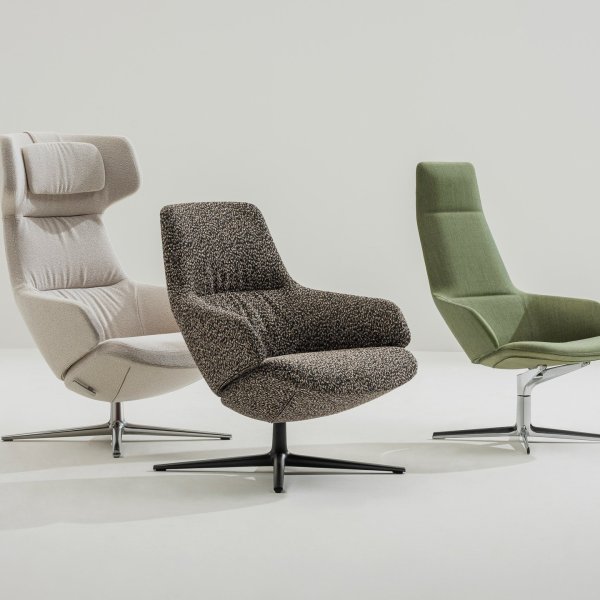
Aston
£ 3,615
An executive office chair is the most personal decision in the whole fit-out, and the one most often delegated. The desk is seen; the chair is lived in. Our view, after nearly three decades supplying directors' offices across the UK, is a firm one: the right executive chair is the one whose mechanism you stop noticing within a week. Recline that follows the body without a hunt for levers, lumbar support that is simply there, leather that takes on character rather than wear. A chair that needs explaining is a chair that was designed for the showroom.
The collection here is Italian in the sense that matters: producers who have refined the same mechanisms for decades, hides selected and cut in-house, foams specified by density rather than by adjective. High backs and medium backs — the latter also the conference chair of the room —, leather and technical fabrics, chairs for the corner office and for the study of a director who now works half the week from home. These are seats built for the ten-hour day and the fifteen-year post, in rooms — from the City to Edinburgh — where the furniture is read as closely as the person.
La Mercanti selects and supplies Italian executive chairs directly from the producers, with specification guidance, material samples and coordination with desks and storage from the same design families. If the chair needs to say something without saying it, that is precisely the brief we work to.
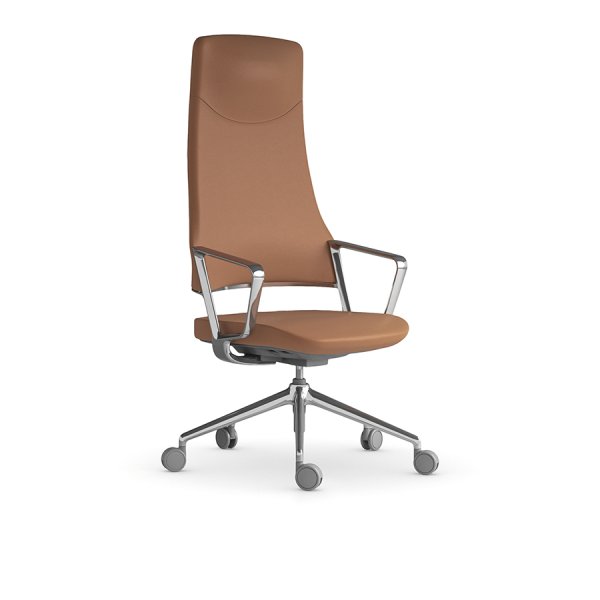
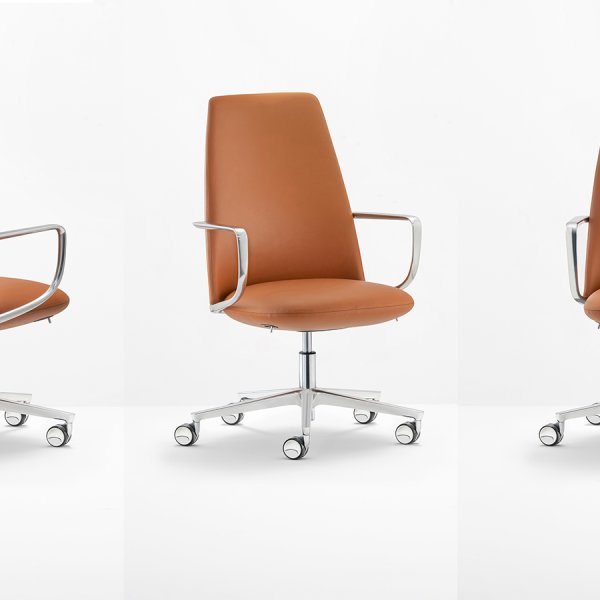
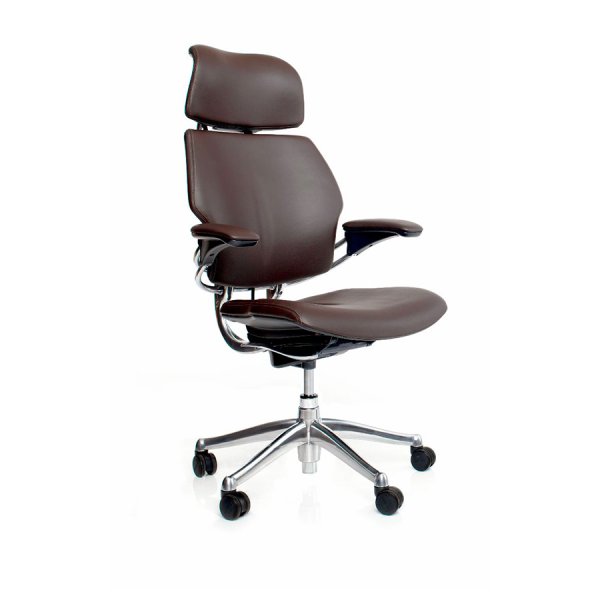
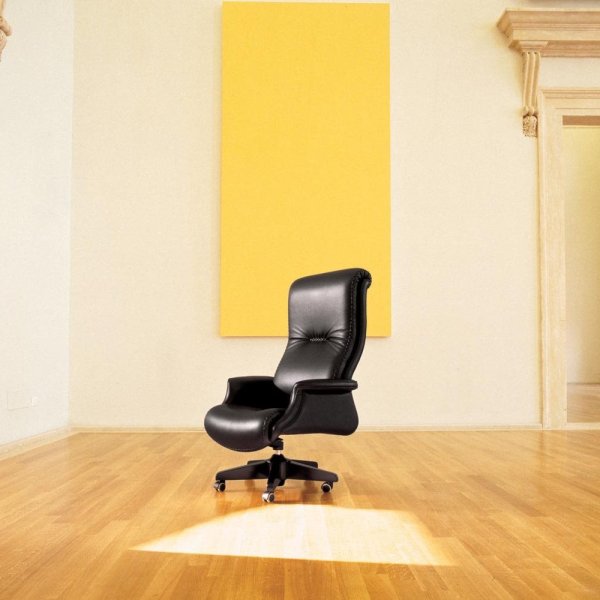
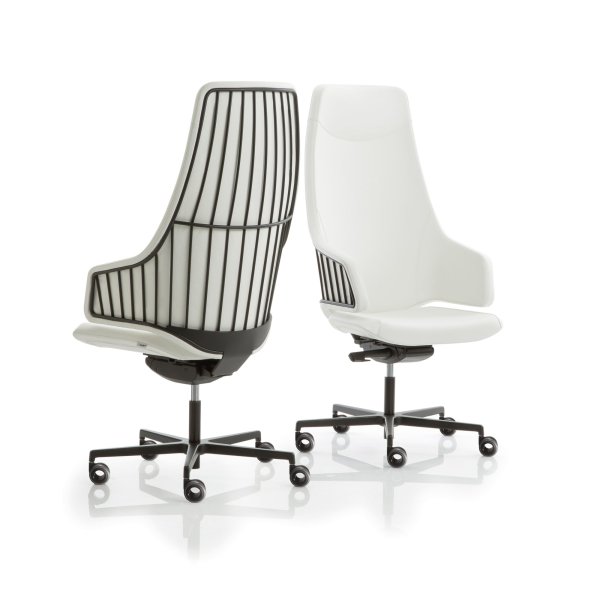
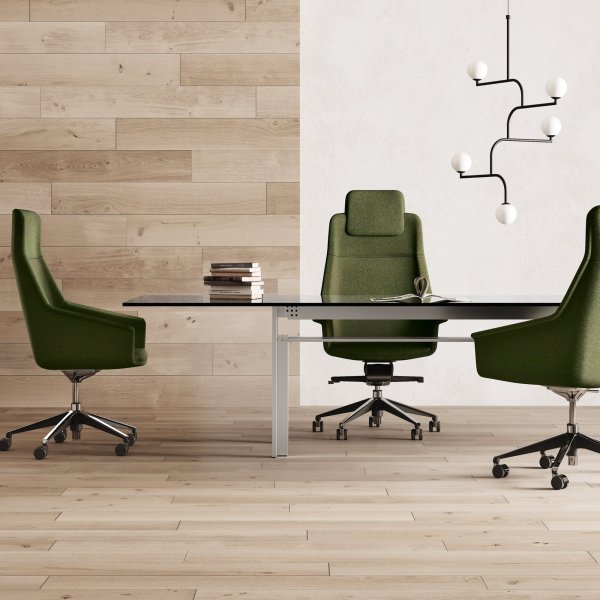
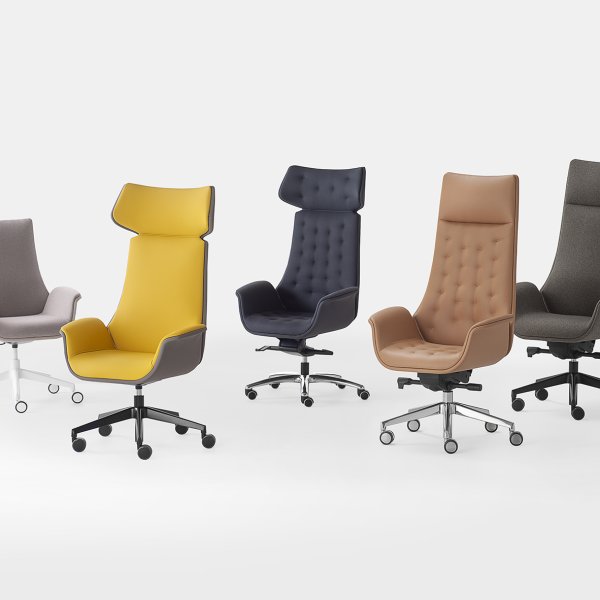
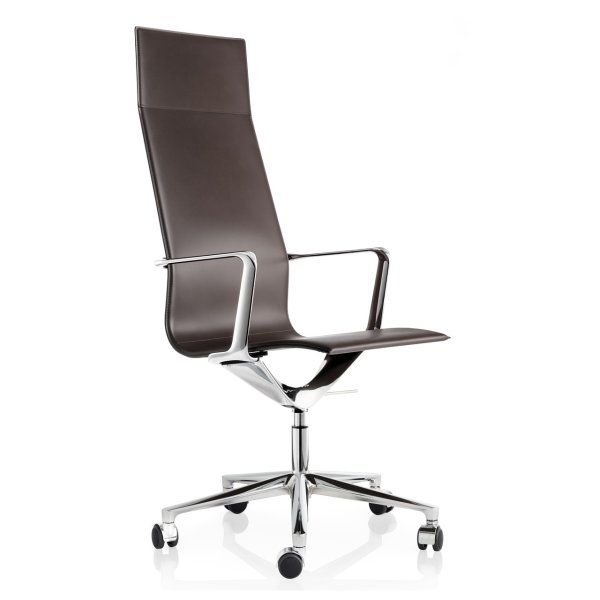
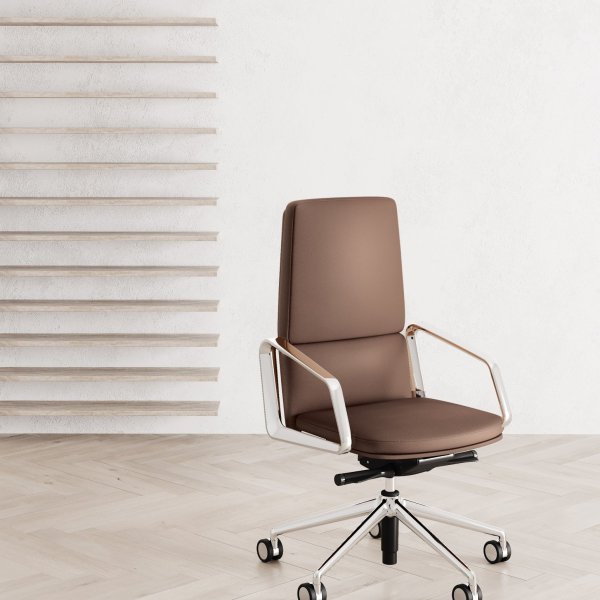
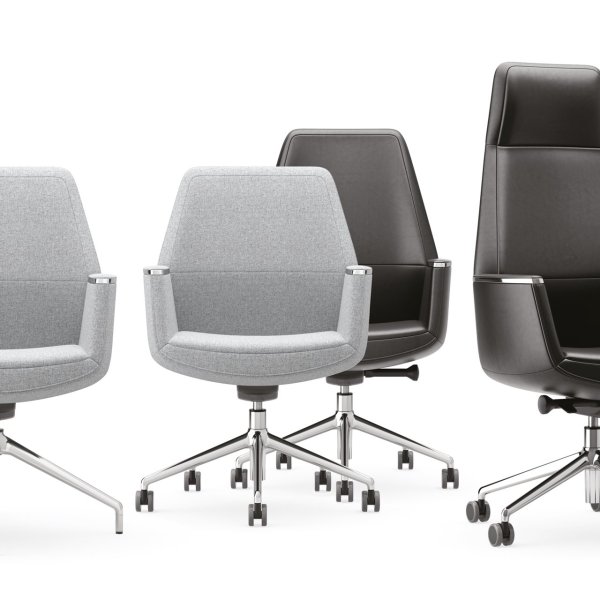
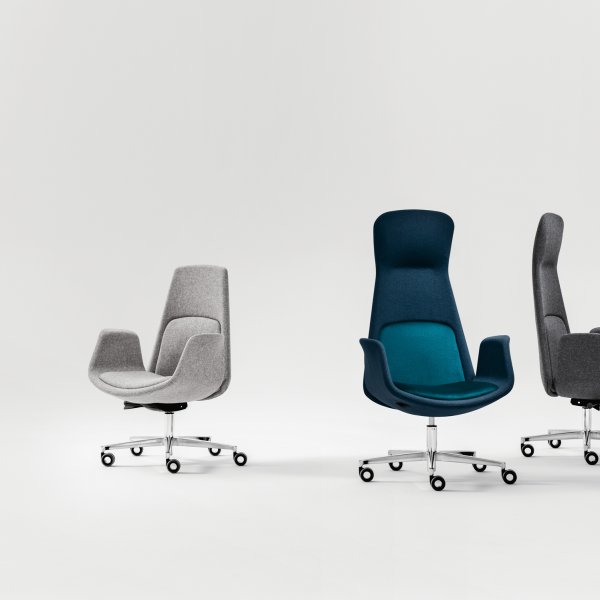
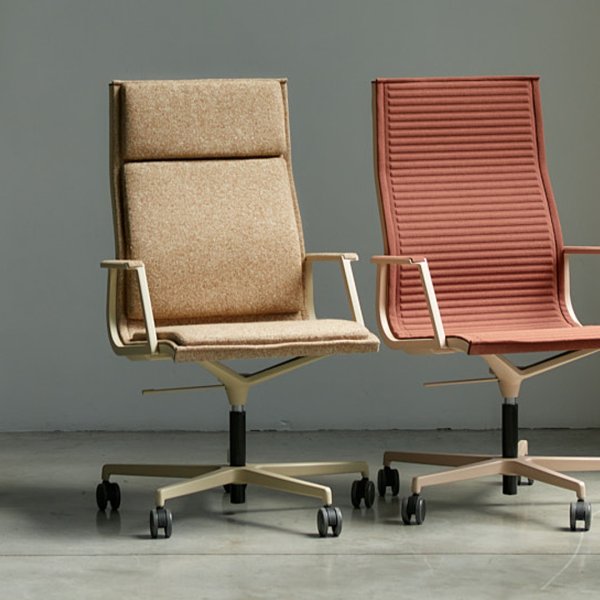
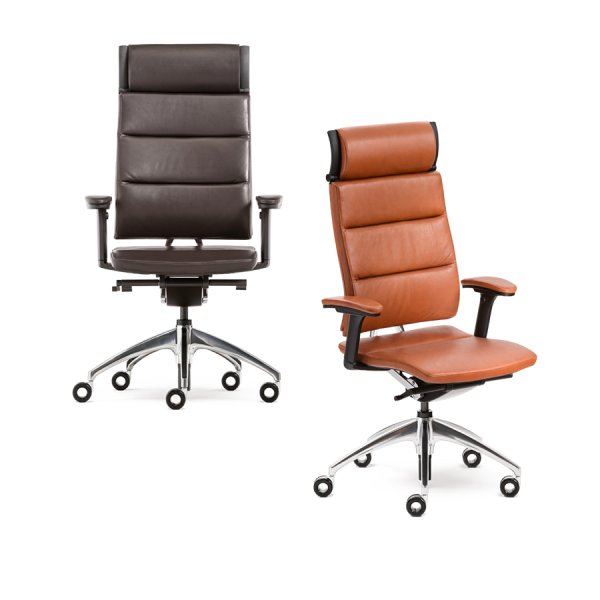
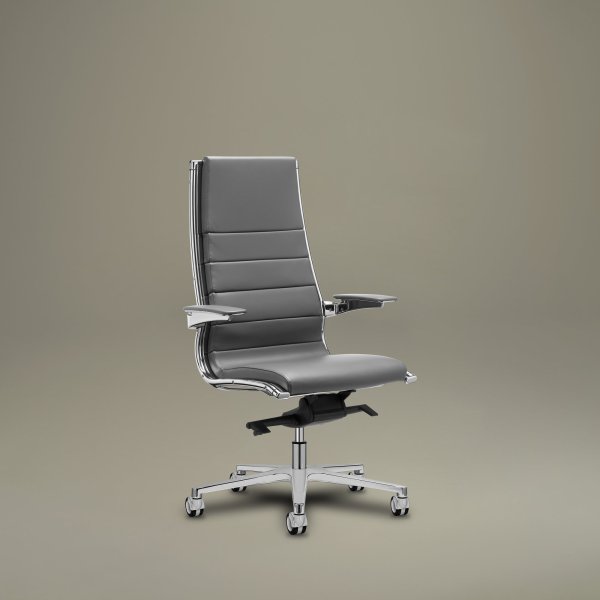
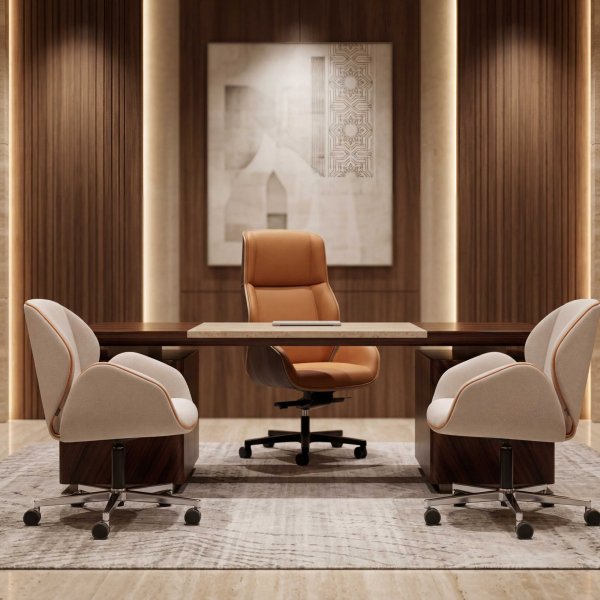
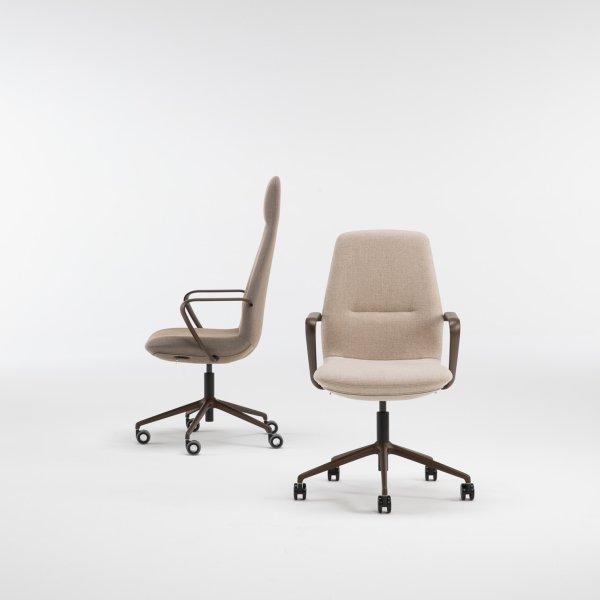
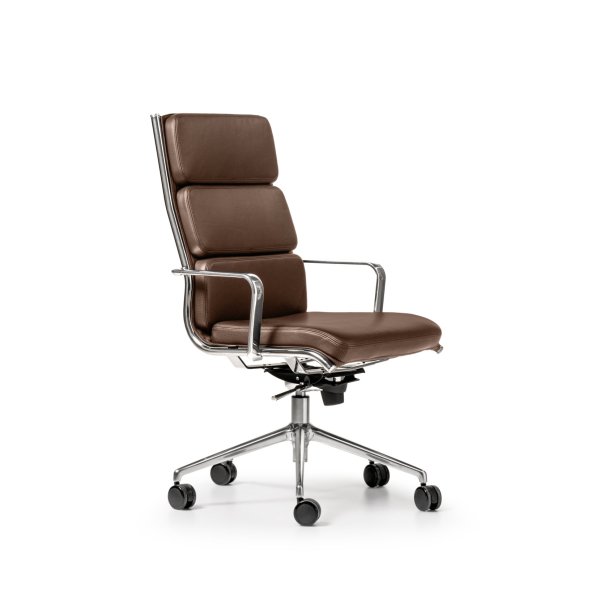
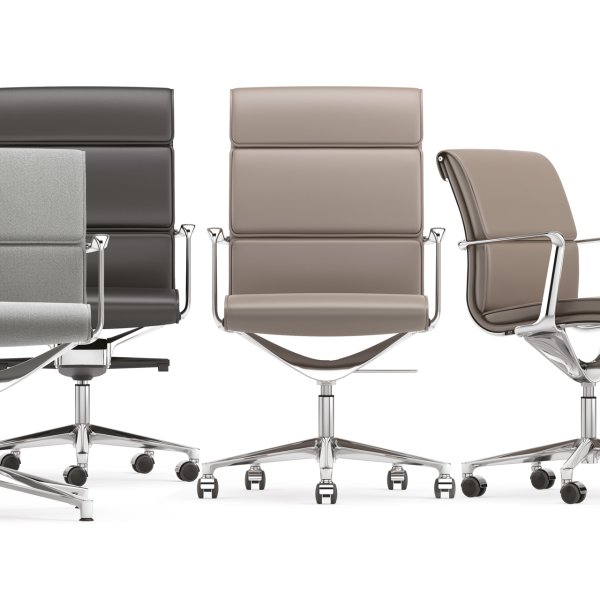
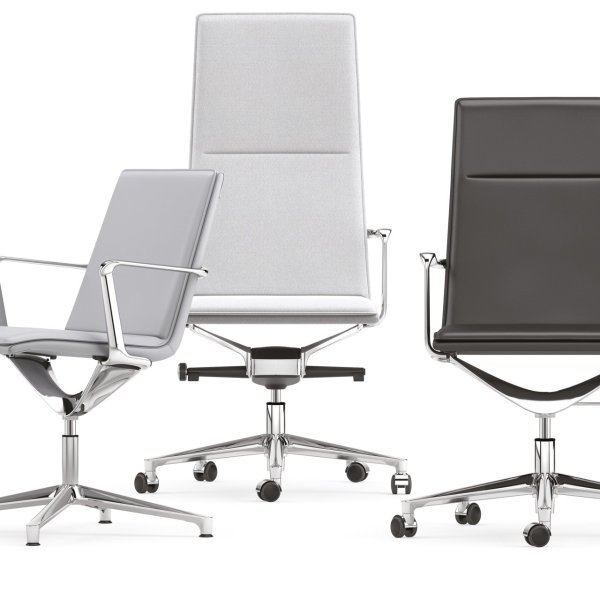
Leather remains the default reading in most senior British rooms, but the reasons have shifted. A full-grain hide on a well-made Italian chair ages the way the profession likes its evidence: gradually, legibly, without complaint. It says the occupant bought once and bought correctly. Technical fabrics have earned a different register — they read as contemporary and considered, particularly in practices that have moved their whole interior language on from panelled tradition, and they run cooler over a long day. What neither material forgives is the mid-market version of itself: corrected-grain leather that cracks at the arms within three years, or a fabric chosen from a swatch that pills where the forearm rests. The operative rule is to match the material to the room’s existing register rather than to the catalogue. A leather chair in a glass-and-oak studio looks inherited; a mesh-backed chair in a panelled partners' office looks borrowed from the floor below. Decide what the room is saying first, then let the chair agree with it.
Almost always the difference sits in three components: the recline mechanism, the gas lift and the fixing points between them. A properly engineered synchronised or oscillating mechanism uses steel plates and bushings dimensioned for daily cycling over decades; the cost-reduced version substitutes thinner pressings and nylon bushes that develop play, which the sitter experiences as a lean to one side or a click on recline. The gas lift should be the highest duty class available, and the mechanism-to-seat fixings should land in steel or threaded inserts rather than directly into board. None of this is visible in a photograph, which is why the reliable proxies are producer and warranty: an Italian manufacturer that has run the same mechanism family for twenty years, and stands behind it in writing for ten, has already done your endurance testing. Before ordering, ask one question a serious supplier answers easily — which parts are replaceable, and for how long after purchase? A chair with no spare-parts answer is a chair with a planned funeral.
Remarkably little, provided the hide was right to begin with — and that proviso does most of the work. Full-grain leather, aniline or semi-aniline, ages by developing a patina: it darkens slightly where hands rest, softens across the seat, and improves the way good shoes improve. Corrected-grain and heavily coated leathers do the opposite; the surface film wears through at the arms and seat edge within a few years, and that damage cannot be conditioned away, only reupholstered. Assuming the hide is honest, the regime is modest: dust and wipe with a barely damp cloth, condition once or twice a year with a product the producer approves, and keep the chair out of direct sun — a south-facing window in a glazed British office does more harm in two summers than a decade of use. The premature agers are all preventable: solvent cleaners, radiators at close range, and the office habit of using the chair as a coat hanger, which burnishes the back panel unevenly. Ask for the care sheet at purchase and give it to the facilities team rather than the occupant, with the conditioning entered in the planned-maintenance diary alongside the rest of the building.
The extra height is doing real work, provided the day is long enough to need it. A high back supports the thoracic spine and, with a headrest, the neck during reclined thinking — the call taken leaning back, the reading that happens after six o’clock. For a director who is at the desk most of the day, that support changes how the last two hours feel. A medium back suits the occupant who uses the chair in shorter stints between meetings, and it keeps the room’s proportions calmer: in the period buildings much of professional Britain occupies, a very tall back can crowd the ceiling line and dominate the view from the door. There is a sightline point too — a high back turned away reads as absence, while a medium back keeps the room legible from the corridor. The honest way to decide is by diary rather than by rank. Map a typical week: if the chair holds its occupant for six or more hours a day, specify the high back and the headrest, and treat the proportions of the room as the constraint that chooses the model.
An executive chair is rarely returned. Once it stands in the corner office it stays, whatever its faults, because replacing it is an admission. The time to be demanding is therefore before the order is placed, and the demands should be physical, documentary and spatial rather than aesthetic. This protocol sets out four verifications to run before any executive chair is confirmed: a structured sit, an inspection of the unseen components, an interrogation of the paperwork, and a check of the chair against the room it will occupy. None requires expertise. All require deliberateness.
Sit in the candidate chair and work, or convincingly simulate working, for twenty minutes. Not the showroom perch of ninety seconds, which flatters every chair ever made. The first thing to observe is whether you have had to think about the chair at all. A well-resolved executive mechanism sets its recline resistance to your weight with one adjustment or none, and from then on follows you: lean back and it yields progressively, come forward and it returns without shoving you in the back. If you find yourself hunting under the seat for levers, or bracing before you recline, the mechanism is asking to be learned — and its eventual occupant, who has less patience than you, will never learn it.
At minute ten, change task. Move from screen posture to reading posture to a leaned-back telephone posture. The transitions are the test: a chair can be comfortable in any single position and still fail between them. Listen as you move. Clicks, creaks or a half-second lag in the recline are the sounds of tolerances that will widen with age.
At minute twenty, stand up and look at the seat cushion, which should be recovering its shape while you watch. Then record two sensations: whether the front edge of the seat left a pressure line on the underside of your thighs, and whether your lower back feels held or merely leaned-on. Write all of it down while it is fresh. The showroom will argue with your memory; it cannot argue with your notes.
Turn the chair over, or ask for it to be turned. The underside is where cost-reduction hides. Look at how the mechanism fixes to the seat: machine screws into steel or threaded inserts are what fifteen years look like; self-tapping screws driven into bare board are not. Check the base too — polished aluminium carries load and cleans well over a decade, painted steel manages the first, and nylon in an executive weight class reliably manages neither.
Press the foam at the seat centre, the seat edge and the lumbar area with a straight thumb. You are feeling for density and recovery rather than softness. Foam that feels immediately plush is usually low-density and will pack down within two or three years into the shape of its occupant, the hammock effect that makes old chairs tiring. High-resilience foam pushes back and recovers at once. On leather models, follow every seam with a finger: stitching should be even, tension consistent, piping straight along the lines the eye reads from the door.
Finally, examine the arms, which fail socially before they fail structurally. Armrests take more abrasion than any other surface on the chair; if they are padded, check the pad is replaceable, and if they adjust, check the adjustment locks positively rather than drifting. A chair that is perfect except for scuffed, wobbling arms reads as a tired chair. This inspection takes ten minutes and tells you more than the brochure ever will.
Ask for three documents before you confirm anything: the warranty terms, the spare-parts policy and the technical data sheet for the exact model and configuration you are ordering. Read the warranty for its exclusions rather than its headline. Ten years on the structure with two on the mechanism and gas lift is a very different promise from ten years across the chair, and a warranty that excludes normal wear of foams and upholstery without defining it has left itself a door. Producers with real confidence in their engineering write short, plain warranties.
The spare-parts answer is the single most revealing item in the file. A serious manufacturer can supply mechanisms, gas lifts, castors, armrest pads and upholstery covers for many years after purchase, and can say so in writing. That answer converts the chair from a disposable object into a maintainable one — the difference, at year nine, between a replaced lift and a full replacement, plus the awkwardness of a mismatched newcomer in a furnished room.
On the data sheet, verify what the showroom conversation glossed: the stated usage rating, the tested weight capacity, the fire-performance position of the upholstery in contract use, and the actual dimensions of this configuration. Certifications belong to specific material combinations; a chair certified in one fabric is not automatically certified in the hide you have chosen. Ask the question in writing and keep the reply with the order.
The final verification costs nothing and is skipped most often. Take the confirmed dimensions of the chair — overall height, back width, base diameter — and check them against the room itself rather than against a floor plan. Mark the back height on the wall behind the desk position: in the period buildings and converted floors much of professional Britain works in, a tall back can collide visually with dado lines, panel joints or the window transom behind it, and the room never quite settles afterwards.
Then check the working clearances. A generously proportioned executive chair needs room to recline and to swivel without the arm clipping the credenza or the radiator behind. Allow for the chair pushed back with an occupant rising from it, and for the full swivel clearing any return or pedestal beside the desk. These are thirty-second checks with a tape measure, and they prevent the daily, silent irritation that no chair survives in its occupant’s affection.
Last, stand at the door and look. This is the view from which the chair will be read a dozen times a day by the people whose reading matters: colleagues, clients, the visiting partner. The chair should sit in the composition of desk, window and shelving as a resolved element, neither vanishing nor performing. If it dominates from the doorway, reconsider the back height or the colour before you sign, because you are looking at the one image of this purchase that everyone else will ever see.