
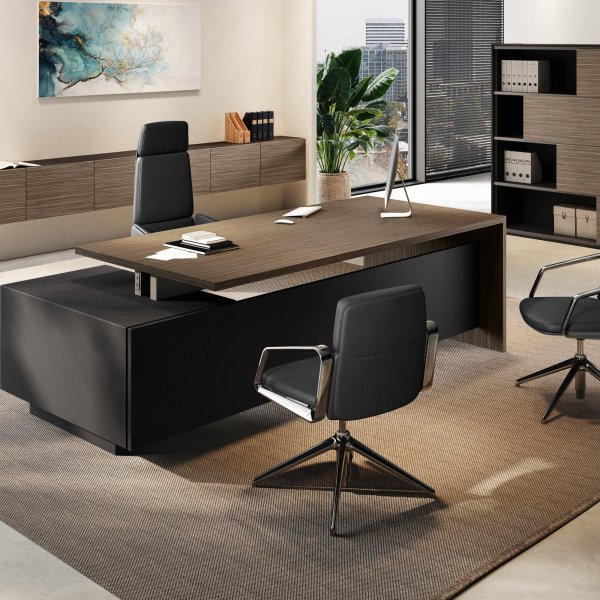
Elite
£ 3,276
The case for modern office desks at executive level is not aesthetic. It is operational. A modern executive desk is built around how a principal or partner actually works now — two screens and a laptop, half the week’s meetings conducted on camera, power drawn at the surface rather than fished from the skirting, and a working day that no longer forgives a fixed posture. Clean lines are the visible result; the engineering underneath is the point. Cable routing inside the structure. Tops — glass or walnut — thin enough to look effortless and dense enough to stay silent under a keyboard. Height adjustment, where wanted, resolved so quietly it never reads as machinery.
The desks in this collection come from Italian manufacturers who treat minimalism as a discipline rather than a shortcut. Removing ornament is easy. Removing it while keeping presence — the quality that lets a desk hold a room in a glass building in Canary Wharf or a converted floor in Manchester — is the hard part, and it is what separates these programmes from the flat-pack version of the same idea.
La Mercanti configures modern executive desks to your dimensions and technology, and delivers across the UK — with finishes, storage and screens coordinated from the same design family. Drawings and samples on request.
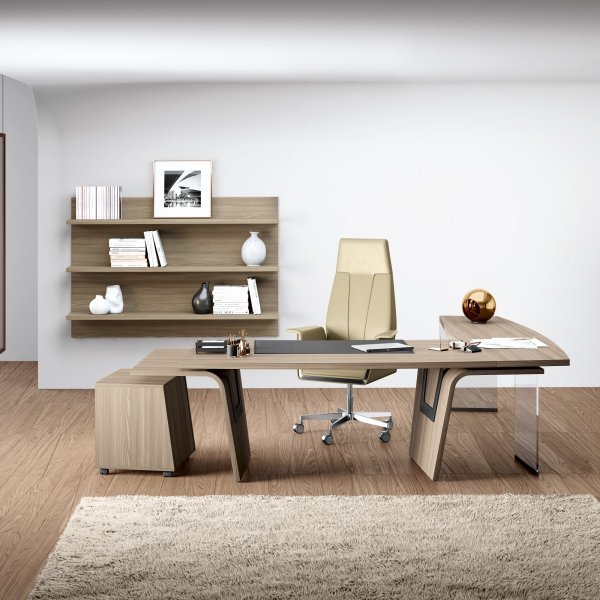
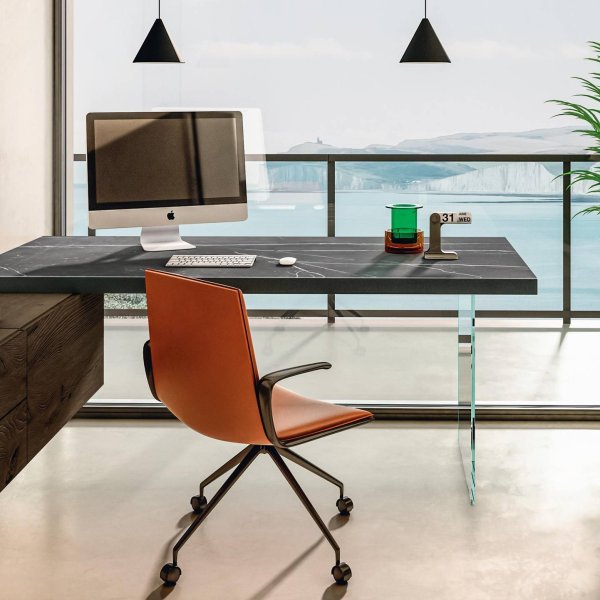
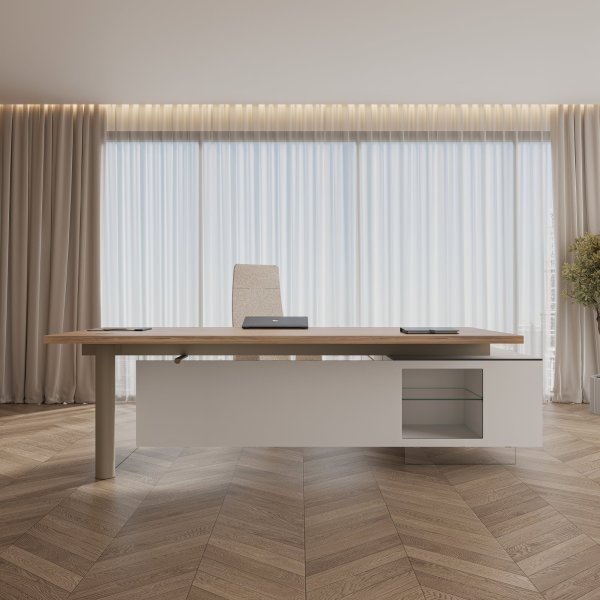
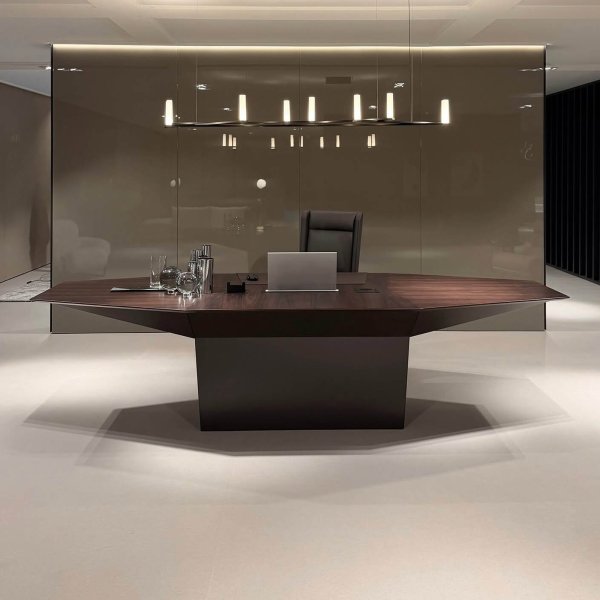
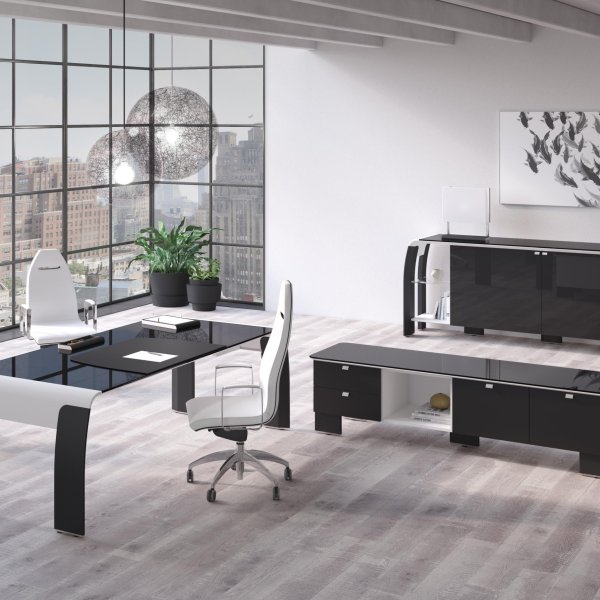
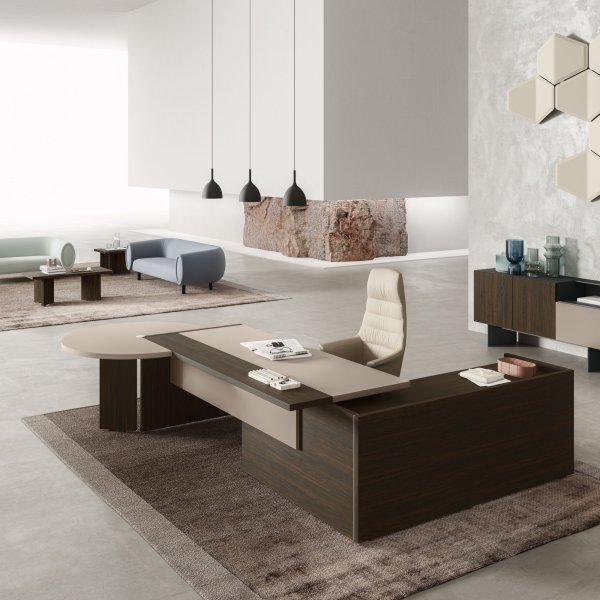
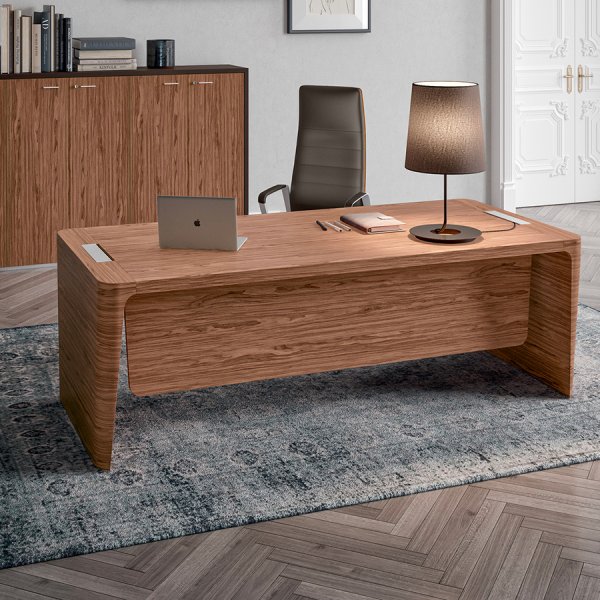
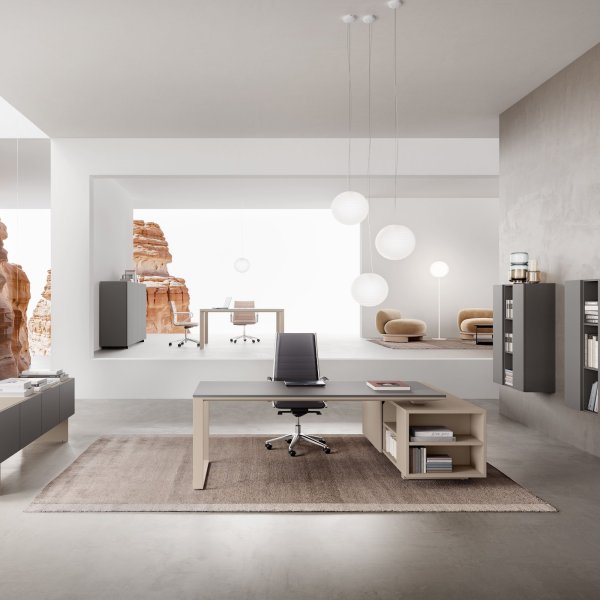
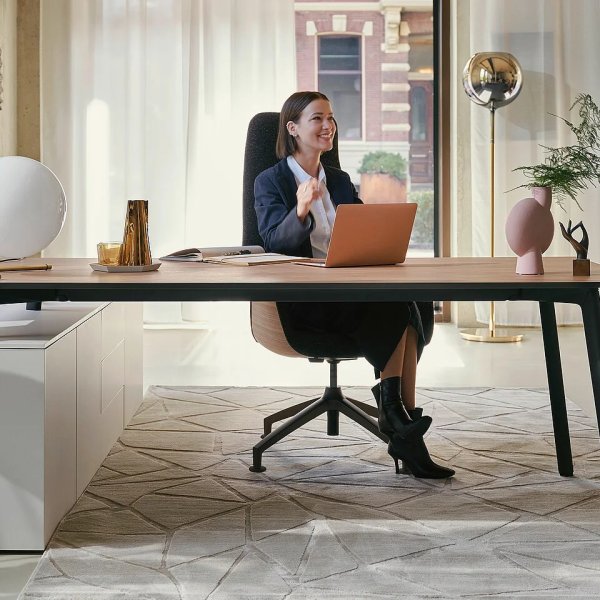
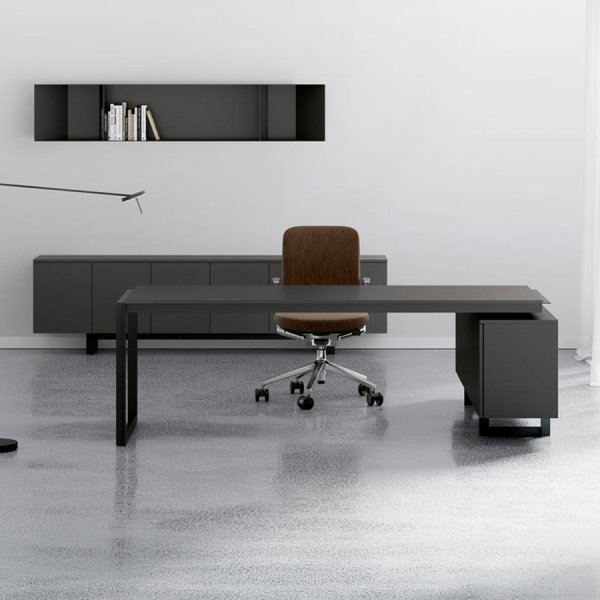
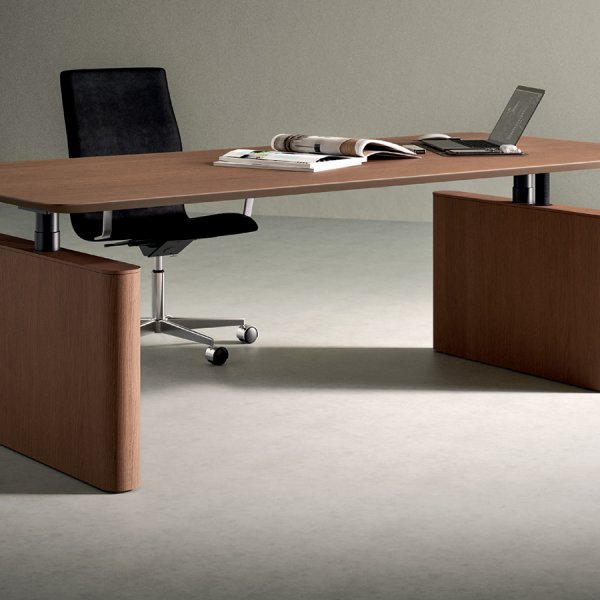
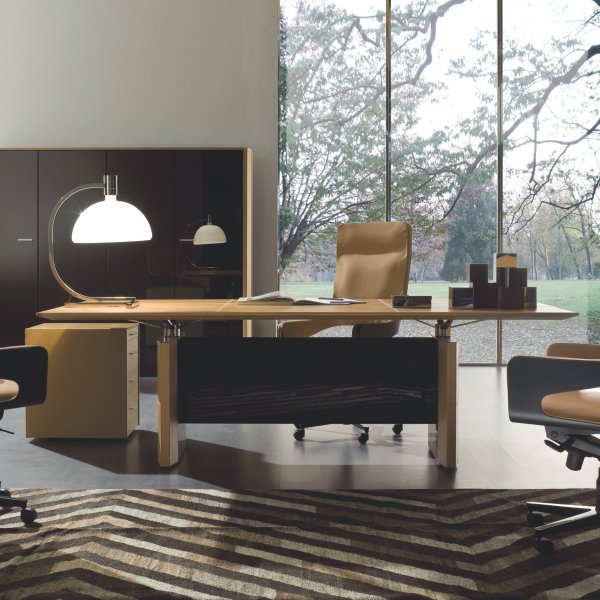
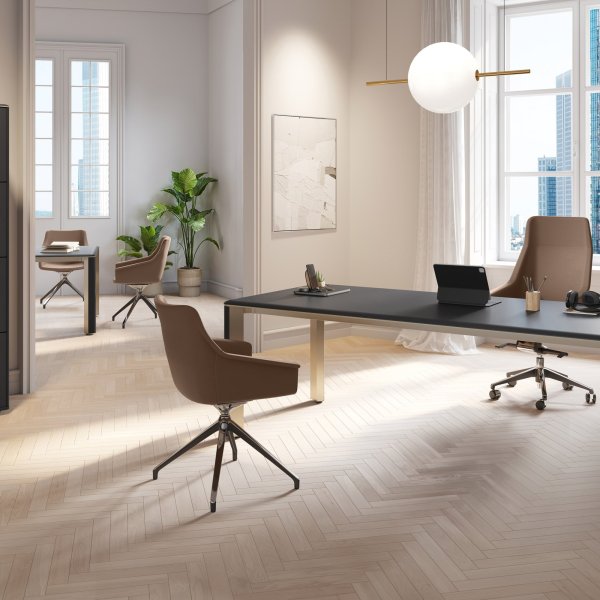
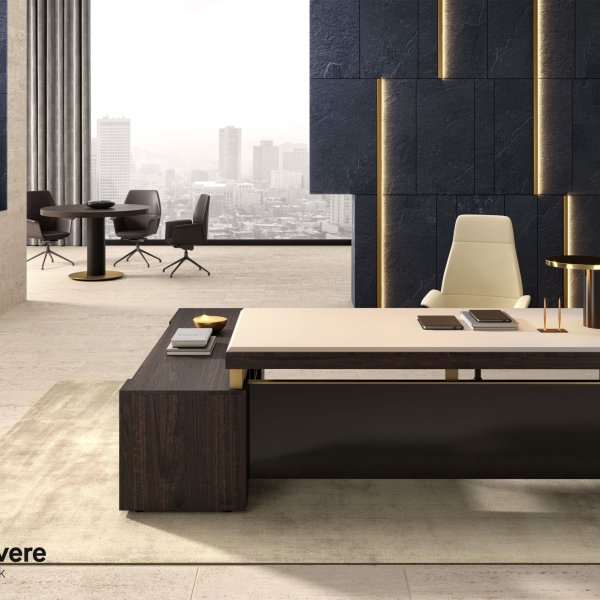
It changes the orientation before it changes the object. A modern executive desk is now a broadcast position for a meaningful share of the week, which means three decisions that never used to matter. Light: the strongest daylight should fall on the occupant’s face rather than behind them — a desk placed against the window, the classic power position, produces a silhouette on every call. Background: whatever sits behind the chair is now part of the practice’s presentation, so the credenza or shelving in shot should come from the same programme as the desk instead of reading as leftovers. Cable discipline: the camera sees the desk surface at an angle no visitor ever does, and a run of loose cabling undoes a considerable amount of tailoring.
The operational implication: fix the desk’s position and orientation in the room before choosing the desk itself. A piece specified for a wall it never suits will spend its life apologising for the light.
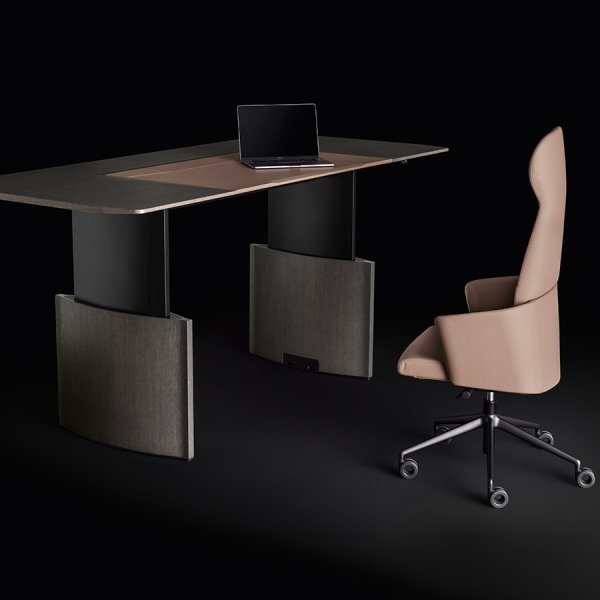
It depends entirely on how the mechanism is resolved, and the range runs from invisible to unmistakable. Operational sit-stand shows its working: exposed telescopic legs, a control pad stuck to the edge, cables that lengthen and shorten in public. The better Italian programmes conceal the lift within a full-material structure, so the desk at rest is simply a desk — timber or lacquered surfaces to the floor, the travel silent, the controls flush. The difference is anything but cosmetic. A desk that visibly declares its mechanism reads as equipment, and equipment reads as issued rather than chosen, which undoes the entire point of an executive piece.
Two tests before committing. Raise it fully and look at it from the door: presence at standing height is where cheap systems collapse, all leg and no body. Then listen to the travel in a quiet room. An executive office is a quiet room. The desks worth specifying pass both without comment.
Into pieces specified in the same decision, or onto the desk within a fortnight. Those are the options. British professional life still produces originals — deeds, engrossments, counterparts, the documents that cannot live in a drive — and a minimal desk does not abolish that reality; it relocates it. The programmes that make minimalism work at executive level pair the clean top with storage doing the actual holding: a credenza within a quarter-turn of the chair for active matters, closed cabinet runs for the rest, a pedestal only where the working style demands one.
The failure mode is familiar. A beautiful bare desk is ordered alone, the paper arrives anyway, and within a month the minimalism consists of piles arranged with care. The specification rule that prevents it: the storage decision is part of the desk decision, sized against the actual document flow of the occupant rather than added later, when the surface has already lost. Minimal is a system, not an object.
Glass demands the most and forgives the least: every touch records, and a glass top under a window turns into a mirror that fights the screens standing on it. It remains the right answer where the architecture is hard-edged and the occupant is disciplined, because nothing else achieves that weightlessness. Matt lacquer is the working choice of most modern Italian programmes for a reason: it holds colour precisely, diffuses light instead of bouncing it, shrugs off daily contact, and a proper lacquer system can be re-finished by the maker rather than merely apologised for. Timber veneer brings warmth and movement to rooms that glass buildings starve of both, and it ages in a way the other two do not — which is either its argument or its problem, depending on the occupant.
The test that settles it: take samples of all three to the actual room and look at them under its lighting at nine in the morning and again at four. LED and daylight disagree about finishes, and the room’s opinion is the one that lasts.
The commonest failure in modern executive furniture is one of sequence: the desk is chosen for how it looks, and the working day is then asked to fit it. This brief reverses the order. Document how the occupant actually works, fix the technical layer in writing, resolve geometry and position in the room, and only then choose material and form. The result is a one-page specification a supplier can answer precisely — and a desk that never needs excusing.
Begin with a structured interview: the occupant, thirty minutes, five lines of questioning. Screens: how many, what sizes, fixed or laptop-docked. Video: how many hours on camera, and at what times of day — this determines light and orientation later. Power: every device that charges or runs at the desk, from the laptop to the phone to the things that quietly accumulate. Paper: what actually crosses the surface, and what merely lives on it because storage was never resolved. Meetings: how often two or three people work at the desk together, as opposed to sitting across from it formally. Where the answers sound confident rather than accurate, check them against the diary and the state of the current desk; both testify more honestly than their owner.
Write the results down in plain numbers and sentences. The point of the exercise is to replace impressions with facts, because impressions produce desks that photograph well and facts produce desks that work. Most occupants discover under questioning that the desk they thought they wanted and the desk their working day describes are two different objects — usually in the direction of more power, more storage and a different position in the room. That discovery costs nothing now. It costs a great deal after delivery.
Before any conversation about finishes, write the technical requirements as dimensions and positions. Surface power: how many outlets, where on the top, and of what type. Grommets: their positions in millimetres relative to the working position, decided by where the screens and dock will actually sit — a factory-cut grommet in the right place is tidy, and a site-drilled hole in the wrong one is permanent. Screen mounting: monitor arms need either a clamp-friendly edge or a bolt-through position, and not every thin-top construction accepts either. This single line in the brief disqualifies more desks than any aesthetic judgment will, which is why it belongs on paper early.
If height adjustment is in scope, add cable travel: the loom must extend and return through the full range without ever appearing, which is a designed feature rather than an accessory. Close the section with under-desk management — trays, spines and the route power takes from wall to top. A modern desk is judged clean or chaotic on precisely these details, and they cannot be retrofitted with dignity.
Position the desk on the floor plan before choosing it. Orientation first: daylight should reach the occupant’s face rather than the screen or the camera lens, which in practice usually means the desk sits perpendicular to the window rather than against it, with the video background falling on a wall you control. Then depth: enough for the screens to sit at a comfortable viewing distance with the keyboard fully on the surface, which is exactly where fashionably shallow tops quietly fail. Then clearance: room to push back freely, and space on the visitor side if the brief showed real working meetings happening at the desk.
Take the sit-stand decision here, on evidence rather than fashion. If the interview shows long unbroken deskbound stretches, adjustability earns its complexity. If the occupant is out of the chair every half hour for other reasons anyway, a fixed height at the correct dimension serves better, with one less mechanism to specify, power and maintain. Either answer is respectable. The unrespectable version is deciding by default and discovering the consequences at the desk’s expense.
With function and geometry fixed, the material conversation becomes short and precise, which is the point of the sequence. Choose the register the room and the occupant can sustain: matt lacquer for exactness, veneer for warmth, glass only where the discipline exists to keep it. Order physical samples and judge them in the actual room, under its lighting, at more than one time of day. Showroom light flatters everything, and LED has strong opinions about certain finishes that only reveal themselves on site.
Then run the pre-order verification against the brief written in the earlier steps. The dimensional drawing should show every grommet, outlet and mounting position you specified, in millimetres, before anything is confirmed — the moment to discover a missing cable port is on a drawing, not on a delivered top. Confirm edge details, finish references and, where relevant, mechanism behaviour in writing. A brief built this way turns the final choice from a leap of taste into a confirmation exercise, which is how the offices that look effortless are actually produced.