DuoChair
£ 1,030
Ergonomic office chairs are bought by the dozen and felt one spine at a time. That is the tension every UK specifier deals with: the order is a procurement line, while the outcome is personal to each of the thirty people who will sit through the British working day on it. Our position is unfashionable and firm: the ergonomics that matter are dynamic. A chair earns its keep by moving with its occupant through hundreds of small posture changes a day, with a mechanism tuned so that movement costs nothing.
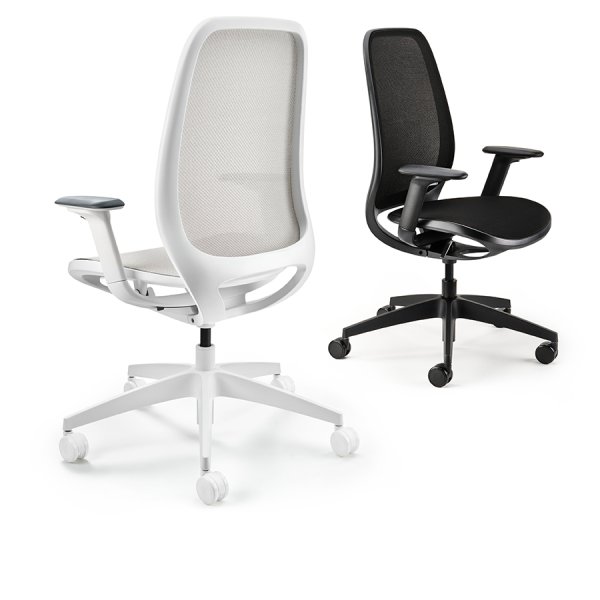
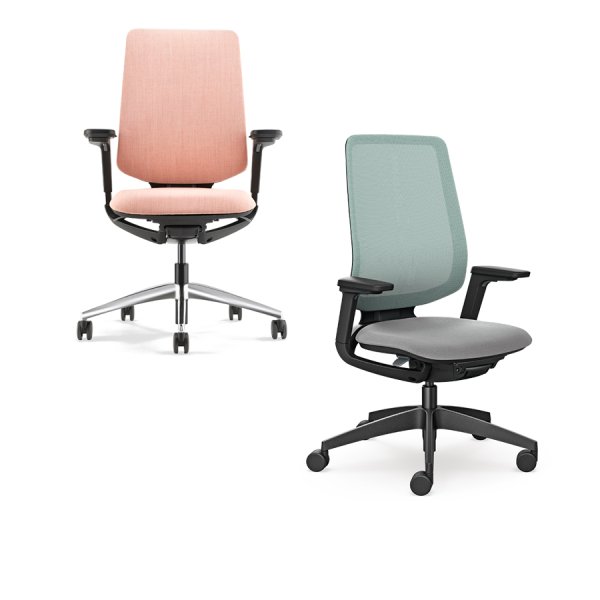
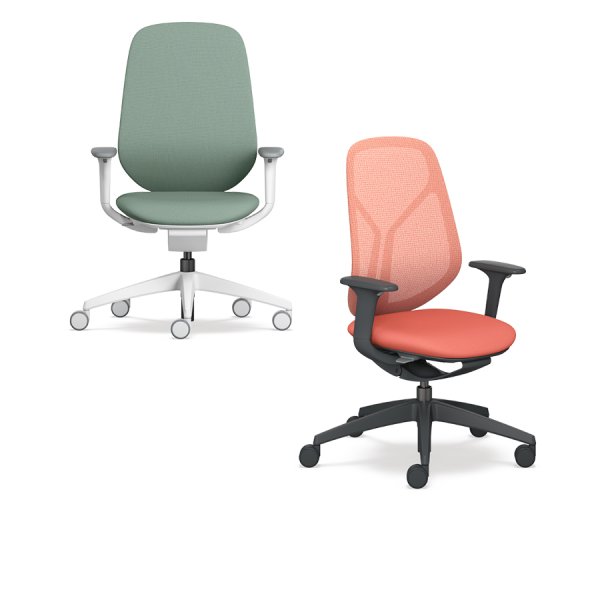
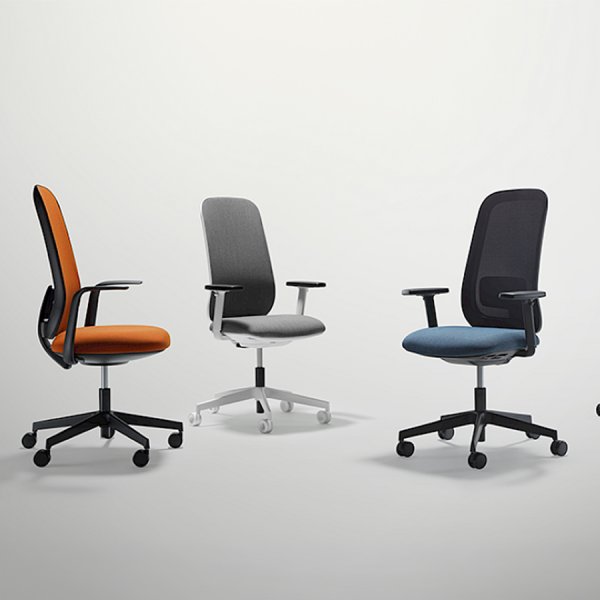
The task chairs and operator chairs in this collection come from Italian producers who treat synchronised mechanisms, weight regulation and properly adjustable lumbar support — on mesh or upholstered backs — as core mechanics rather than options. They are built for open-plan floors, focused workstations and the hybrid patterns of UK teams, and they give a DSE workstation assessment something worth assessing.
La Mercanti supplies Italian ergonomic seating across the UK, with model selection guidance, contract fabric options and the technical documentation your workplace assessments ask for. One chair, chosen well, quietly improves a thousand working days.
The regulations set a floor, not a specification. For seating, the UK’s Display Screen Equipment framework asks that the work chair be stable, allow the user freedom of movement and a comfortable position, have an adjustable seat height, and a seat back adjustable in both height and tilt, with a footrest available to anyone who wants one. Almost every task chair on the market clears that bar, which is precisely the problem: compliance tells you nothing about whether the lumbar support meets a particular spine, whether the seat depth suits the shortest and tallest users on the floor, or whether the recline resistance can be tuned to a nine-stone body and a sixteen-stone one alike. The failures assessors actually record are failures of fit and of use — chairs adjusted once on day one and never again, or adjustment ranges too narrow for the people at the extremes. Treat the regulations as your minimum evidence, specify for the range of real bodies, and budget ten minutes per person for a proper adjustment induction. A compliant chair badly set up is an ergonomic chair in name only.
Yes, and the reason is arithmetic rather than luxury. A synchronised mechanism reclines the backrest and the seat together at a fixed ratio — the back travelling roughly twice as far as the seat — so that when you lean back, your feet stay planted, your thighs stay supported and the angle between torso and legs opens up. A simple tilt pivots the whole seat pan instead: heels lift, thighs press against the front edge, and the body quietly learns that reclining is uncomfortable. The consequence over a working day is behavioural. People on synchronised mechanisms change posture constantly, which is what spines are built for; people on basic tilts settle into one fixed position and hold it, which is what makes four o’clock feel the way it does. Weight regulation matters just as much: recline resistance must be adjustable, or automatic, so that lighter users are not pinned upright and heavier users are not dropped backwards. For occasional seating, a simple tilt is a defensible saving. For the chair someone occupies most of the week, it is a saving the occupant repays daily, with interest.
It changes, in one large way and two small ones. The large way is that the fixed worktop stops dictating the chair. Once the desk moves, the chair can at last be set to the person rather than to the furniture, and that freedom quietly exposes chairs whose comfort depended on everyone tolerating the same compromise. The small ways are practical: armrests must clear the desk’s descending edge and its cable tray, or the daily lowering becomes a daily collision, and the chair should move aside willingly when its occupant stands, which favours lighter bases and free-running castors over stately mass. What does not change is the sitting. Teams with sit-stand desks still spend most of the day seated, and the standing spells make poor support more conspicuous on the return, not less. So resist the procurement logic that a half-standing team deserves half the seating budget. In a Cat B fit-out the chair estate will outlast the desks' novelty and, in plenty of tenancies, the lease itself: specify the seating as the durable layer of the scheme, not the flexible one.
It is real, though it will not rescue a bad room. Fabric-covered seating is absorbent surface area, and across a floor of forty or sixty chairs that area adds up in the frequencies open-plan speech occupies. The effect matters most in the offices Britain is building now: refurbished floors with exposed soffits, glazed meeting boxes and polished screed are acoustically live, and every soft surface earns its keep. An upholstered back and seat contribute; a hard shell contributes almost nothing. Treat the seating as one layer of the acoustic strategy alongside ceiling rafts and screens, not as a substitute for them. The quieter argument for cloth is character. A wool-blend in a considered colour is how a floor stops looking like a stock photograph, and textile takes pattern and texture in a way technical finishes cannot — much of why the better British refurbs feel inhabited rather than installed. The conditions are contract discipline: a stated abrasion performance for daily task use, and cleanability the facilities team has confirmed. Choose the fabric with the acoustician and the interior designer in the same conversation, and the chairs do two jobs on one budget line.
A task chair reveals itself between day three and day ten, long after the showroom visit is over. Backs and mechanisms that impress in a five-minute sit can turn indifferent across a full working week, and the reverse happens just as often. The method below replaces the gamble with evidence: a structured trial of shortlisted chairs on your own floor, with your own people, feeding a specification you can defend to finance, to facilities and to a DSE assessor. It takes two weeks of elapsed time, very little money and a modest amount of discipline.
Choose between four and eight trialists, and choose them deliberately. The group must include the extremes of the floor, because it is at the extremes that chairs fail: the shortest and the tallest regular users, someone who works long uninterrupted stretches at the screen, someone who moves constantly between desk and meetings, and at least one person with an existing back complaint who will be honest about it. Resist the natural drift towards volunteers who like new things; enthusiasm is not data.
Set expectations in writing before the chairs arrive. Each trialist keeps the chair for a defined period, uses it as their only chair, and agrees to give structured feedback twice. Make clear that no decision has been taken, that their notes will directly shape the order, and that the point is to find faults rather than to be polite. British teams in particular need explicit permission to criticise something the company has taken visible trouble over.
Keep the shortlist tight, because two chairs compared honestly beat five compared vaguely: two or three models, ideally from producers whose spare-parts and warranty answers already satisfied you, rotated through the group so that every trialist sits every candidate. The rotation matters — it converts personal impressions into comparisons, and comparisons are what you can act on.
An unadjusted ergonomic chair is a placebo with castors. Before the trial starts, walk each trialist through a full setup on their own chair at their own desk, in this order: seat height so that feet sit flat and forearms run level with the desk surface; seat depth so that two or three fingers fit between the seat edge and the back of the knee; lumbar support raised or lowered into the hollow of the lower back rather than against the pelvis; recline resistance tuned so the back yields to a deliberate lean without throwing the sitter forward on return; arms set so the shoulders hang relaxed rather than shrugged.
Do this in person rather than by leaflet. Ten minutes per person is the entire cost, and it changes everything downstream: complaints caused by setup vanish from your data, and what remains is real information about the chair. It also rehearses what you will have to do at rollout — a DSE workstation assessment expects users to know how to adjust their own equipment, and a trial is the cheapest rehearsal you will get.
Photograph each completed setup. When feedback later says a chair felt wrong, the photograph tells you whether the chair or the configuration had drifted, and drift is itself a finding: a chair whose adjustments do not hold position for a fortnight has disqualified itself.
Gather feedback at two moments: around day three, when novelty has worn off, and at the end of the trial, when habit has formed. Keep the questions identical both times so you can see movement, and ask about the day rather than the product — people are unreliable about chairs and very reliable about their own sensations. Useful questions: where do you ache at four o’clock, and is it different from before; how often do you lean back, and does the chair invite it or resist it; have you readjusted anything since day one, and did the adjustment hold; does the seat edge press behind your knees; how warm is your back at the end of the afternoon.
Score each answer simply and keep the verbatim comments, which carry more truth than the scores. Watch specifically for the crossover pattern that justifies the whole exercise: chairs that scored well on day three and slid by day ten, or the reverse. The first is showroom charm evaporating. The second, usually a firmer seat and a more insistent lumbar curve, is what long-term support feels like before the body recalibrates, and it is the pattern that predicts a good decade.
Close the loop with the extremes of the group. If the tallest and shortest trialists disagree sharply about the same chair, that model’s adjustment range is too narrow for a single-model floor, and you have learned it for the price of a fortnight rather than a full rollout.
Translate the trial into a written specification with three layers. First, the mechanical minimum drawn from what mattered on your floor: mechanism type and adjustability, seat-height and seat-depth ranges wide enough for your measured extremes, lumbar adjustment, arm type, and the fabric or mesh grade with its stated abrasion performance for contract use. Second, the evidence: trial scores, verbatim comments and the setup photographs, condensed to a single page. A seating request supported by a fortnight of documented use moves through sign-off in a way a catalogue quotation never does.
Third, the whole-life terms that decide what the estate costs in year six: warranty duration and its exclusions, spare-parts availability confirmed in writing, and replaceable seats, arms, castors and gas lifts, so that maintenance is a component swap rather than a skip full of chairs. Specify the same family in the sizes the trial demanded rather than a mixed estate, and record the standard setup positions from your induction so that new joiners inherit them.
File the trial record with the order. When the workstation assessments come round, and they will, you hold documentary evidence that the seating was selected against the needs of real users on this floor — a rather stronger position than pointing at a brochure.