
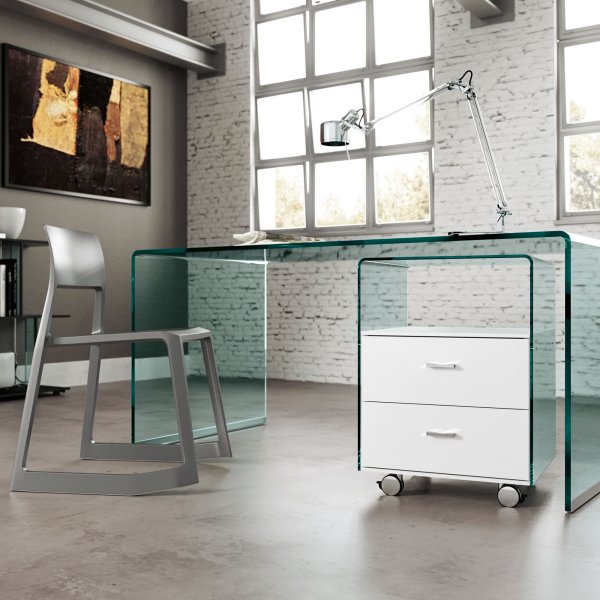
Rialto
£ 7,476
A designer desk is the one piece in an executive office that carries a point of view. Not a style — a point of view: a specific argument, made by a specific studio, about how the person at the top of a practice should work and be seen to work. The designer desks in this collection come from Italy’s signed programmes, where the relationship between studio and manufacturer runs deep enough that the designer’s decisions survive all the way to the finished piece — the exact radius of an edge, the shadow gap between top and structure, the way a leg meets the floor. In the British professional context this matters more than it first appears. A room in Clerkenwell or the City is read in seconds, and a desk with real authorship reads differently from a desk that merely looks expensive.
What you will find here: statement pieces with restraint, sculptural bases that still leave knee room, tops in materials — glass, walnut, leather — chosen for the hand as much as the eye. What you will not find is novelty for its own sake. A designer desk that needs explaining has already failed; one made to measure rarely does.
La Mercanti selects designer desks from Italy’s principal studios and delivers them, configured and coordinated, to executive offices across the UK. Samples, finish references and dimensional drawings on request.
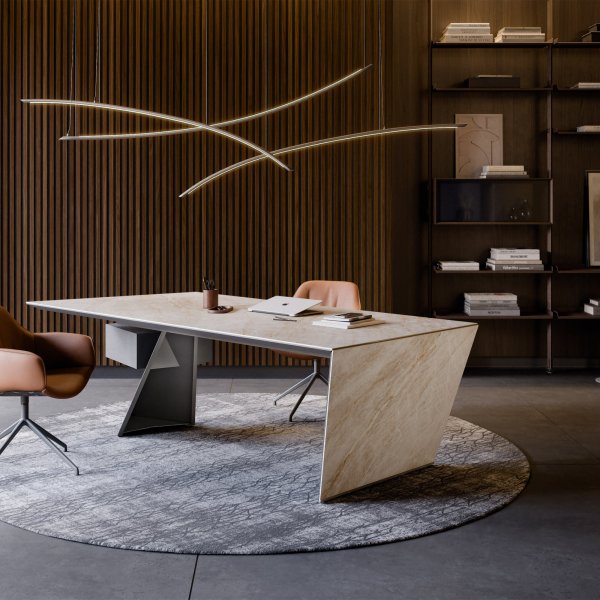
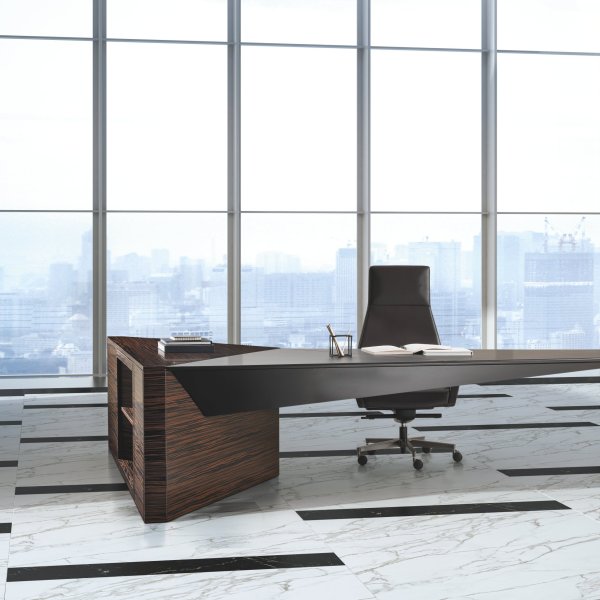
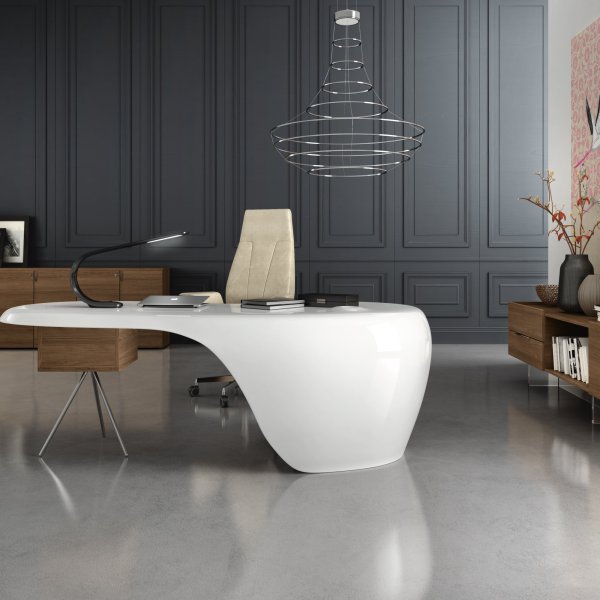
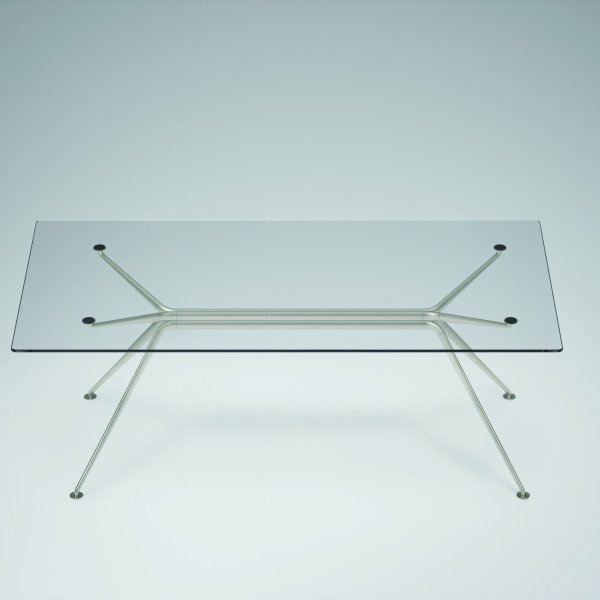
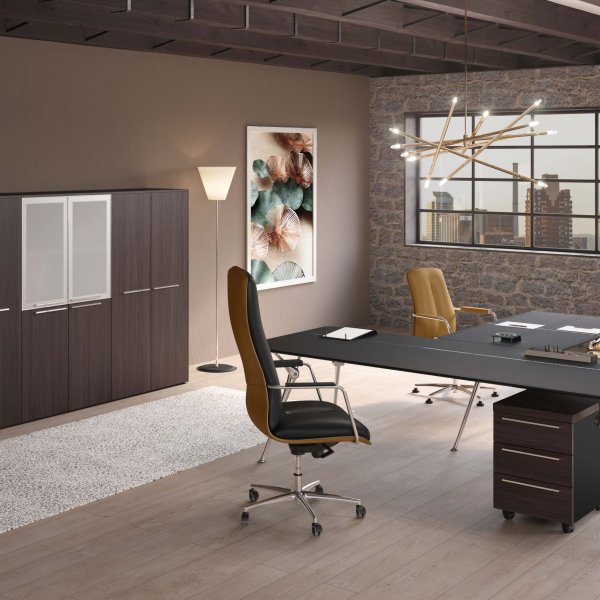
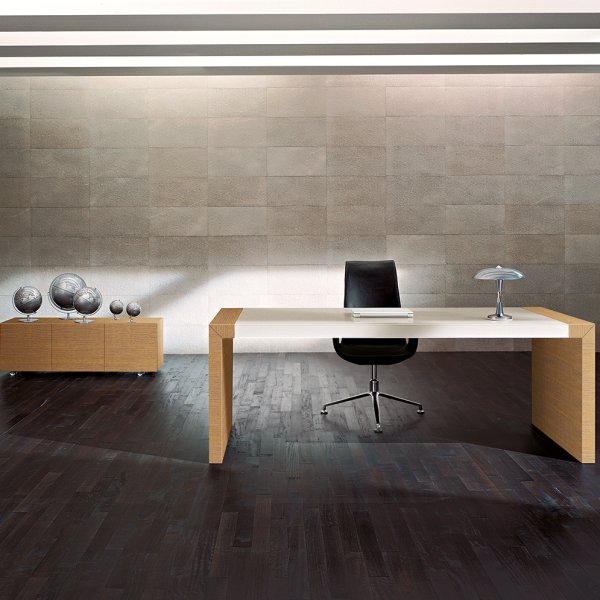
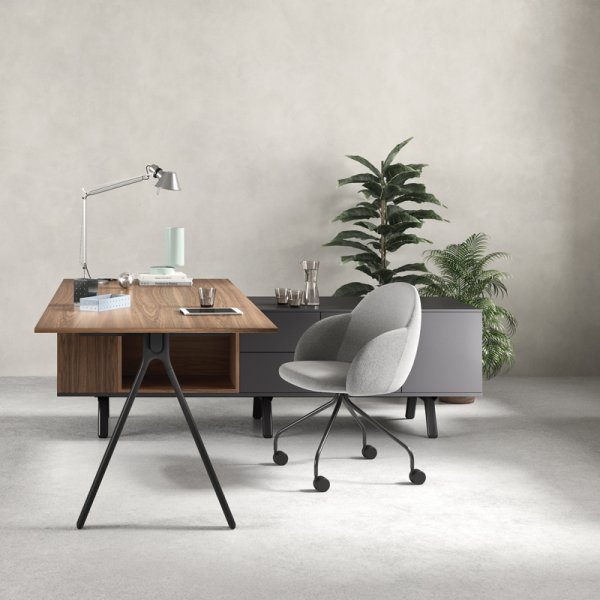
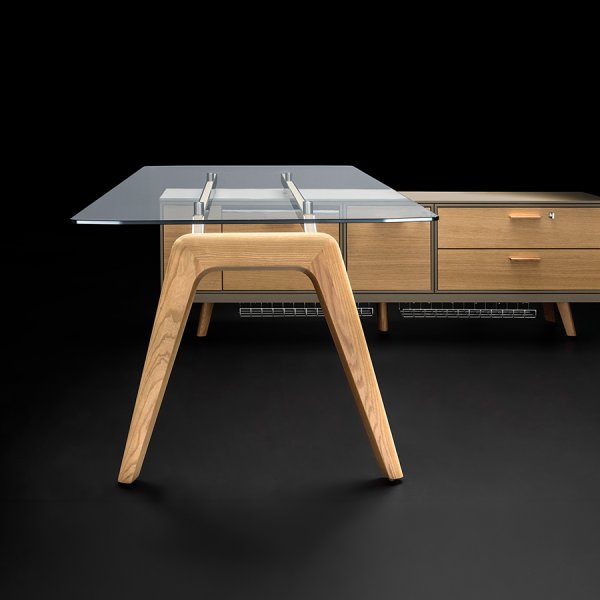
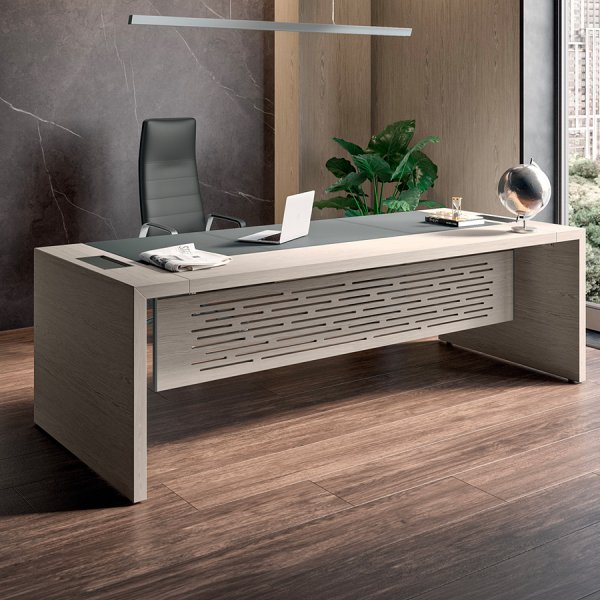
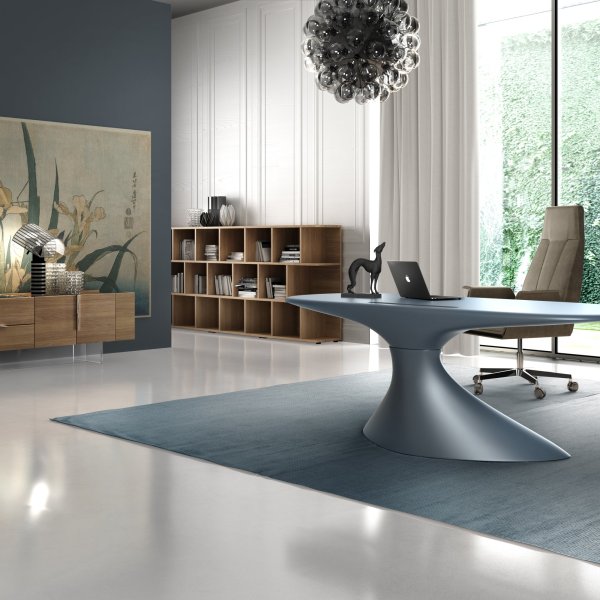
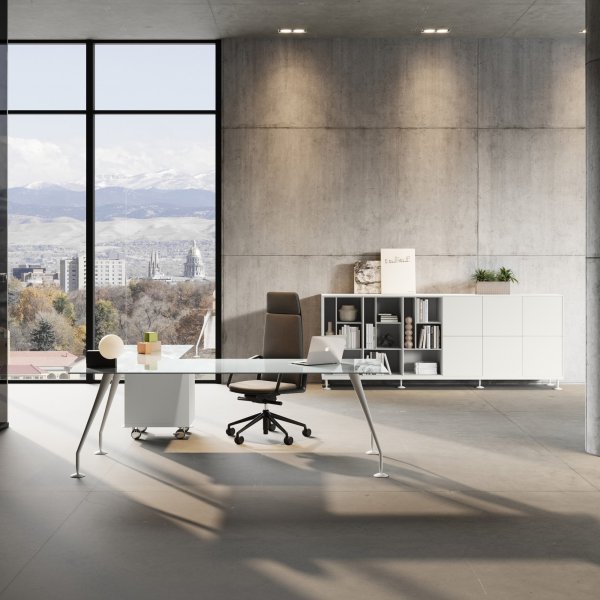
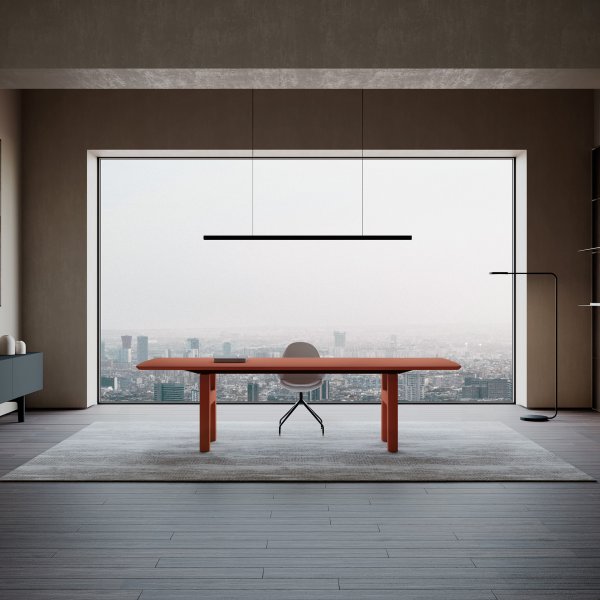
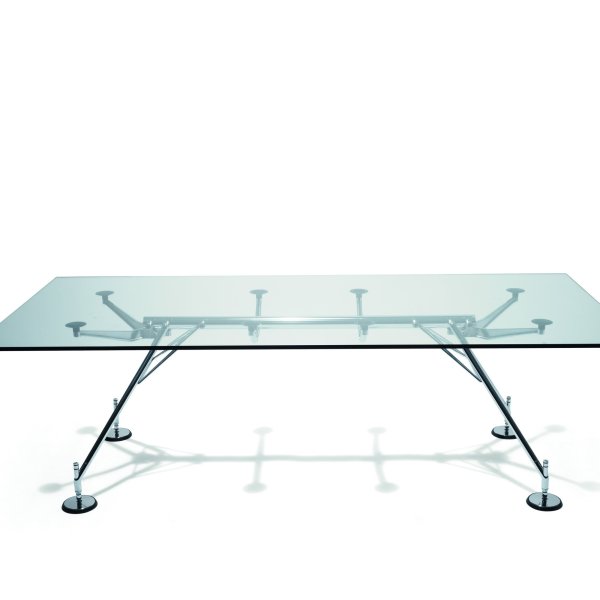
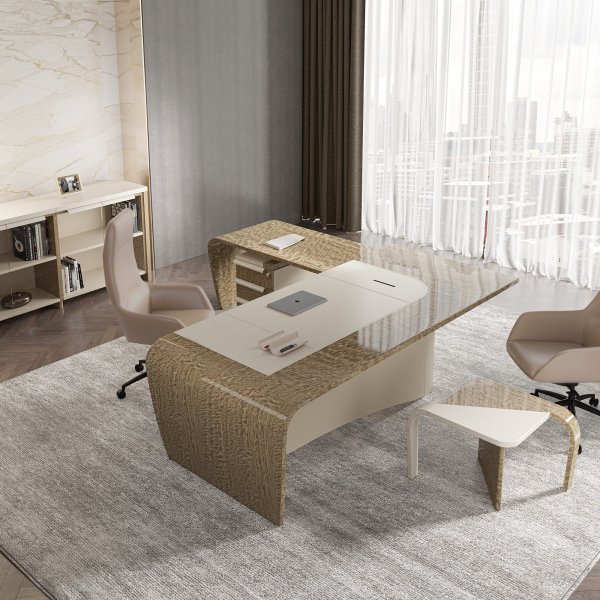
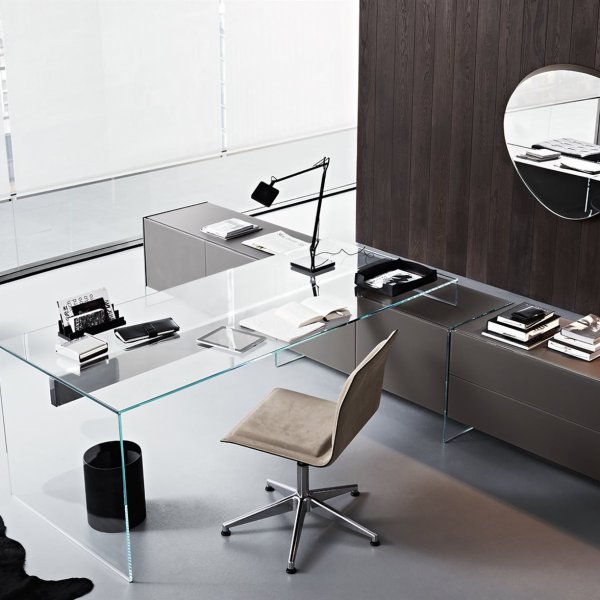
It buys a process rather than a signature. In the Italian system, a designer desk is developed over years between a studio and a manufacturer: prototypes made and rejected, junctions redrawn, a top thinned by millimetres until the proportions resolve. The name certifies that this happened. That is materially different from the licensing model, where a name is rented and applied to a piece the studio never touched. The test is in what doesn’t photograph: the underside of the top, the way the cable route meets the leg, the back of the modesty panel — a properly developed piece is resolved from every angle, because the designer had to sign off every angle.
The practical implication for an executive office: ask who designed the desk, and what else came out of that collaboration. A real answer names a studio and a programme with coordinated storage and tables. A vague answer names an in-house design team. One of these is worth the premium.
Only if the statement is loud. The distinction that matters is between ostentation and authorship: ostentation asks to be admired on arrival; authorship rewards attention over time. A designer desk of the first kind — high gloss, aggressive geometry, visible expense — plays badly in a professional culture where the room is read as evidence of judgment. A desk of the second kind works precisely because of that culture. Its quality is discovered rather than announced: a client notices the shadow gap on the second visit, the balance of the base on the third, and quietly revises their estimate of the occupant each time.
The pattern we see in the UK projects we support is consistent: the designer pieces that succeed in legal, private equity and family office settings are the quiet ones with depth, never the loud ones with volume. Judge a candidate desk by its second and third look. If everything it has to say is said in the first three seconds, it belongs in a different market.
Three checks, in order. Provenance: the manufacturer names the studio, the collection appears in its official catalogue with the designer credited, and the piece has a documented design history. Lookalikes are anonymous by necessity. Detail resolution: a developed piece is finished on the faces nobody photographs — undersides, backs, drawer interiors, the junction where leg meets top. Copies resolve the catalogue angle and economise everywhere else, which is why they survive a webpage and fail a showroom. Family depth: a genuine programme extends into coordinated storage, meeting tables and credenzas drawn by the same hand. A copy is an orphan, and the moment you try to furnish the rest of the room around it, the orphanhood shows.
When specifying, name the collection, the designer and the finish references rather than describing the object. A described desk can be substituted; a named one cannot be substituted invisibly.
Contrast, handled deliberately, is the more considered choice — and usually the only honest one. Filling a Georgian or Victorian room with reproduction furniture flattens both: the room reads as a set, the furniture as costume. A precise contemporary piece against period fabric does the opposite, sharpening the age of the architecture and the intent of the desk at the same time. London’s better practices have understood this for years, which is why the most convincing offices in listed buildings tend to pair original cornicing with furniture that could not have existed when the cornice was made.
The discipline is threefold. One register of contrast, never several: a contemporary desk among period features, not a themed collision. Proportions that answer the room, because ceiling heights and window rhythm set the scale the desk must hold. And a material echo — a timber or bronze tone picking up something the building already owns. Furniture is one of the few freedoms a listed interior grants. It seems a waste not to use it.
A short protocol for architects and buyers: four checks that separate a genuine designer programme from a well-photographed catalogue page.
A signed programme carries a person and a date. If the maker cannot say who drew the desk and when, you are buying a style, not authorship. The name should appear in the manufacturer's own documentation, not only in the reseller's copy.
Authorship shows in what surrounds the desk: storage, meeting extension, cable management and the executive chair should belong to the same hand and the same year. A desk without a family is a one-off that will not survive the first change of layout.
Edge thickness, joints, the way the top meets the leg, the finish options: a designer programme resolves these once and repeats them across the range. If the sheet is thin or generic, so is the design.
Ask for a physical sample of the top and the structure and place it where the desk will stand. Veneer, lacquer and leather read differently under London daylight than under showroom spots; the sample is the only test that cannot be photographed.