What did you have in mind?
Trade terms for professionals and design studios
What did you have in mind?
Trade terms for professionals and design studios
Most office chairs last three or four seasons in a catalogue before being quietly replaced. Open Up was launched in 2000 and is still made today, with the same name and the same architecture. For anyone furnishing a floor in stages, that is not a piece of trivia — it is the difference between matching the eleventh chair to the first ten and starting again from scratch.
The reason it survived is that the engineering was not tied to a fashion. The backrest is dorsokinetic: it follows the spine as the body turns or leans sideways instead of holding it in one plane. Combined with the Similar mechanism, it opens to a recline of up to 45 degrees, which is why the chair works for reading and thinking, not only for typing. Sedus has kept it in production at Dogern, in Germany, and guarantees repairability for ten years.
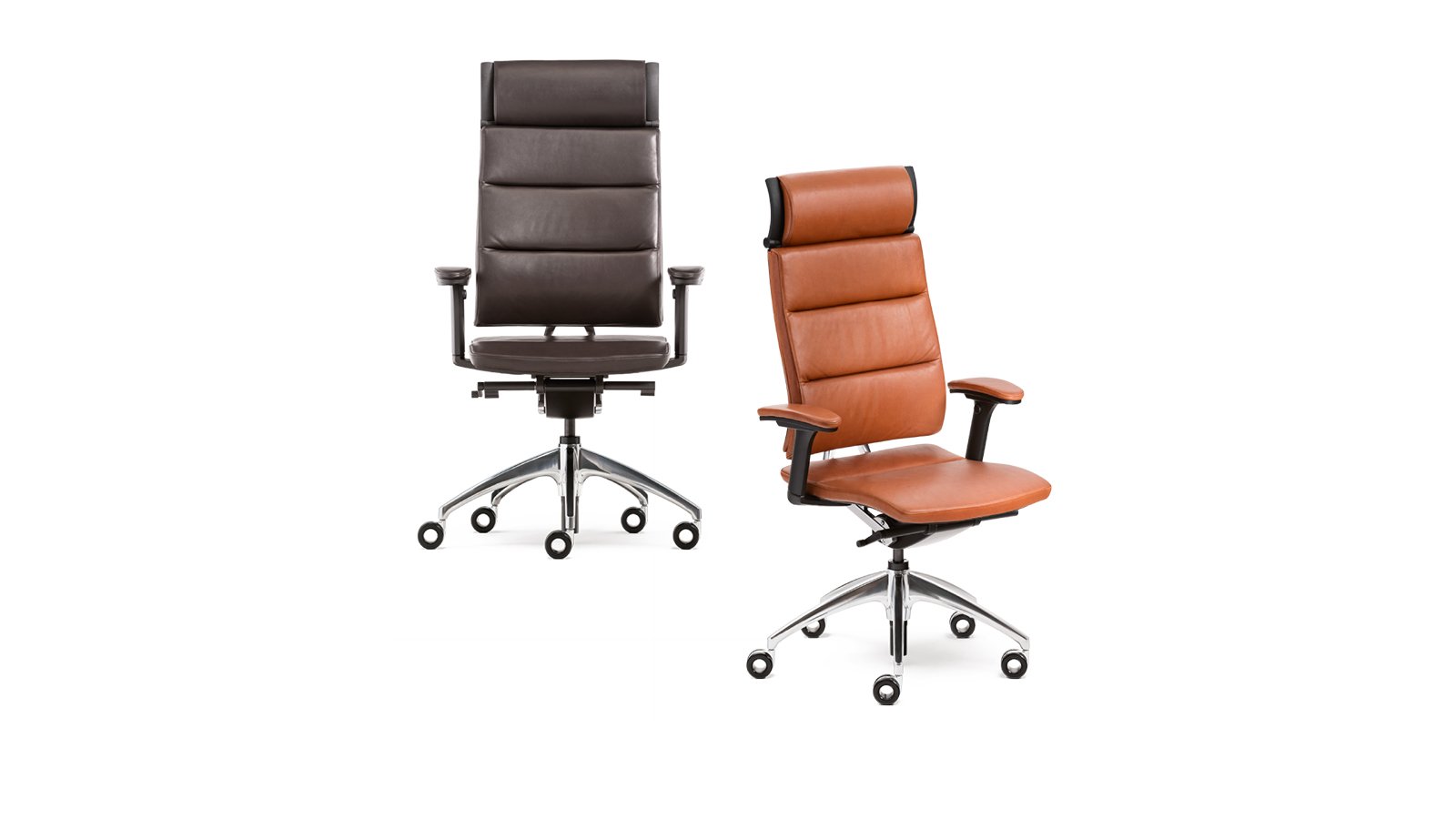
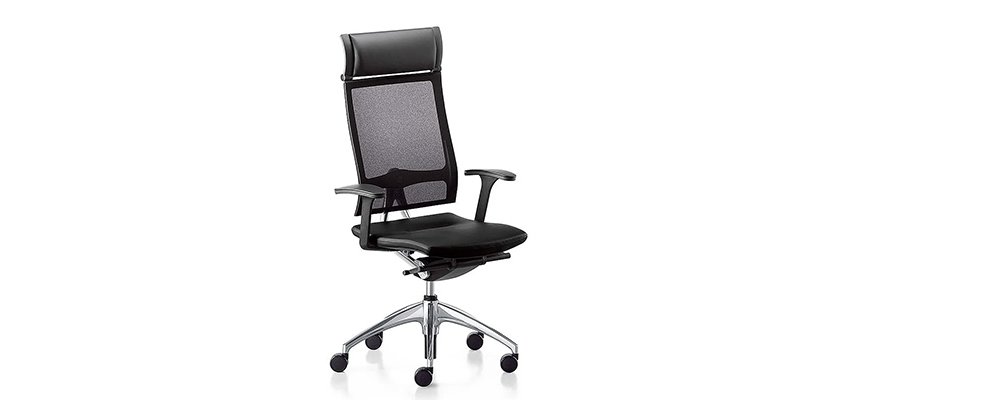
Twenty-six years on, the specification still reads like a current one: height-adjustable lumbar support, 3D armrests, a seat that slides through 60 mm, and a headrest on the high-backed version. La Mercanti supplies and configures it for offices in the United Kingdom and abroad.
Model: Open Up, Sedus Stoll AG — design Mathias Seiler, 2000
Versions: up-100 low backrest · up-103 high backrest with headrest · open up modern classic · conference chair · cantilever chair, stackable up to 5 · counter version
Mechanism: Similar mechanism with tension control, lockable in 5 positions; optional 4° forward seat tilt; dorsokinetic backrest; backrest inclination approx. 35°, recline up to 45°
Adjustment: height-adjustable lumbar support · headrest adjustable for height and angle, in leather or imitation leather · sliding seat with 60 mm (2.4 in) travel · seat with 30 mm (1.2 in) extra depth · armrests omitted, standard polyamide, or 3D adjustable for height, depth and rotation with soft-touch, gel or leather pads
Upholstery: membrane or padded backrest, also slim padding or quilted leather; modern classic in aniline-tanned, grained and unembossed leather; fabrics certified to OEKO-TEX Standard 100
Structure: five-star die-cast aluminium base, powder-coated black or light aluminium, or polished; steel frames powder-coated or chromed; twin castors Ø 65 mm (2.6 in), load-dependent braking, type H or type W; steel, plastic or felt glides; gas lift with mechanical depth-springing, EN 16955 class 4
Load and weight: up to 120 kg (265 lb) · 21.06 kg (46 lb) for up-103 excluding packaging
Materials: metals 59.3% (aluminium 33.25%, steel 25.90%), plastics 28.1%, wood 6.9%, fibreglass 4.0% · recycled content 46.39% · recyclability 99%
Durability: 10-year guaranteed repairability · 5-year guarantee under Sedus warranty terms · covers not glued into place
Production: Sedus Stoll AG, Dogern, Germany, using 100% green electricity; manufactured in accordance with ISO 9001, ISO 14001, ISO 50001 and ISO 45001
Certification: TÜV Rheinland GS to DIN EN 1335-1 and DIN EN 1335-2 · TÜV Rheinland Ergonomics Approved · Quality Office · GREENGUARD (UL 2818) for up-100 and up-103 · life cycle assessment to DIN EN 15804 · REACH compliant

Tell us which finishes you'd like to assess
It lets the backrest follow the body when you turn or lean to one side, instead of keeping the spine in a single fixed plane. In practice, when you reach for a phone on your left the backrest goes with you and comes back with you. Sedus first used the technology on the Paris chair in 1987, which is why on Open Up it feels resolved rather than experimental: it has had a long time to be refined.
Four that matter to a specifier. TÜV Rheinland GS covers safety and is tested against DIN EN 1335-1 and 1335-2, the European standard for office work chairs; TÜV Rheinland Ergonomics Approved covers ergonomics; Quality Office is the German mark for office furniture; and GREENGUARD under UL 2818 addresses chemical emissions indoors. La Mercanti supplies the manufacturer's current certificates with the quotation.
Yes, and this is where a shared office saves money. The seat slides through 60 mm of depth, so a tall user gains thigh support and a shorter one keeps the knees free; a seat with 30 mm extra depth is available for taller users. Add the height-adjustable lumbar support and one chair specification serves a team of different builds rather than one person.
Because the leather is not corrected. Aniline tanning leaves the grain as it came, so every hide carries its own marks and takes colour differently — two chairs delivered on the same day will not be twins. The version is hand-finished as well: wider armrests, castors with a visible running ring, and the signature of the Sedus employee who built it. Underneath, the mechanics are identical to the standard version.
At Dogern in southern Germany, in the Sedus plant, using electricity that is 100% from renewable sources. Two thirds of the steel, aluminium and wood used by the company are bought in Germany and almost all the rest in Europe, with deliveries from outside Europe below 3%. For a buyer, short supply chains are the reason spare parts and repairs stay realistic over a ten-year horizon.
On a photograph, two executive chairs are indistinguishable. Five checks that separate a chair built for fifteen years from one built for three.
A backrest bolted rigidly to the seat plate moves in one plane only. One that is suspended, as on a dorsokinetic design, follows rotation. Sit down and turn to reach something behind you: the difference appears in two seconds.
A warranty covers faults; guaranteed repairability covers time. Ten years of guaranteed spare parts means a worn gas lift or a torn cover is a service call rather than a replacement purchase.
Glued upholstery cannot be separated at the end of life and often cannot be replaced either. Covers that are fixed mechanically can be changed when a fabric wears or when the office changes colour.
Comfortable and ergonomic are opinions. DIN EN 1335 is a test. Ask which standard the chair was tested against and by whom, and the conversation moves from marketing to evidence.
Every chair feels good for two minutes. La Mercanti arranges longer trials with the actual upholstery under consideration, because the fabric decides as much as the frame.