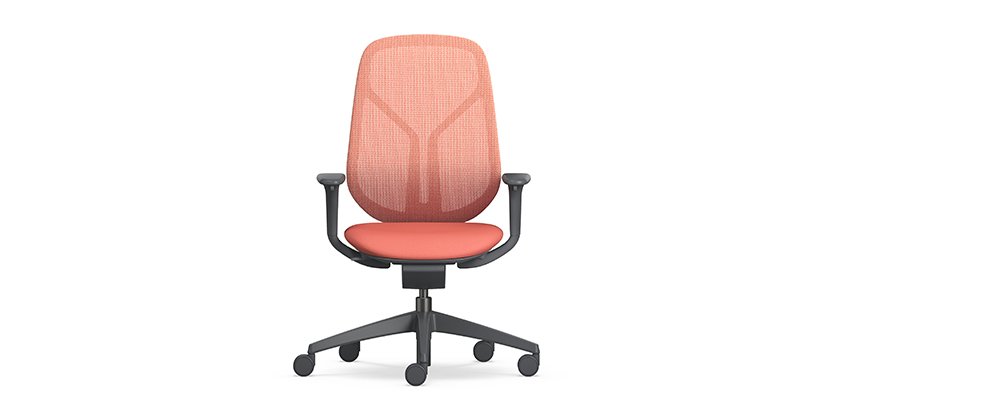
Modular task office chair se:kit by Sedus with grey membrane backrest in an open-plan office

se:kit by Sedus: one modular office chair, three ways to specify it by hours in the seat

Sedus
Task chair
se:kit Most chosen configuration Task chair
£ 1,872

Let's discuss your project

Trade terms for professionals and design studios

The se:kit brochure answers the question every fit-out asks and few chairs can: how much chair does this desk need? Sedus lays out three sample builds on a single page. «Light & flexible» is for seats used under four hours by changing people: Kinetic Swing mechanism, standard seat, 63 cm (24¾ in) membrane backrest, 2D design armrests. «Comfortable & versatile» covers four to eight hours at desk-sharing workstations: Similar mechanism with weight adjustment, comfort seat, fully upholstered backrest with lumbar support, 3D armrests. «Individual & representative» is the assigned seat used beyond eight hours: Similar with individual weight adjustment, height-adjustable membrane, 4D armrests and neck support. Same chair, three specifications, three price points.

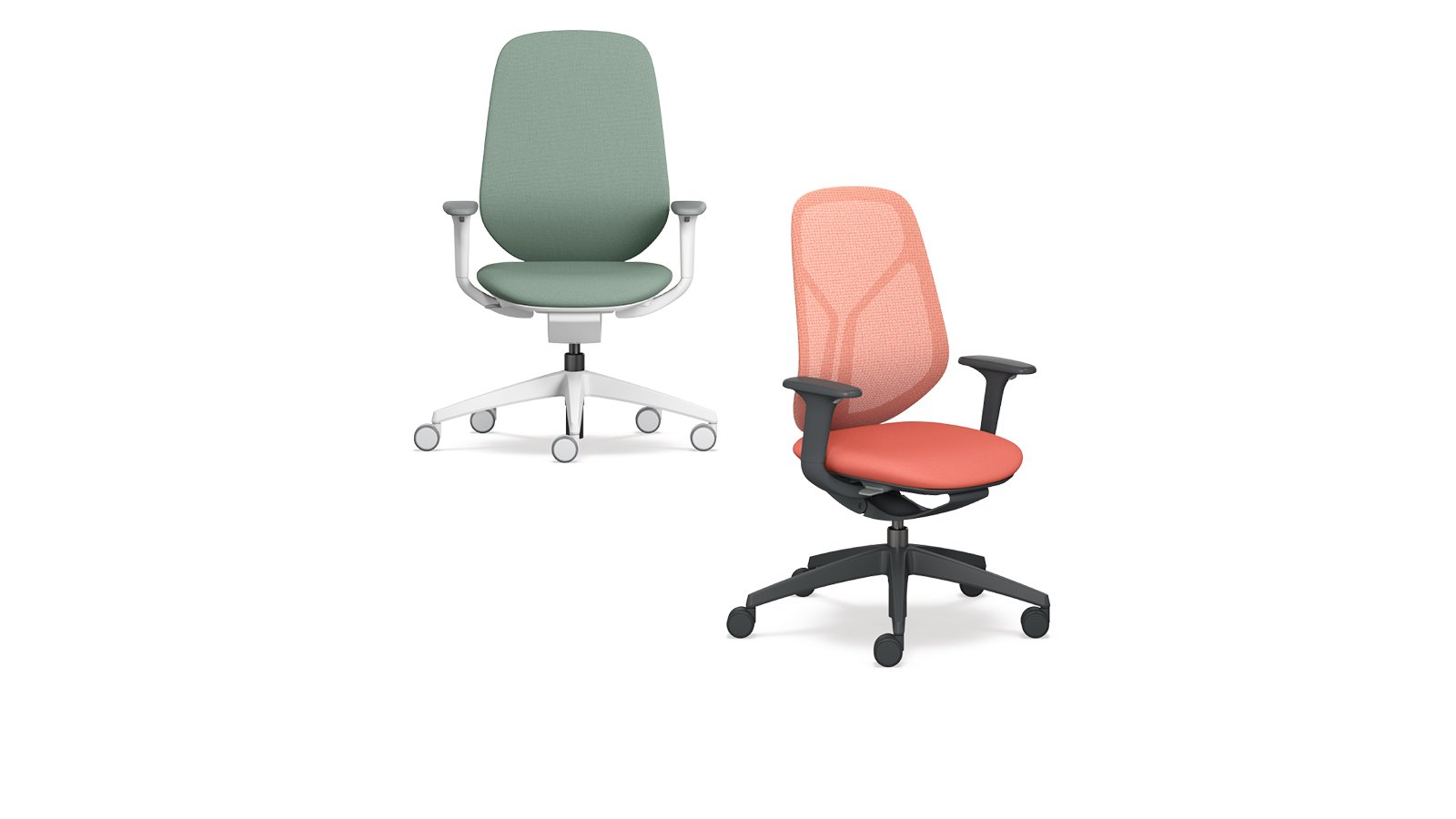
Falk Blümler of the Sedus Design Team built the task office chair as six groups of parts that clip together, most of them without tools. The mesh backrest comes in six colours and three heights; the upholstered one carries 45 mm (1¾ in) of foam and the whole Sedus fabric collection. Seats are five-zone, standard or comfort, fixed or sliding with auto return; bases are polyamide or die-cast aluminium.

The family spreads across the building: conference swivel chairs on a 4-star base for meeting rooms, four-leg visitor chairs that stack five high, cantilevers, a counter version with footring for high desks and the se:kit 24 for shift work. La Mercanti writes the hours per seat on the plan before a single code goes on the order.

Technical information based on data declared by the manufacturer.
  • Collection: se:kit, Sedus Stoll AG — swivel chair in modular design
  • Design: Falk Blümler, Sedus Design Team
  • Swivel chairs with membrane back: sn-121 medium 63 cm (24¾ in), sn-122 height-adjustable 59-66 cm (23¼-26 in) with 70 mm (2¾ in) travel, sn-123 high 73 cm (28¾ in); breathable, moisture-permeable, crease-resistant 3D membrane in six colours (anthracite, sage, melon, beige, light grey, black); polyamide frame in the model colour
  • Swivel chairs with upholstered back: sn-101 medium, sn-102 height-adjustable, sn-103 high; 45 mm (1¾ in) padding in Sedus fabrics or leathers, Harlequin back cover in the model colour; optional lumbar support adjustable in height with adaptive depth
  • 24-hour version: sn-124 with height-adjustable upholstered back, Similar mechanism with automatic weight adjustment, aluminium base only, Phoenix, Pure, Umber or leather covers; users up to 150 kg (331 lb)
  • Counter version: gas spring with footring Ø 500 mm (19⅝ in) adjustable 300-500 mm (11¾-19¾ in), 19 mm (¾ in) brushed aluminium rest surface, seat height 630-880 mm (24¾-34⅝ in) or 645-895 mm (25⅜-35¼ in) with Kinetic Swing, aluminium base, permanently braked soft castors
  • Conference swivel chairs: sn-201/sn-203 upholstered and sn-271/sn-273 membrane, medium or high back; Kinetic Swing with 18° opening angle and 5° forward tilt; 2D design armrests; 4-star die-cast aluminium base with plastic or felt glides or castors, 5-star optional; users up to 130 kg (287 lb)
  • Visitor and meeting chairs: sn-220 four-leg chair in Ø 22 mm (⅞ in) steel tube, stackable five high with trolley, stainless steel glides as standard, plastic or felt optional, Ø 37 mm (1½ in) castors optional; sn-230 cantilever; frames black, light grey or chrome; membrane or slim upholstered back; seat 450 × 435 mm (17¾ × 17⅛ in) with 50 mm (2 in) padding; optional fixed polyamide armrests 170 × 35 mm (6¾ × 1⅜ in); users up to 130 kg (287 lb)
  • Partially disassembled models: sn-801 (upholstered medium) and sn-821 (membrane medium) in compact cardboard packaging, one assembly step
  • Mechanisms: Kinetic Swing with no user settings, automatic seat tilt up to 5°, lockable upright, 24° opening angle, users up to 130 kg (287 lb); Similar with automatic weight adjustment, opening angle limited to 0°, 8°, 16° or 26°, optional ComfortSwitch with firm or soft mode, users up to 150 kg (331 lb); Similar with individual weight adjustment, three locking positions, 26° opening, optional seat tilt
  • Seat: anatomical five-zone PUR foam seat, standard approx. 55 mm (2⅛ in) or comfort approx. 60 mm (2⅜ in); sliding seat with auto return, 60 mm (2⅜ in) travel on Kinetic Swing (depth 425-485 mm / 16¾-19⅛ in) or 70 mm (2¾ in) on Similar (410-480 mm / 16⅛-18⅞ in)
  • Armrests: 2D polyamide as standard; height-adjustable polyamide; 2D design with PUR pads; 3D PUR with tool-free width adjustment; 4D softtouch with pads that swivel 24° inwards and 12° outwards, or rotate 360° in the Type A build; or none
  • Seat height adjustment: continuously adjustable gas spring; Sedo-Lift III pneumatic rack, virtually wear-free, guaranteed for 30 years
  • Bases and castors: 5-star polyamide in black or light grey; 5-star die-cast aluminium in black, light grey or polished; load-dependent braked twin castors Ø 65 mm (2½ in), hard for soft floors or soft for hard floors, with or without protection ring
  • Accessories: neck support adjustable in height (90 mm / 3½ in) and tilt (25°) in black or light grey synthetic leather or anthracite membrane; coat hanger rated for 15 kg (33 lb); neck support and hanger set; model prepared for later fitting of accessories
  • Type A compliance: DIN EN 1335-1:2023 Type A with Similar mechanism, gas spring, aluminium base, 360° rotating 4D armrests and standard or comfort sliding seat
  • Covers: Sedus collections in five groups — polyester (Atlantic, Era, Nova, One, Phoenix), recycled polyester (Cura, Cyber), wool (Fame, Umber, Remix, Steelcut Trio 3), Tempt, Step in Trevira CS, synthetic leather, SILVERTEX and Scala leather; membrane 100 % polyester at 660 g/m² (19.5 oz/yd²), 50,000 Martindale cycles, EN 1021 parts 1 and 2, UNI Class 1.IM; flame-retardant version with One, Step, Umber and anthracite membrane
  • User weight: up to 150 kg (331 lb); 130 kg (287 lb) with Kinetic Swing; 180 kg (397 lb) on models sn-101 and sn-121
  • Weight and materials: 15.49 kg (34.2 lb) for the sn-122 swivel chair with polished aluminium base (metals 49.4 %, plastics 41.7 %, fibreglass 8.9 %, wood 0 %), recycled content 49.57 %, recyclability 99 %; 8.52 kg (18.8 lb) for the sn-230 cantilever (steel 48.3 %), recycled content 40.45 %
  • Production: covers not glued, CFC-free foams, chrome III plating, OEKO-TEX Standard 100 fabrics, 100 % green electricity, ISO 9001, 14001, 50001 and 45001; life cycle assessment to DIN EN 15804; REACH compliant
  • Standards and certificates: TÜV Rheinland LGA GS mark for the swivel chairs (DIN EN 1335-1/-2, DIN 4573, AfPS GS 2019:01) valid to 6 February 2029 and for conference and visitor chairs (DIN EN 16139, DIN 4573) to 14 February 2029; TÜV Ergonomics approved; TÜV tested for harmful substances to 21 December 2030; GREENGUARD UL 2818 to 19 October 2026; Quality Office seal to 10 March 2027; AGR seal since 16 June 2023
  • Awards: iF DESIGN AWARD 2023 (Discipline Product) and Red Dot Design Award 2023 Winner
  • Guarantee: 5 years, 30 years on the Sedo-Lift III, as declared by Sedus; repairability guaranteed for 10 years
  • Manufacturer: Sedus Stoll AG, Dogern (Germany); Made in Germany
La Mercanti Srl — trusted supplier for design and contract projects since 1997.
San Benedetto del Tronto (AP), Italy · +39 0735 753833 · info@lamercanti.com
Supply, quotations, specifications and project support across the UK and worldwide.

Tell us which finishes you'd like to assess

£ 170

Fully redeemable against your first order

FAQ

Which se:kit mechanism suits a desk nobody owns?

The Kinetic Swing. Sedus describes it as a kinematic concept without a mechanism, made for non-territorial use: the seat tilts automatically by up to 5°, the backrest opens to 24° and can be locked upright, and there is nothing to set. It is rated for users up to 130 kg (287 lb). The Similar mechanisms, by contrast, read the user's weight or let the user dial it in.

How many armrest designs does the se:kit offer?

Six, or none. The height-adjustable range runs from 1D through 2D, 2D design with PUR pads, 3D with tool-free width adjustment, to 4D softtouch with pads that swivel 24° inwards and 12° outwards; a 360° rotating 4D version comes with the Type A build. Code 3000 removes the armrests altogether, and the pads are always black except on the 2D design version, which is basalt grey on the light grey model.

Four legs or cantilever: which se:kit visitor chair stacks and which one springs?

Both share the PA6 GF shell, the 450 × 435 mm (17¾ × 17⅛ in) seat with 50 mm (2 in) padding and the choice of membrane or slim upholstery. The four-leg sn-220 stacks five high and rides a trolley, with stainless steel glides as standard and castors on request; the sn-230 cantilever springs on its Ø 22 mm (⅞ in) steel tube and stacks only on a flat surface for storage. Both are built for the same user weight.

What does the GREENGUARD certificate for the se:kit cover?

Chemical emissions. UL tested representative samples of the se:kit to UL 2818 and ANSI/BIFMA M7.1 and X7.1, modelling the chair in a seating environment ventilated at 24.8 m³/h (876 cu ft/h). The certificate, number 295542-410, runs from 2 February 2023 to 19 October 2026 and is the one to file with an indoor-air submittal.

What share of a se:kit comes from recycled material?

The environmental product information for the sn-122, the membrane chair on a polished aluminium base, declares 7.68 kg of recycled material out of 15.49 kg (34.2 lb), or 49.57 %; Sedus quotes up to 60 % depending on the build. Recyclability is 99 %, with 85.29 % recovered as material and the rest as energy.

How to set up a se:kit task chair on its first day

A se:kit arrives with the mechanism the buyer chose, but the seat still has to meet the person. Five steps from the Sedus instructions for use, before the first full day.

Sit on the whole se:kit seat
The anatomical seat is shaped to be fully occupied; only then does the backrest support the back. If the chair has a sliding seat, pull the lever, slide the cushion to the right depth and let it lock.
Set the seat height by the elbow
Pull the button upwards and let the seat sink under your weight, or stand and let it rise. Stop when the forearms rest flat on the desk at about 90° at the elbow and the knees also sit at about 90°.
Let the backrest work
On a Similar mechanism with weight adjustment, choose the opening angle with the knob (0°, 8°, 16° or 26°) and, if fitted, flick the ComfortSwitch to firm or soft. On the individual version, turn the quick adjustment forwards for more counter-pressure.
Place the lumbar and the armrests
Take the load off the backrest, move the lumbar support with both hands to the right height, then press the armrest button and raise the pads until the shoulders relax.
Check the label before the day starts
The maximum user weight for that se:kit is printed on the product label, fixed to the chair: 130 kg (287 lb) on Kinetic Swing, 150 kg (331 lb) on Similar. Remove the coloured transport protection from the castors before the chair rolls.