Technical information based on data declared by the manufacturer.
Collection: DuoChair, listed by ICF (price list 05/2026) as DuoChair Edge in the DuoMesh, DuoSoft and DuoPad series
Manufacturer: ICF Office
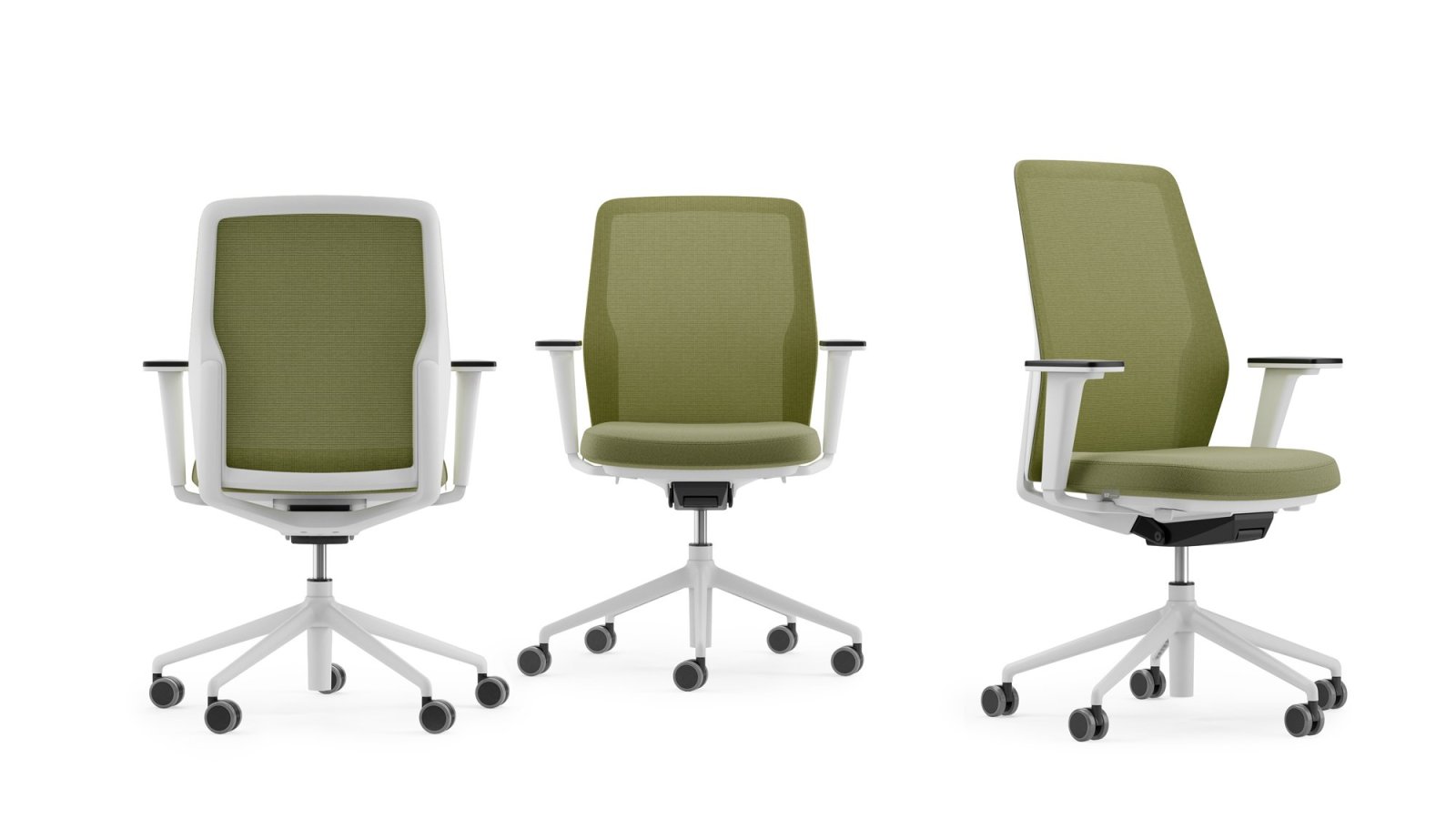
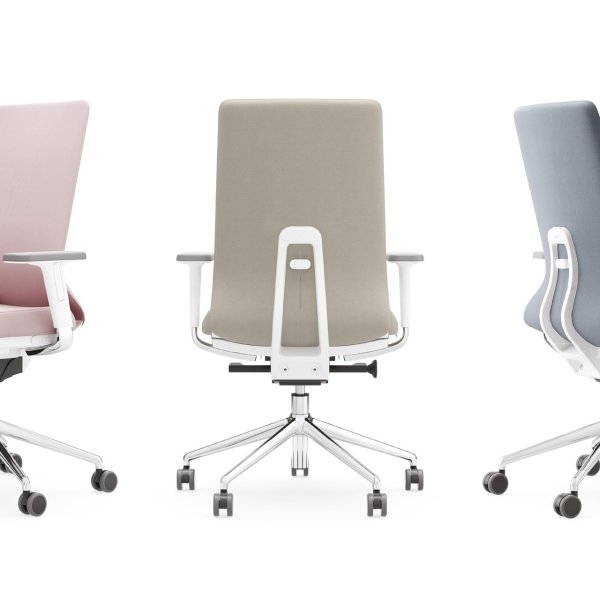
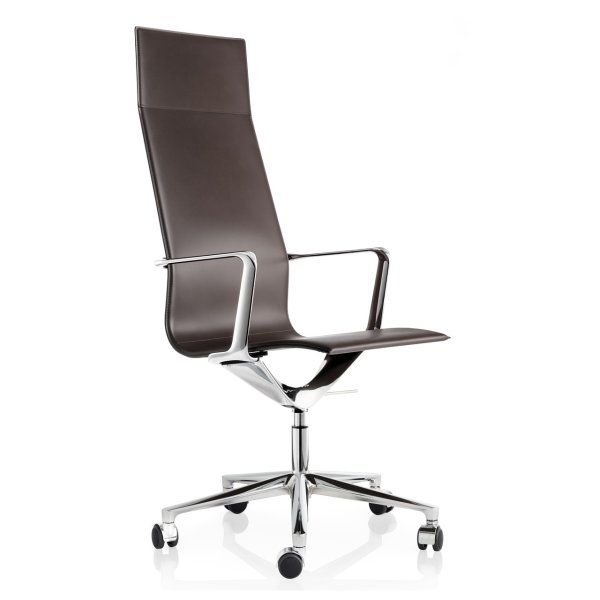
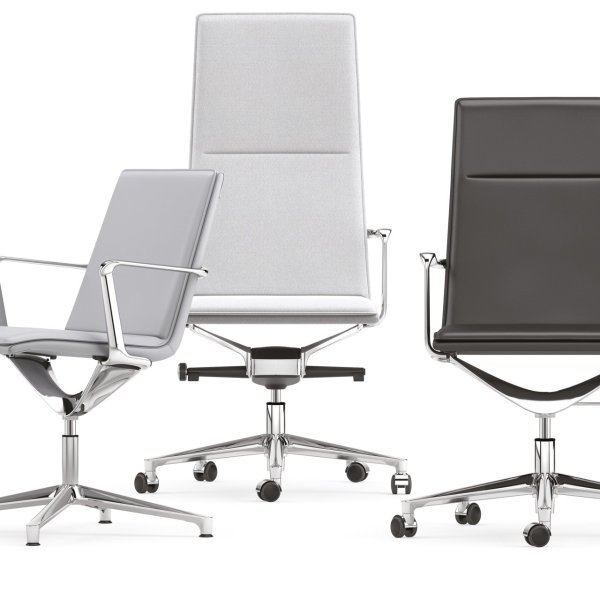
Three versions: XMesh (load-bearing mesh backrest), Soft (upholstered backrest), Pad (layered backrest, knitted polyester over a soft foam core)
Codes: DCE.410, 413 and 414 with DCE.510, 513 and 514 for XMesh; DCE.440, 443 and 444 with DCE.540, 543 and 544 for Soft; DCE.460, 463 and 464 with DCE.560, 563 and 564 for Pad. Within each set: without armrests, with 3D adjustable PPE armrests, with 3D adjustable aluminium armrests; the 4 series has the low backrest, the 5 series the high one
Overall height: 96-109 cm (37.8-42.9 in) (4 series) and 103-116 cm (40.6-45.7 in) (5 series); 97-110 and 104-117 cm (38.2-43.3 and 40.9-46.1 in) on the Pad versions
Width: 50 cm (19.7 in) without armrests (52 cm (20.5 in) on the Pad), 59 to 72 cm (23.2 to 28.3 in) with the adjustable armrests
Seat height: 47–60 cm (18.5–23.6 in), 13 cm (5.1 in) travel with a lever on the right-hand side; 42–55 cm (16.5–21.7 in) seat gas lift on request
Seat depth: 42-49 cm (16.5-19.3 in), lever under the seat on the left
Backrest adjustment: height-adjustable in seven positions, 6.5 cm (2.6 in) travel, operated while seated
Mechanism: synchronised tilt with automatic weight adjustment; tension set by a knob; lockable upright and in three intermediate positions via a side lever; forward tilt available on request and disengageable; polyamide housing
Load-bearing structure: rear U-shaped die-cast aluminium, in polished, chromed or painted finish
Seat: cold-foamed polyurethane 5.5 cm (2.2 in) thick with a structural polypropylene insert, class 1 IM
Armrests: 3D adjustable in height, depth and width, 4D on request; soft black TPU pad; vertical support in die-cast aluminium
Base: five-star base in die-cast aluminium, polished, chromed or painted 070 soft grey and 111 warm black, or in nylon 070 soft grey or 111 warm black; plastic shell in the same two colours
Castors: 6 cm (2.4 in) diameter with a soft central element and an automatic safety brake to EN 12529:2001; soft tread as standard for hard floors, hard tread on request
Coverings: seat in categories A (Bravo), B (Atlantic, Mini, Tonal), C (Cura, Mini Melange, Sealife, Sotega, Step, Step Melange) and F (Breeze Fusion, Grain), or E leather; XMesh back in category X (elastic mesh, Rhythm, Tale, String); DuoSoft with the back in the same categories as the seat; DuoPad in B, C, F, E leather and H Premium Leather; the recycled polyester is GRS certified and compliant with OEKO-TEX Standard 100 and EU Ecolabel
Leather: category E full-grain cowhide, 1.2–1.4 mm (0.05–0.06 in) thick; category H Premium Leather, full-grain cowhide 1.2–1.3 mm (0.05 in) thick, leather of Italian origin to UNI EN 16484 and Der Blaue Engel RAL UZ 148; flame-retardant leather on request
ICF fabrics: in the categories available for the model. Mini and Mini Melange in Trevira CS: UNI 9175 class 1 IM, DIN 4102 B1, IMO Part 8; Step and Step Melange in Trevira CS with IMO MSC 307(88) and MED certificate; Bravo, Cura, Sealife, Tale and Tonal in post-consumer recycled polyester with Global Recycled Standard and OEKO-TEX Standard 100, Sealife with Seaqual yarn; Atlantic in polyester with EU Ecolabel; Breeze Fusion 88% wool and 12% polyamide; Sotega 73% PVC on cotton; Martindale abrasion from 50,000–110,000 cycles
Care and maintenance: fabric with a vacuum cleaner and upholstery nozzle, stains with a dry cleaning agent, never rotating brushes or water; mesh with a soft brush or sponge and water with detergent; leather and hide kept away from direct sunlight and heat sources, cleaned two or three times a year with Leather Soft Cleaner and protected with Leather Protection Cream; aluminium with a soft cloth, water and neutral soap, never solvents or abrasives; plastic parts with soap and water
Spare parts and accessories: set of five castors, pairs of 3D adjustable armrests in black or grey PPE or in painted, polished or chromed aluminium
Weight: 15.8 kg (35 lb) on model DCE.513 (technical sheet); 13–18 kg (29–40 lb) depending on model and armrests (price list)
End of life: around 93% recyclable when components are separated completely and correctly; composition 62% plastic, 14% metal, 13% aluminium, 4% polyurethane, 7% miscellaneous (figures refer to model DCE.513); every component can be dismantled for repair, reuse and recycling
Certifications: EN 1335:2020 level A and BS EN 1335-2:2018; VOC Emission Test Report compliant with DE-UZ 117, RAL GZ 430, EU Ecolabel and FEMB, plus CAM, LEED v4 and v4.1 Beta and ANSI Bifma sections 7.6.1, 7.6.2 and 7.6.3 with Mini and Mini Melange coverings; fire reaction class 1 IM with Atlantic, Rhythm, Mini and Mini Melange, class 1 with mesh
Delivery: assembled in a cardboard box; unassembled on request, to be assembled by qualified personnel