Technical information based on data declared by the manufacturer.
Collection: UP — Desk Elevation System
Manufacturer: Las Mobili
Type: motorized height-adjustable operative desks and benches (sit-stand)
Producer-declared compliance: panels Class E1 low formaldehyde
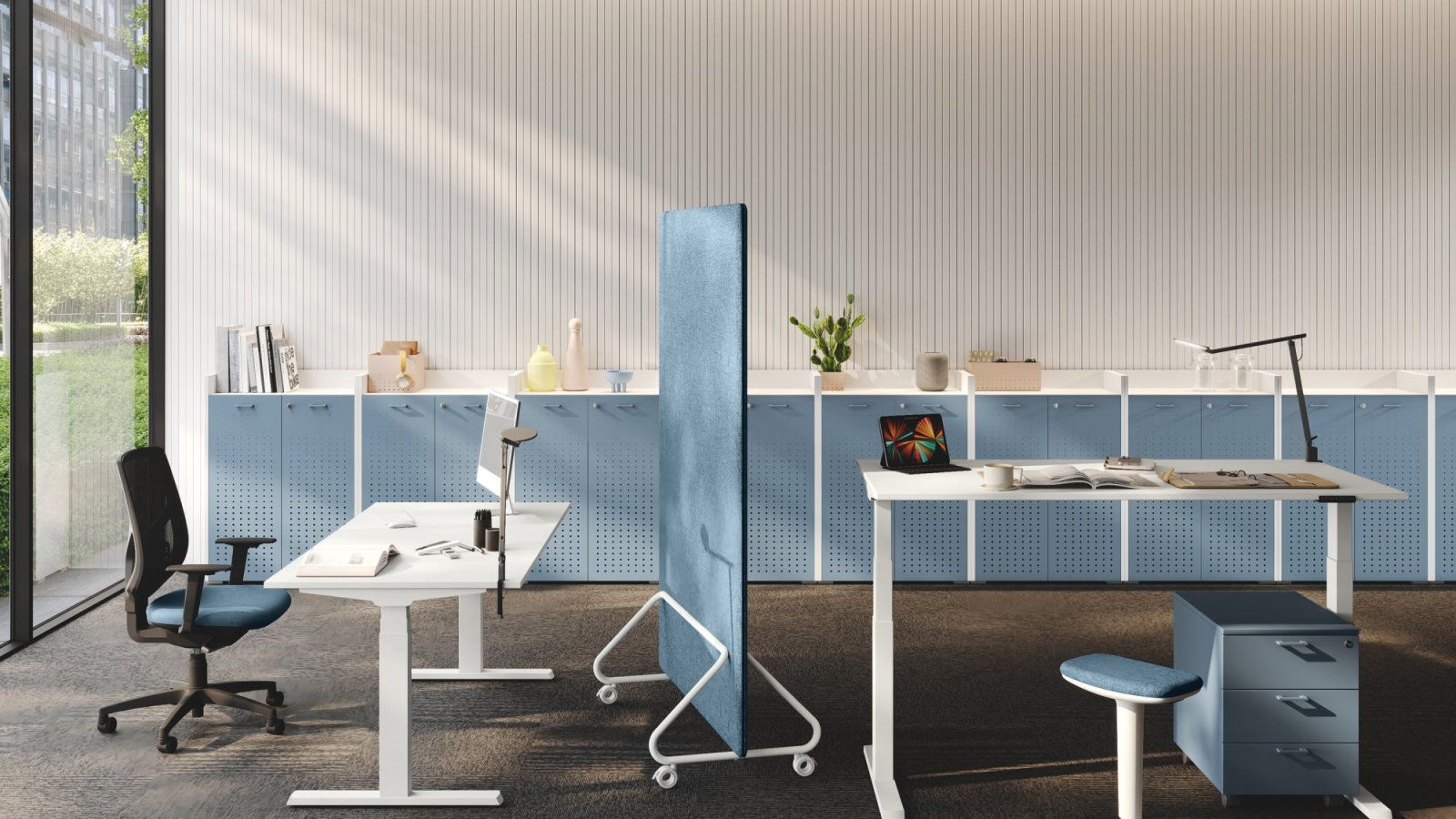
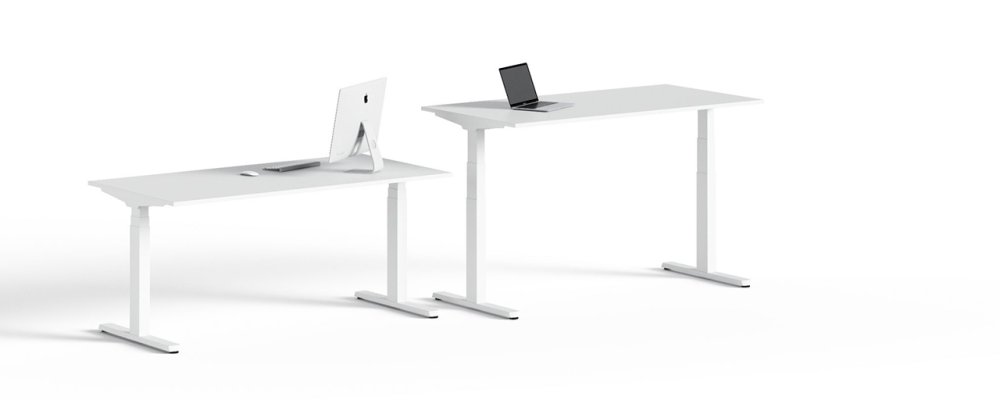
UP Basic desk — H 65-130 cm (25.6-51.2 in): desk top, two motorized T legs, central telescopic beam, electrical control unit, up/down push-button panel, EU power cable 300 cm (118.1 in)
UP Plus desk — H 65-130 cm (25.6-51.2 in): as Basic, plus COMFORT push-button panel with memory functions and anti-collision sensor system
T legs in telescopic rectangular steel tube 90 x 60 x 2 mm (3.5 x 2.4 x 0.08 in), Black or White epoxy; upright on 70 x 25 x 2 mm (2.8 x 0.98 x 0.08 in) tubular foot with levelling feet; telescopic beam in press-bent sheet 100 x 50 x 2 mm (3.9 x 2 x 0.08 in), black
UP bench Basic / Plus — H 65-130 cm (25.6-51.2 in): two desk tops on a motorized bridge structure, two telescopic central beams, two electrical control units, two panels (COMFORT with memory + two anti-collision systems on Plus), two EU cables 300 cm (118.1 in) — the two sides adjust independently
UP Lite desk — H 72.5-121.5 cm (28.5-47.8 in): two-stage T legs in telescopic tubes 75 x 45 x 2 / 70 x 40 x 2 mm (3 x 1.8 x 0.08 / 2.8 x 1.6 x 0.08 in); shaped sheet-metal foot 650 x 80 x 3 mm (25.6 x 3.1 x 0.12 in); two telescopic support beams in 1.8 mm (0.07 in) press-bent sheet; control unit, anti-collision system, MEMORY up/down panel, EU cable 300 cm (118.1 in)
UP Lite Pro desk — H 60.5-125.5 cm (23.8-49.4 in): three-stage T legs in telescopic tubes 70 x 70 / 65 x 65 / 60 x 60 x 2 mm (2.8 x 2.8 / 2.6 x 2.6 / 2.4 x 2.4 x 0.08 in); shaped foot 680 x 90 x 3 mm (26.8 x 3.5 x 0.12 in); beams in 40 x 20 x 2 mm (1.6 x 0.79 x 0.08 in) tube; MEMORY up/down panel, anti-collision system, cable tray in press-formed sheet 700 x 120 x 0.8 mm (27.6 x 4.7 x 0.03 in) hooked under the central beams, EU cable 300 cm (118.1 in)
Worktops: 25 mm (0.98 in) melamine-faced particleboard (Class E1 declared), 2 mm (0.08 in) ABS edge in the same colour
Finishes: Classic Walnut 07, Niagara Oak 31, Grey 38, Stone Grey 44, Black 59, Dark Poplar 63, Light Poplar 64, White 68
Structure colours: Black, White
Accessories:
Front screens for bench W 160-180 cm (63-70.9 in): 25 mm (0.98 in) panel upholstered in Gabriel fabrics (Crepe, Time, One, Stretch, Melange, Trevi, Lana, Nautilus, Sealife, Mixage, Supreme, Grain), PVC accessory track on top, mounted above the bridge legs with supplied brackets
Modesty panels 18 mm (0.71 in) (Class E1 declared) in Black 59 or White 68 with matching metal brackets
Cable trays in 1 mm (0.04 in) sheet metal, Black or White, fixed under the top with clips that allow inspection
Packaging: components disassembled in triple cardboard with perimeter protection strips and shock-resistant corner protectors
Warranty declared by the manufacturer:
5 years on the furniture
2 years on sockets, cables, control panels and motor drives
Spare parts available for 5 years
Manufacturer certifications: UNI EN ISO 9001:2015 (SQ174159-ICILA), UNI EN ISO 14001:2015 (ICILA-SGA-17258), UNI ISO 45001:2018 (IMQ-SHS-170062), SA8000:2014 (certificate no. 144), FSC® chain of custody ICILA-COC-000170 with FSC® certified products on request, COSMOB Qualitas Praemium Formaldehyde no. 45/2025 for low-formaldehyde panels; declared contribution of 6 LEED points (MR C4 recycled content, MR C2 construction waste management, MR C5 regional materials, EQ C4.5 low-emitting materials)