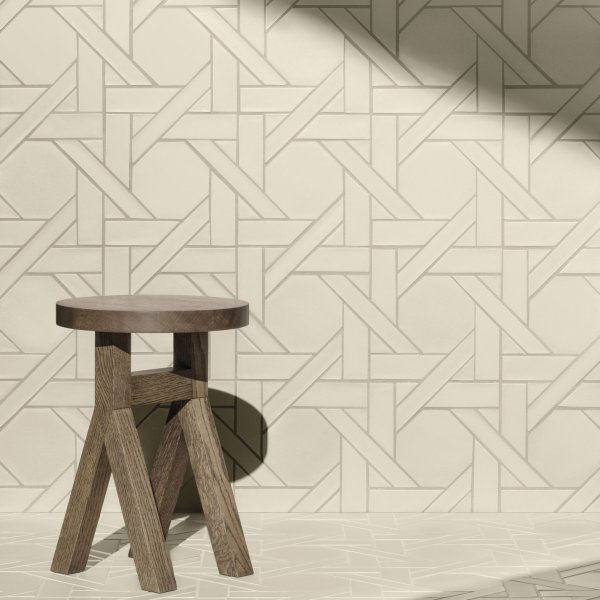
Runner band of Tex in Olive running along a corridor

Tex by Mutina — argyle leaves the sweater

Mutina

Raw Edges

Olive
Olive Available now
£ 414

What did you have in mind?

Trade terms for professionals and design studios

Britain has worn this diamond for a century - on golf courses, in club rooms, across generations of knitwear. Tex lets it leave the sweater. The London studio Raw Edges designed the collection for Mutina in 2012 around a declared idea: the rhombus tile is «a simplified enlargement of the basic knitted stitch», the symmetric rows of stitches you see when you look closely at a knit.

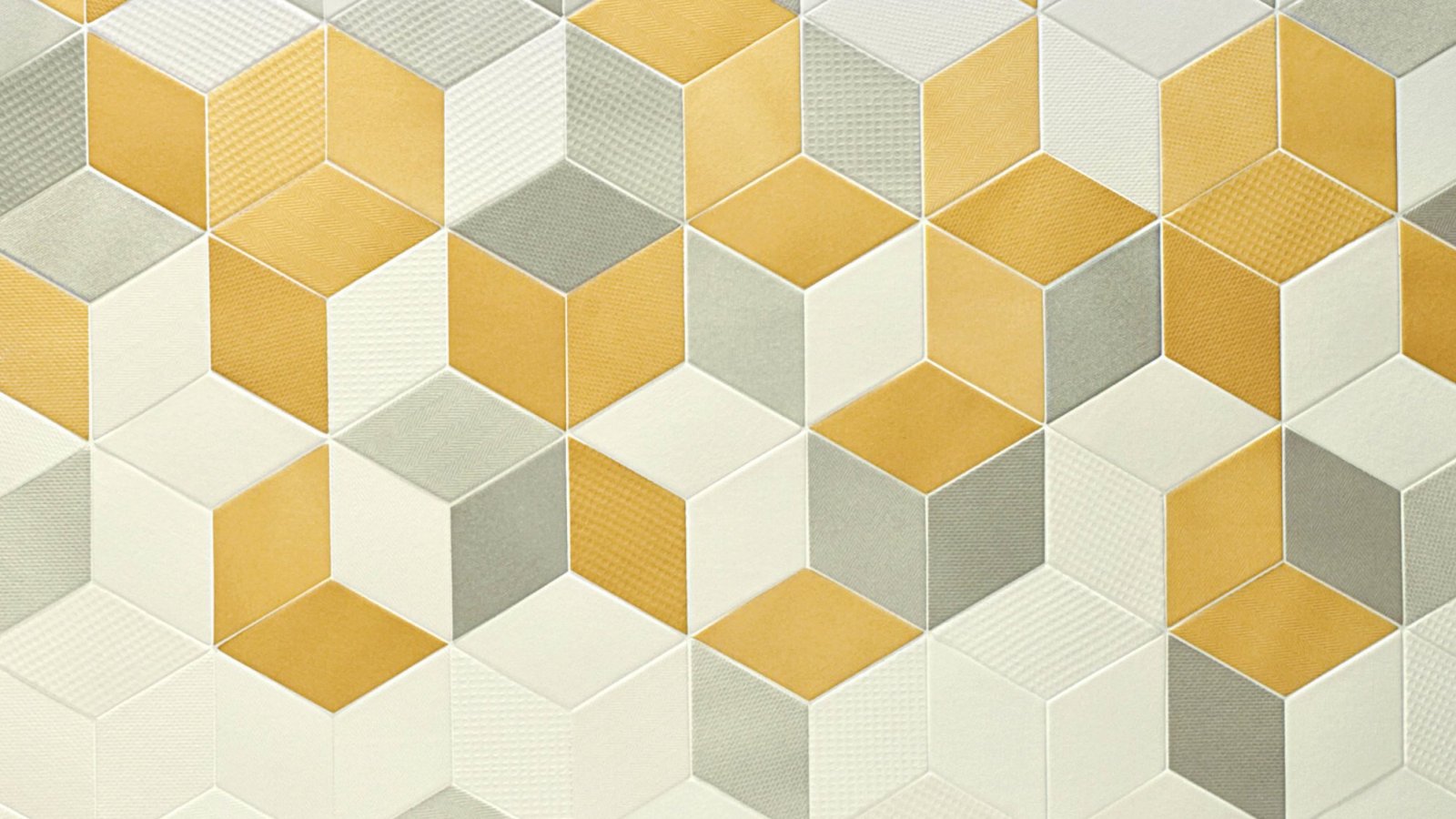
The textile logic runs deeper than the shape. Each of the eight matt colours comes in three shades and five relief textures, «re-creating the feel of the different tones of the yarn», packed randomly so the wall or floor composes itself with a knitter's irregularity. For deliberate pattern-making there are the Runners: twelve rhombi pre-set on mesh in ten designed combinations, used as a frame, a centrepiece or a linear band.

The performance is anything but woolly: 10 mm thick porcelain, 0.04% water absorption, stain class 5, frost-proof for courtyards, R10 with barefoot class C and a Robinson rating for extra-heavy, high-impact use. The Interior Innovation Award followed in 2014. For offices, member clubs and hotel washrooms, it is the rare pattern that feels inherited rather than installed.

Technical information based on data declared by the manufacturer.

Collection: Tex
Manufacturer: Mutina
Design: Raw Edges (Yael Mer, Shay Alkalay), 2012 — registered design no. 002193797-0001/0014 (28/02/2013)
Awards: Interior Innovation Award 2014
Material: glazed porcelain stoneware (UNI EN 14411 App. G, group BIa GL), matt surface, 10 mm (0.39 in) thick
Format: rhombus 11.5x20 cm (4.5x7.9 in) (4"x8") — mesh-mounted Runner 35x40.4 cm (13.8x15.9 in) (8 modules = 1.12 sqm, 10 versions) — skirting 10.5x20 cm (4.1x7.9 in)
Colours: 8 (Cream, Brown, White, Grey, Black, Blue, Olive, Yellow), each in 3 shades and 5 textile textures, randomly mixed in the box — V3 variation
Use: floor and wall, indoor and outdoor (frost-proof, ISO 10545-12)
Technical data: water absorption 0.04% (ISO 10545-3) — Mohs hardness 6 (EN 101) — stain resistance class 5 (ISO 10545-14) — R10 (DIN 51130) — DIN 51097 class C — DCOF 0.58 — pendulum BS 45 dry / 36 wet — resistant to thermal shock and chemicals — Robinson test: extra heavy and high-impact use
Installation: 2 mm (0.08 in) joints, 1 mm (0.04 in) caliber tolerance, mix tiles from several boxes
Sustainability: 24% recycled content (LEED v4.1) — VOC emissions class A+

La Mercanti Srl — trusted supplier for design and contract projects since 1997.
San Benedetto del Tronto (AP), Italy · +39 0735 753833 · info@lamercanti.com
Supply, quotations, specifications and project support across the UK and worldwide.

Tell us which finishes you'd like to assess

£ 170

Fully redeemable against your first order

FAQ

What is the design story behind Tex tiles?
Raw Edges state it plainly: the rhombus is «a simplified enlargement of the basic knitted stitch» - the symmetric rows you see inside any knit. Eight colours, each in three shades and five textures, reproduce the tones of a yarn in glazed porcelain.
Can Tex be used in showers and barefoot areas?
Yes. Unusually for a decorative collection, the sheet declares DIN 51097 class C - the top barefoot wet-area rating - alongside R10 and DCOF 0.58. Hotel washrooms, spa corridors and changing rooms are within its declared scope.
How do the Tex Runner panels work?
Each Runner is twelve rhombi pre-arranged on a 35x40.4 cm mesh, eight modules covering 1.12 square metres, in ten designed colourways. Specify them as a frame around a room, a central motif or a linear band - on walls or floors.
Is Tex robust enough for a busy workplace?
The Robinson test rates it for extra-heavy, high-impact use, surface hardness is Mohs 6 and stain resistance is class 5. It will outlast most carpets it happens to resemble - with neutral detergent as the only upkeep.
Does Tex work outside in a British climate?
It does: frost resistance is certified to ISO 10545-12 with 0.04% absorption, so courtyards, lightwells and terrace thresholds can carry the same diamond field as the interior.

From knitwear to brickwork: planning a Tex scheme

A working sequence for architects and workplace teams specifying Tex across offices, clubs and hospitality - balancing the random three-shade field against designed Runner patterns, and keeping the matt surface honest.

Approve the yarn, not the swatch
Order physical samples in two or three colours (the cost is credited in full at order confirmation) and review the three shades and five textures together - Tex is judged like a knit, by the mix rather than the single piece.
Draw the line between chance and design
Let open fields compose themselves from randomly packed boxes, and reserve the ten Runner colourways for frames, bands and focal points - the tension between the two is the scheme.
Mock up the cube before committing
The rhombus assembles in three principal orientations, including the tumbling-block illusion; dry-lay a square metre on site to choose the geometry under real light.
Grout like a seamstress
Keep 2 mm joints with wedge spacers against the 1 mm caliber tolerance, and pick a grout close to the tile tone - the field should read as fabric, not as a grid of tiles.
Hand over with the pattern book
Include the technical sheet, LEED and VOC declarations - all downloadable from the article page - in the O&M manual, and specify neutral detergent with no waxes to preserve the matt.

You May Also Like