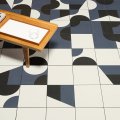
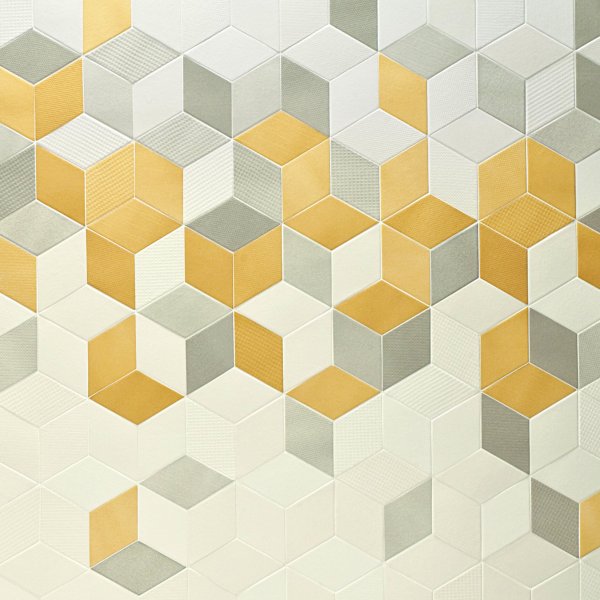
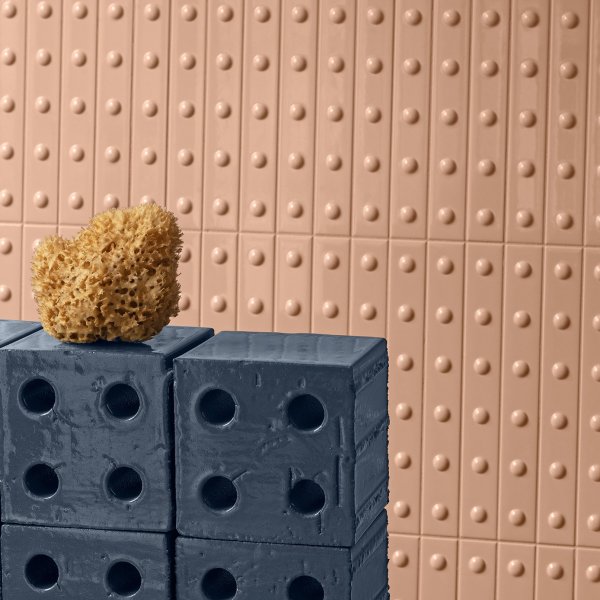
Puzzle porcelain floor by Mutina

Puzzle by Mutina — Barber & Osgerby's island geometry

Mutina

Barber Osgerby

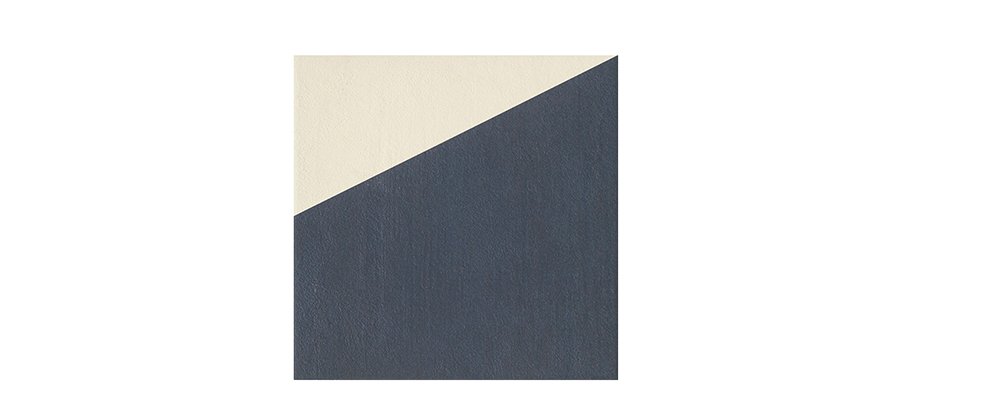
Edge Smoke
Edge Smoke Available now
£ 232

Already have something in mind?

Trade terms for professionals and design studios

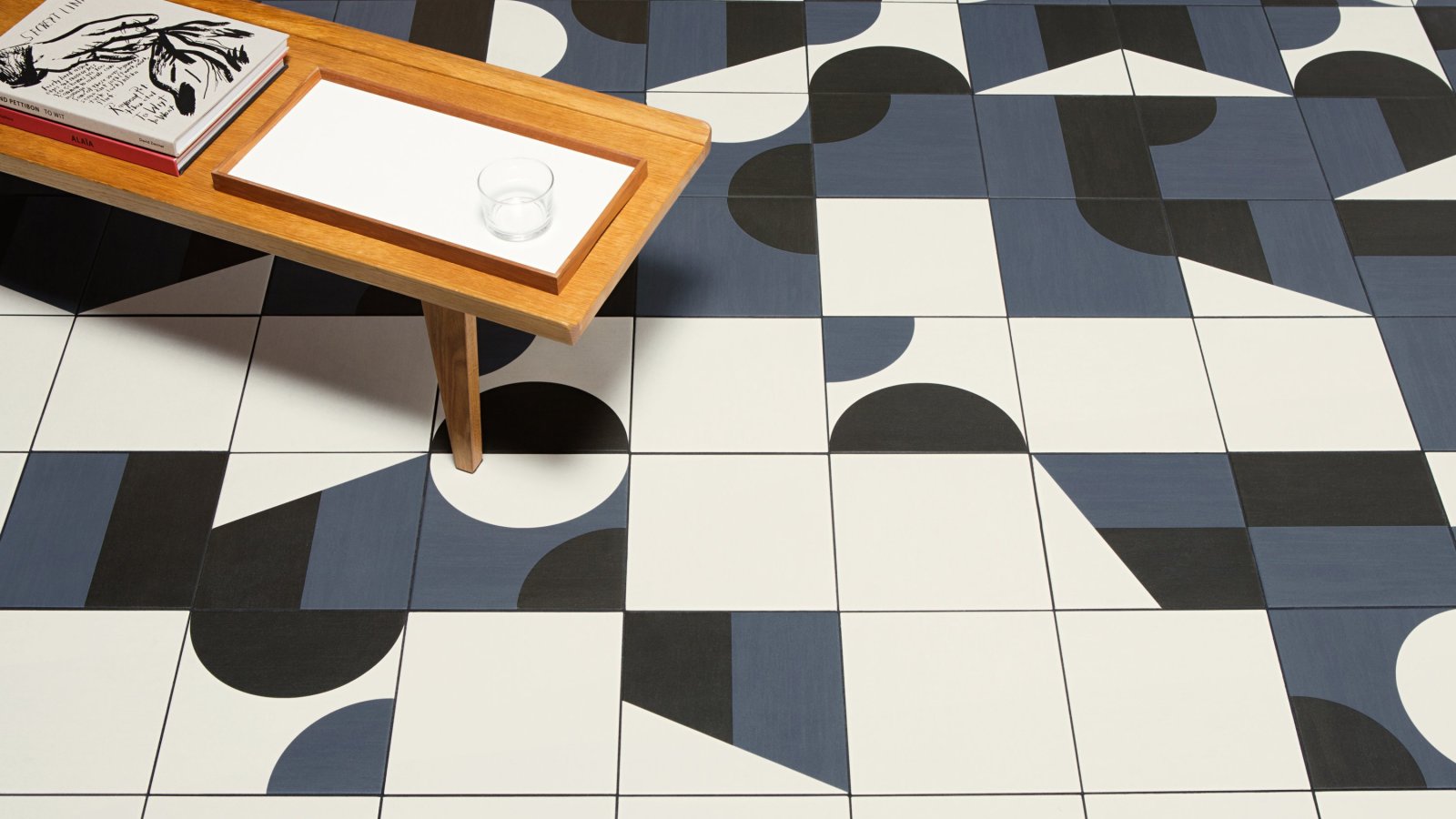
Two of the five colour families in Puzzle carry British island names: Anglesey, with its Powder, Smoke and Coal blues, and Skye, in deep greens and slate. It is a fitting signature for Edward Barber and Jay Osgerby — the London duo behind the 2012 Olympic Torch — whose first ceramic collection for Mutina turns simple geometric shapes into what they call a game with infinite outcomes: «objects emerge like maps, islands or clouds», and no two installations are ever the same.

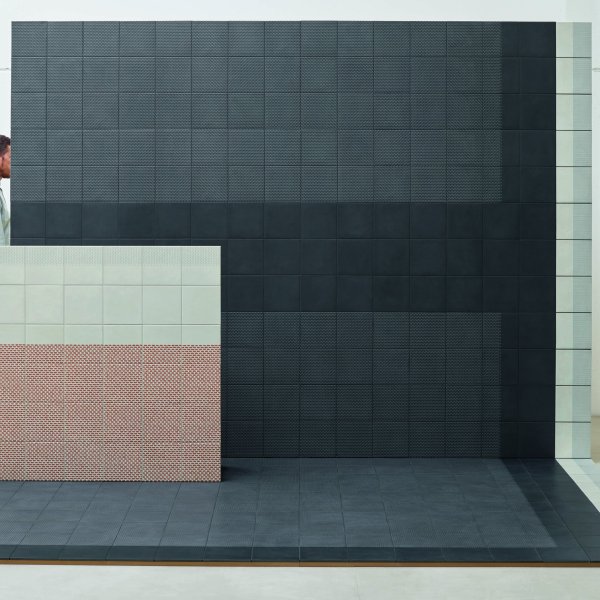
The grammar is disciplined where the play is free. Each family — Aland, Skye, Anglesey, Creta, Murano — pairs six graphic patterns in three colours with three plain tiles and two symmetrical Edge designs, all in a single 25×25 format that has become rare in ceramics, glazed porcelain stoneware at a substantial 14 mm, with five surface textures that read as hand-painted. Frames, borders and graphic rugs are drawn in tile rather than laid on top.

The part the datasheet plays

Water absorption of 0.06%, class 5 stain resistance, frost-proof, R10 with barefoot class C and DCOF 0.68: the same surface runs from reception floor to meeting-room wall to the outdoor terrace. With 20% declared recycled content for LEED and an A+ VOC class, it also runs through specification reviews untouched. Datasheet and certificates can be downloaded from this page.

Technical information based on data declared by the manufacturer.

Collection: Puzzle
Producer: Mutina
Design: Barber & Osgerby, 2016 — awards: EDIDA China 2016, Best of Year 2016, HD Award 2017 — registered design no. 003065440
Material: glazed porcelain stoneware (UNI EN 14411 App G, group BIa GL), grey body, 14 mm (0.55 in) thick
Size: 25×25 cm (9.8×9.8 in) (10"×10") — skirting 12.5×25
Range: 5 colour families (Aland, Skye, Anglesey, Creta, Murano); each with 6 graphic patterns in 3 colours + 3 plain tiles + 2 symmetrical Edge patterns; 5 surface textures with a hand-painted effect
Use: floor and wall — indoor and outdoor
Declared values: water absorption 0.06% — stain resistance class 5 — frost and thermal shock resistant — chemical resistant — U4 breaking-load class — Mohs 5 (EN 101) — R10 (DIN 51130) — DIN 51097 class C — DCOF 0.68 — Pendulum 46 P4
Sustainability: 20% pre-consumer recycled content, all colours (LEED 4.1, decl. 01/2024) — VOC class A+ (fired at 1100-1220 °C, no organic post-firing treatments) — HPD, EPD, SDS on request
Installation: 2 mm (0.08 in) joints, mix tiles from several boxes, calibres declared per production lot — Packing: 12 pcs/box (0.75 sqm), 16 pcs/sqm; skirting 10 pcs (2.5 lm)
Care: neutral detergent; avoid waxes and sealers

La Mercanti Srl — trusted supplier for design and contract projects since 1997.
San Benedetto del Tronto (AP), Italy · +39 0735 753833 · info@lamercanti.com
Supply, quotations, specifications and project support across the UK and worldwide.

Tell us which finishes you'd like to assess

£ 170

Fully redeemable against your first order

FAQ

Why does Puzzle name its colour families after islands?
Because the collection itself behaves like an archipelago. Barber & Osgerby describe shapes that merge «like maps, islands or clouds», and each of the five families — Aland, Skye, Anglesey, Creta, Murano — is a self-contained palette of three colours: six patterns, three plains, two Edge tiles, all pre-harmonised. Two of the islands, Anglesey and Skye, are British — a quiet nod from a London studio.
Is Puzzle by Mutina suitable for outdoor use in a wet climate?
Yes, by declaration: floor and wall, indoor and outdoor. Water absorption is 0.06% — nearly a tenth of the threshold for porcelain — so frost has nothing to work with, and thermal shock resistance is certified. Slip data covers the practical side: R10, barefoot class C and DCOF 0.68, so a courtyard or roof terrace can carry the same surface as the room behind it.
How do you balance patterned and plain tiles in a Puzzle scheme?
Start from the published layouts rather than instinct: Mutina's catalogue shows six schemes for the patterns — from a random fade over one plain ground to a full random field — and six more for the Edge tiles, ordered or loose. The reliable principle: concentrate pattern where people pause, in reception or around the meeting table, and let the plains carry the working areas.
What are the Edge tiles in Puzzle actually for?
They are the collection's drawing tools: two symmetrical designs, each in two of the family's colours, that build frames, borders and graphic rugs in the tiling itself. An Edge perimeter can mark out a breakout zone or trace a corridor without a single partition — and laid in their ordered A, B or C arrangements they form crisp geometric figures that dissolve into random play.
What should a Puzzle order include besides the tiles?
Three line items thought through: patterns, plains and Edge counted separately — boxes hold 12 pieces covering 0.75 sqm, with 16 pieces per square metre — plus skirting in 2.5-linear-metre packs and the calibre check, since work sizes vary by production lot. La Mercanti converts the layout into exact quantities per element and supplies the datasheet and certificates with the quotation.

Planning a Puzzle interior in five steps

From choosing the island to wintering outdoors: how to use Barber & Osgerby's patterns, plains and Edge tiles across an office floor.

Pick your island
One family per project keeps the palette honest: Aland for warm greys, Anglesey for blues, Skye for deep greens, Creta for brick, Murano for olive and pink. Three colours, already tuned.
Set the ratio
Pattern where the eye lingers, plains where the work happens. The catalogue's six pattern layouts — fades, frames, full random — are tested starting points, not rules.
Draw with the Edge
Use the two symmetrical Edge designs as borders: they frame a lobby rug, edge a corridor or close a wall composition in ordered A, B or C sequences.
Carry it outside
Frost resistance, R10 and barefoot class C let the same floor continue onto the terrace — the collection was conceived to bind spaces, not stop at thresholds.
Count by element
12 pieces per box, 0.75 sqm covered, skirting in 2.5 lm packs: quantities are per pattern, plain and Edge. La Mercanti breaks the layout down into an order and checks lot calibres before confirmation.

You May Also Like