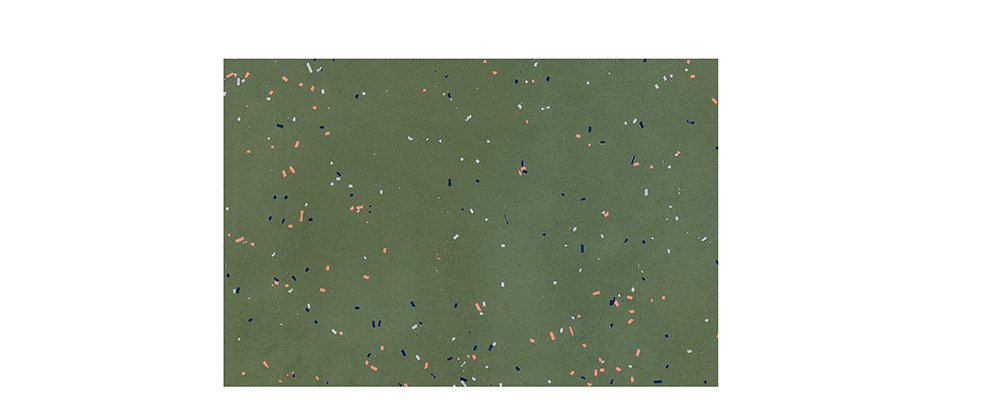
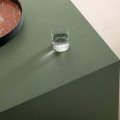
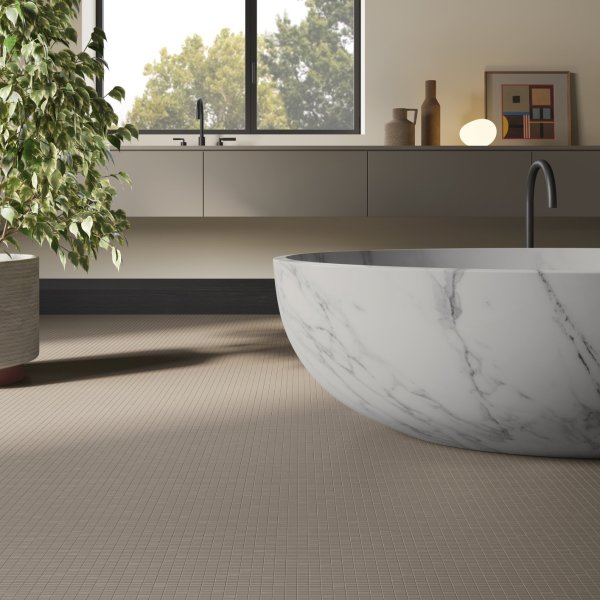
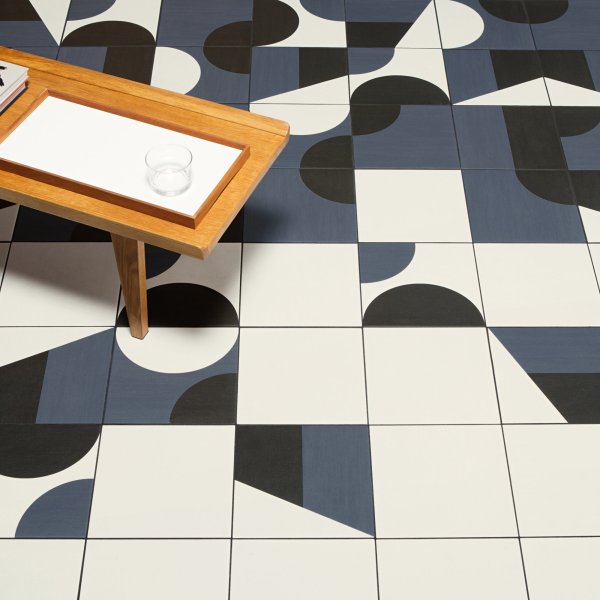
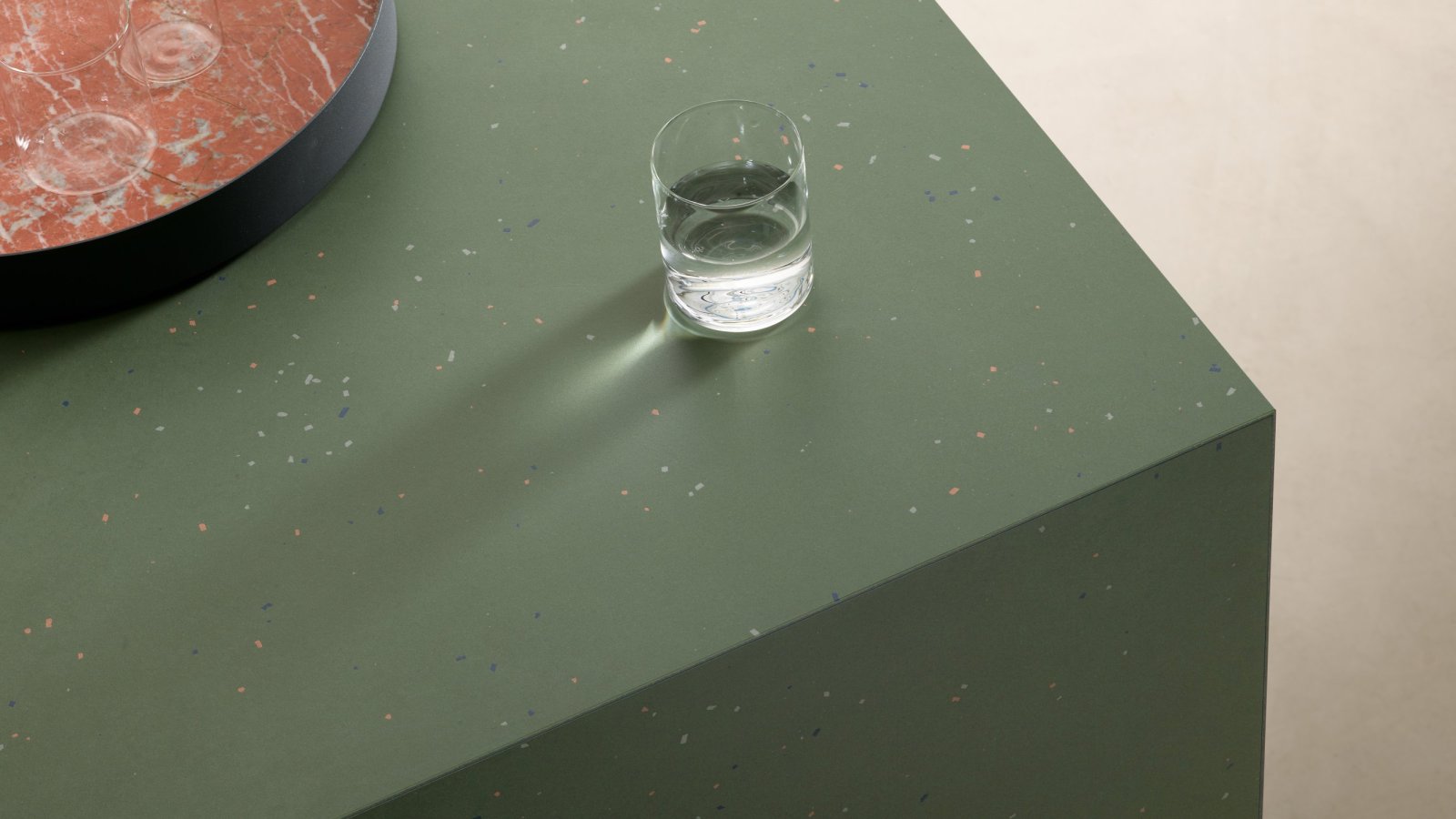
Primavera by Mutina porcelain surface with scattered ceramic chips

Primavera by Mutina, the surface that never repeats

Mutina

Barber Osgerby

Green
Green Available now
£ 1,338

What did you have in mind?

Trade terms for professionals and design studios

Britain built its decorative culture on the repeat: wallpaper blocks, printed textiles, the pattern that returns every fifty centimetres. Primavera takes the opposite vow. Edward Barber and Jay Osgerby scatter real ceramic chips across the slab in a genuinely random order; the Continua Plus press locks them into an unglazed porcelain stoneware body, and the shaded ground comes from soluble salts rather than inkjet. There is no repeat to spot, because there is no print to repeat — every tile is a one-off by manufacture, not by marketing.

The numbers are as disciplined as the surface is loose: 6 mm thick, stain class 5, frost-proof, rated for heavy traffic and even ventilated facades. Five colours — Bianco, Grigio, Nero, Verde, Blu — in 120×120 and 60×60 formats, with a German Design Award 2020 on the record. La Mercanti specifies it for receptions, meeting rooms, washrooms and breakout areas where a floor should hold attention without ever showing its working.

Technical information based on data declared by the manufacturer.

Collection: Primavera
Producer: Mutina
Design: Edward Barber & Jay Osgerby, 2018 — German Design Award 2020, Archiproducts Design Award 2019 (Primavera Grigio); registered design, 2019
Material: unglazed porcelain stoneware (UNI EN 14411 App G, BIa UGL group), 6 mm (0.24 in) thick
Sizes: 120×120 cm (47.2×47.2 in) (work size 1190×1190 mm (46.9×46.9 in)) — 60×60 cm (23.6×23.6 in) (594×594 mm (23.4×23.4 in))
Colours: Bianco, Grigio, Nero, Verde, Blu — real ceramic chips pressed into the surface (Continua Plus technology, no digital printing), soluble-salt shaded grounds, V3 variation
Use: floors and walls, indoor and outdoor, ventilated facades (with safety fibre), high-traffic areas (Robinson test: heavy use)
Declared values: water absorption <0.5% — deep abrasion compliant — frost and thermal shock resistant — acids and bases class A, pools included — stain class 5 — slip R9 (DIN 51130), DIN 51097 class B, DCOF 0.51
Sustainability: 14% recycled content (LEED 4.1); ISO 14000 and ISO 9001 systems; VOC, HPD, EPD, SDS on request
Installation: 2 mm (0.08 in) joint; C2S2 adhesives for the 120×120 and over underfloor heating; quick-setting adhesives over existing floors; neutral detergent only, no acids or waxes

La Mercanti Srl — trusted supplier for design and contract projects since 1997.
San Benedetto del Tronto (AP), Italy · +39 0735 753833 · info@lamercanti.com
Supply, quotations, specifications and project support across the UK and worldwide.

Tell us which finishes you'd like to assess

£ 170

Fully redeemable against your first order

FAQ

Why does Primavera have no pattern repeat?
Because nothing is printed. The coloured chips are real ceramic fragments thrown onto the surface at random and dry-pressed into the slab, while the shaded ground comes from soluble salts. With no print file there is no module to repeat — a wall or floor reads as one continuous field, however large the room.
Is a 6 mm tile robust enough for commercial use?
Yes, and the paperwork says so: the Robinson test rates Primavera for heavy use, deep abrasion is compliant for unglazed porcelain, and stains sit at class 5. Mutina declares it for high-traffic areas, outdoors included, so an office corridor is well within its comfort zone.
Can it go over an existing floor during a refurbishment?
That is one of the quiet advantages of 6 mm: Mutina's own laying guidance covers installation over existing floors and old ceramic with quick-setting adhesives. Levels barely move, doors keep their clearance and the building keeps working while the floor changes.
Where does the R9 slip rating place it, honestly?
R9 suits interiors — offices, receptions, washrooms — while DIN 51097 class B extends it to wet barefoot zones such as showers, and DCOF 0.51 clears the commercial threshold. For external ramps or pooled water on a slope you should specify a grippier surface; Primavera does not pretend otherwise.
Which colours and sizes does the collection include?
Five colours — Bianco, Grigio, Nero, Verde and Blu — in 120×120 and 60×60 cm, both 6 mm thick. The Grigio took the Archiproducts Design Award in 2019, and the whole collection the German Design Award in 2020. Grounds are softly shaded, so adjacent tiles differ by design, not by defect.

How to use a no-repeat surface across a workplace

A short guide for architects and facility teams: making Primavera's random field work from front of house to washrooms.

Let the field run
Choose one colour and let it flow across the main space uninterrupted — a no-repeat surface rewards scale, and the 120×120 keeps joints to a minimum.
Change size, not story
Step down to 60×60 in washrooms and service rooms: the chips keep the two zones in the same visual family without repeating a single slab.
Use the chips as your palette
Pick out furniture or joinery colours from the scattered fragments — the surface already contains the accent tones a fit-out needs.
Mind the wet-zone data
Class B under DIN 51097 covers showers and wet barefoot areas; keep steeper or outdoor ramps for higher-grip surfaces and quote the numbers in the spec.
Specify the joint early
A 2 mm joint with a grout matched to the ground keeps the terrazzo effect continuous — decide it at drawing stage, not on site.

You May Also Like