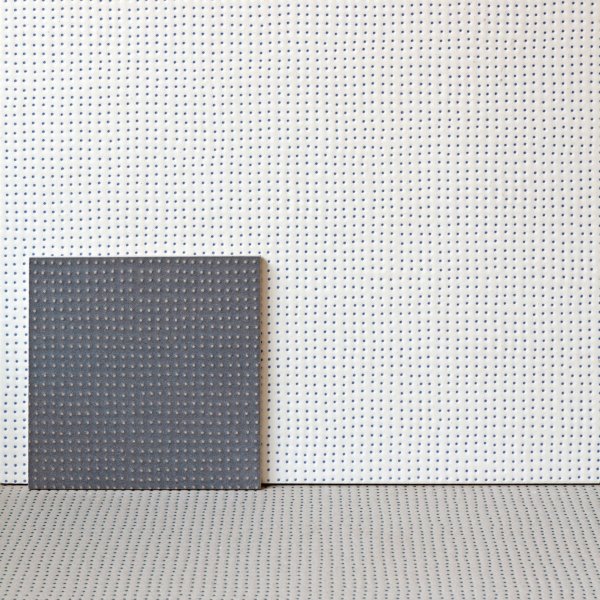
Phenomenon porcelain mosaic by Mutina, design Tokujin Yoshioka

Phenomenon by Mutina: architecture at one centimetre

Mutina

Tokujin Yoshioka

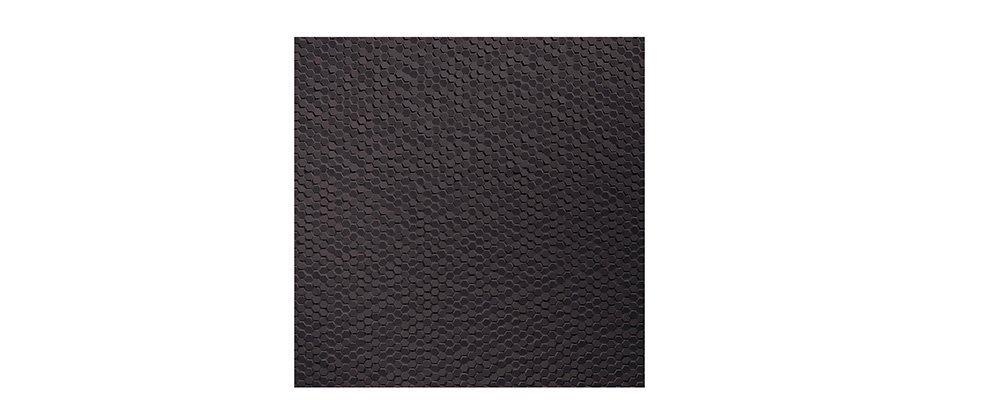
Honeycomb Black
Honeycomb Black An icon of Italian design
£ 889

What did you have in mind?

Trade terms for professionals and design studios

The smallest architectural module in the Mutina catalogue measures one centimetre: the hexagon of Phenomenon. Tokujin Yoshioka — the Tokyo designer who trained under Kuramata and Miyake and put a glass bench into the Musée d'Orsay — asked for tesserae so small they needed a new way of making: each one pressed individually in a custom 100-hole mould, fired under a process Mutina patented in 2010, then assembled by hand on mesh.

The range reads like a field guide to natural pattern: Honeycomb in two hexagon reliefs, Rain in three rhythms of slender rods, Rock, Air and Wind. Seven matt colours with a powdery, full-body finish — Bianco to Rosa — and a Glossy line in white, black, Oro and Argento for interior walls. Unglazed porcelain keeps the performance honest: 0.1% water absorption, frost-proof by declaration, stain class 5, so matt sheets run from shower walls to external facades, with Rock and Honeycomb A rated for floors.

For a UK specification the shortcut matters: one supplier, sampling of the real colours, quantities converted from the laying drawing per module — each has its own sheet yield. La Mercanti handles that arithmetic and the documentation trail, from VOC A+ class to HPD, so the mosaic that won the Red Dot in 2012 arrives on site as boxes, counts and instructions rather than a beautiful problem.

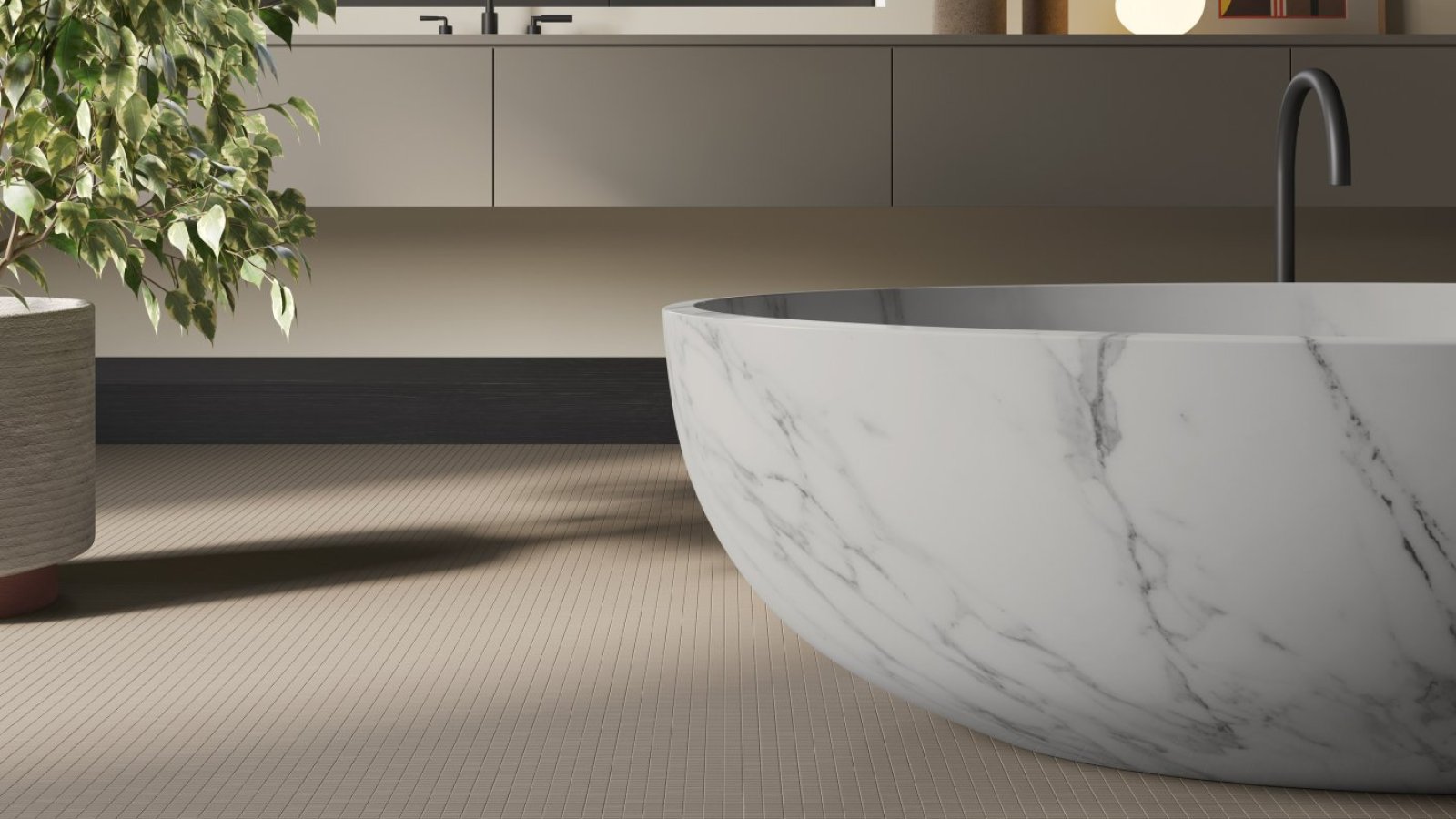
Technical information based on data declared by the manufacturer.

Collection: Phenomenon
Manufacturer: Mutina
Design: Tokujin Yoshioka, 2010 - 2013 - 2022
Material: mesh-mounted mosaics in unglazed full-body porcelain stoneware (UNI EN 14411 App. G, BIa UGL) — individually pressed tesserae, 100-hole custom mould, patented process, hand assembly
Modules: Rain A/B/C (25×30 cm (9.8×11.8 in) mesh) — Honeycomb A/B (30×30, 1×1 cm (11.8×11.8, 0.39×0.39 in) hexagon) — Rock (29×29) — Air (30×30) — Wind (25×25); Honeycomb external trim
Colours: 7 matt (Bianco, Grigio, Fango, Nero, Blu, Verde, Rosa) + Glossy: Rain A, Honeycomb B, Rock in Bianco Glossy, Nero Glossy, Oro, Argento
Use: walls indoor/outdoor; floors: Rock and Honeycomb A; Glossy interior walls only
Declared values (ISO 10545): absorption 0.1% — frost and thermal shock: resistant — chemicals class A — stains class 5 — VOC emissions A+
Awards: Red Dot Design Award 2012, Interior Innovation Award 2014 Best of Best, Azure Love Tag 2012
Documents: technical sheet, VOC, HPD, EPD, SDS from the article page

La Mercanti Srl — trusted supplier for design and contract projects since 1997.
San Benedetto del Tronto (AP), Italy · +39 0735 753833 · info@lamercanti.com
Supply, quotations, specifications and project support across the UK and worldwide.

Tell us which finishes you'd like to assess

£ 170

Fully redeemable against your first order

FAQ

Where can Phenomenon be installed - floors, showers, outdoors?

Matt sheets clad walls indoors and out - 0.1% absorption and declared frost resistance cover facades and terrace walls alike - while floors take Rock and Honeycomb A. Showers are natural territory. The Glossy line, including Oro and Argento, stays on interior walls. La Mercanti checks each surface against the manufacturer's use classes before you order.

What is actually patented in Phenomenon?

The making. Each tessera is pressed on its own in a custom 100-hole mould and fired under a production process Mutina registered in 2010 (patent MO2010A000247), then hand-assembled on mesh. It is why the surface has that powdery, hand-worked density no printed tile achieves - and why the collection took a Red Dot in 2012.

How do the eight Phenomenon modules differ in practice?

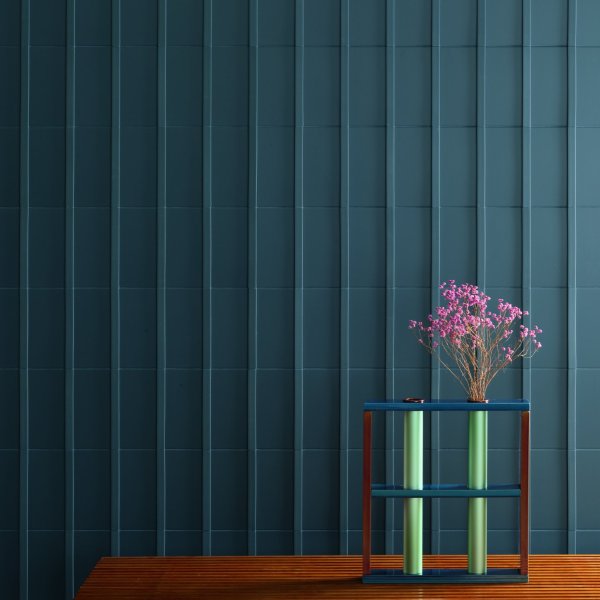
By the scale of the pattern. Rain lays slender vertical rods in three rhythms; Honeycomb is a one-centimetre hexagon in two relief depths; Rock, Air and Wind move towards irregular, cellular textures. A workable office recipe: Rain behind reception, Honeycomb in the directors' washroom, Rock underfoot in the wellness area. We send real module samples so the decision happens on the wall.

Is a mesh mosaic difficult to lay and to maintain?

No more than any quality porcelain: slow-setting adhesive, joints following the mesh, cement grout - epoxy is admitted on Rock and Honeycomb A. Maintenance is neutral detergent in water; the unglazed full body sits in stain class 5 and chemical class A. The manufacturer's laying and cleaning sheet ships with the order.

Which documents support Phenomenon in a sustainability brief?

Mutina's ceramic collections carry a certified VOC A+ emission class - fired above 1100 °C with no organic surface treatments - and HPD, EPD and SDS files are available from the article page. For projects chasing healthy-building credits, La Mercanti assembles the document pack together with the quotation.

Specifying Phenomenon: a five-step route

From surface audit to laying drawing - how a UK practice gets Yoshioka's mosaic on site correctly.

Audit the surfaces
List walls, floors and wet areas, then match them to the use classes: floors mean Rock or Honeycomb A, Glossy means interior walls.
Pick the pattern scale
Rain, Honeycomb, Rock, Air or Wind: choose by viewing distance - a reception wall reads differently at three metres than a shower at arm's length.
Sample two colours
A dominant and an accent from the seven matts - or a Glossy metal - judged in the room's own light.
Convert the drawing to sheets
Each module has its own yield per box; La Mercanti turns the laying drawing into sheets, trims and wastage.
Brief the installer
Slow adhesive, mesh-led joints, module-specific grout: the manufacturer's instructions travel with the delivery.

You May Also Like