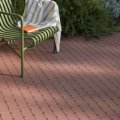
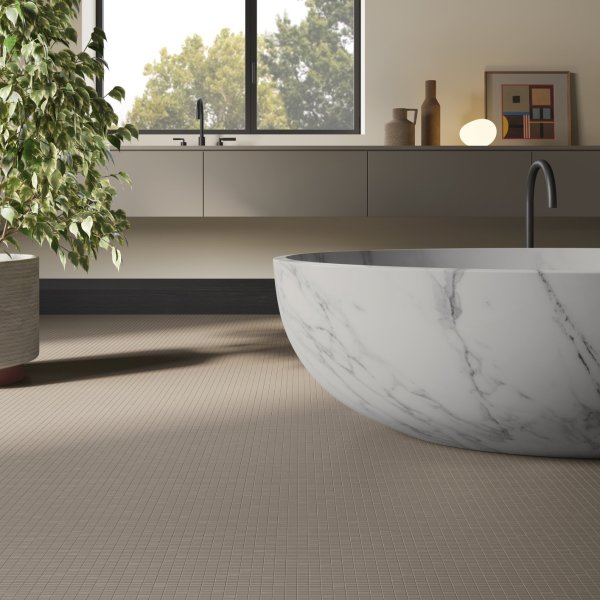
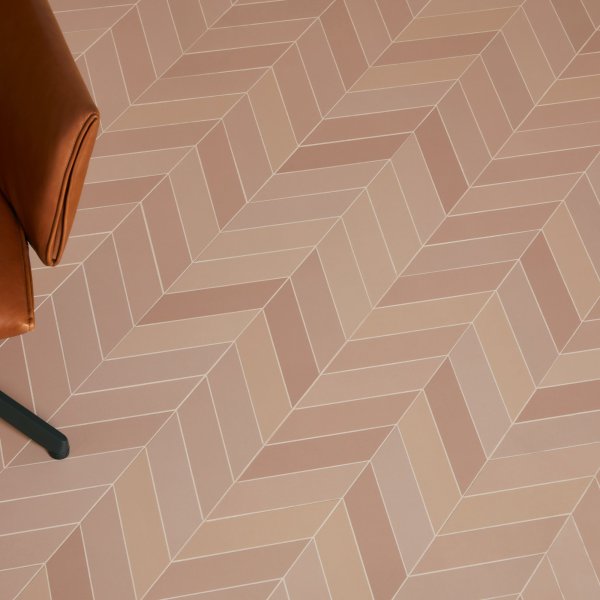
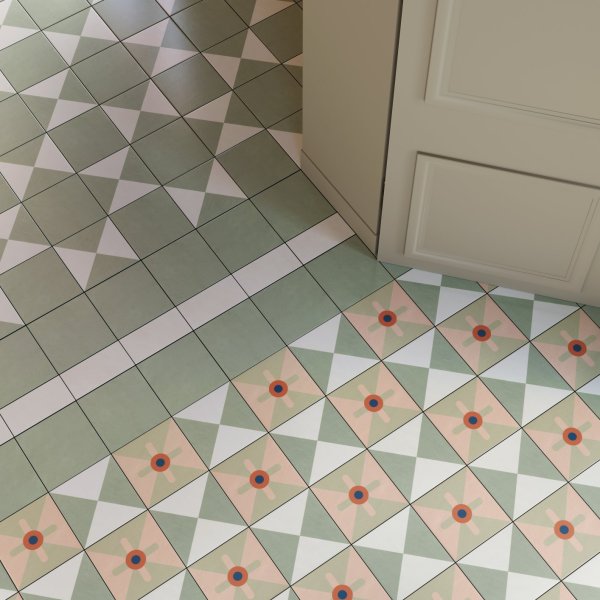
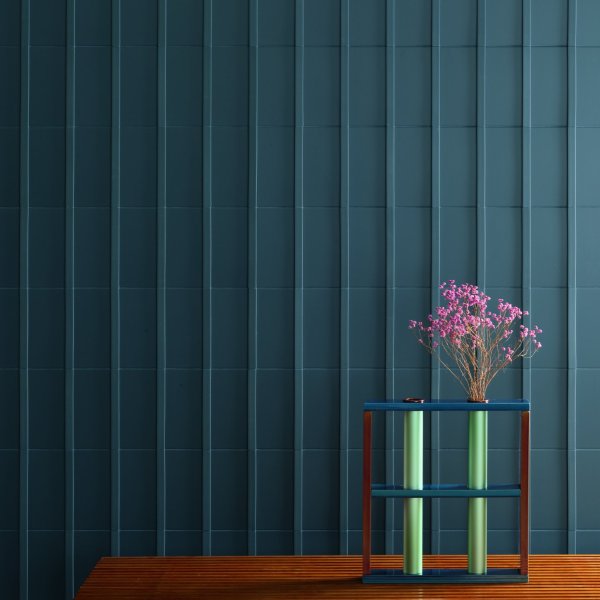
Osso & Bottone porcelain surface by Mutina

Osso & Bottone by Mutina: sculpted porcelain that passes the pendulum

Mutina

Ronan & Erwan Bouroullec

L Red
L Red Available now
£ 171

Already have something in mind?

Trade terms for professionals and design studios

British specifiers read outdoor floors through one number: the pendulum. Osso & Bottone arrives with its figures declared — PTV 55 dry, 45 wet (EN 16165-C) — which means a terrace, a roof garden or a courtyard café can be signed off in the rain it will actually live in. Designed by Ronan Bouroullec in 2024, this is the first Mutina collection conceived explicitly for the outdoors, with a surface refined enough to carry on inside.

The pieces are unglazed porcelain stoneware, full-body coloured with mixed earths rather than flat pigments, 10 mm thick, in four sculpted formats: the bone-waisted Osso L and S, and Bottone L and S, whose semicircular edge cuts close into perfect circles when two pieces meet across a 4 mm joint. Five colours — Sabbia, Grigio, Rosso, Blu, Verde — and the rest of the datasheet holds up: 0.15% water absorption, stain class 5, frost resistance, R11 and DCOF 0.66.

Use it where the plan steps outside — breakout terraces, entrance thresholds, courtyard meeting spots — or keep it indoors for the drawing alone. The 4 mm joint is mandatory on Bottone: that gap is where the pattern completes itself. Technical sheet and certificates can be downloaded from this page.

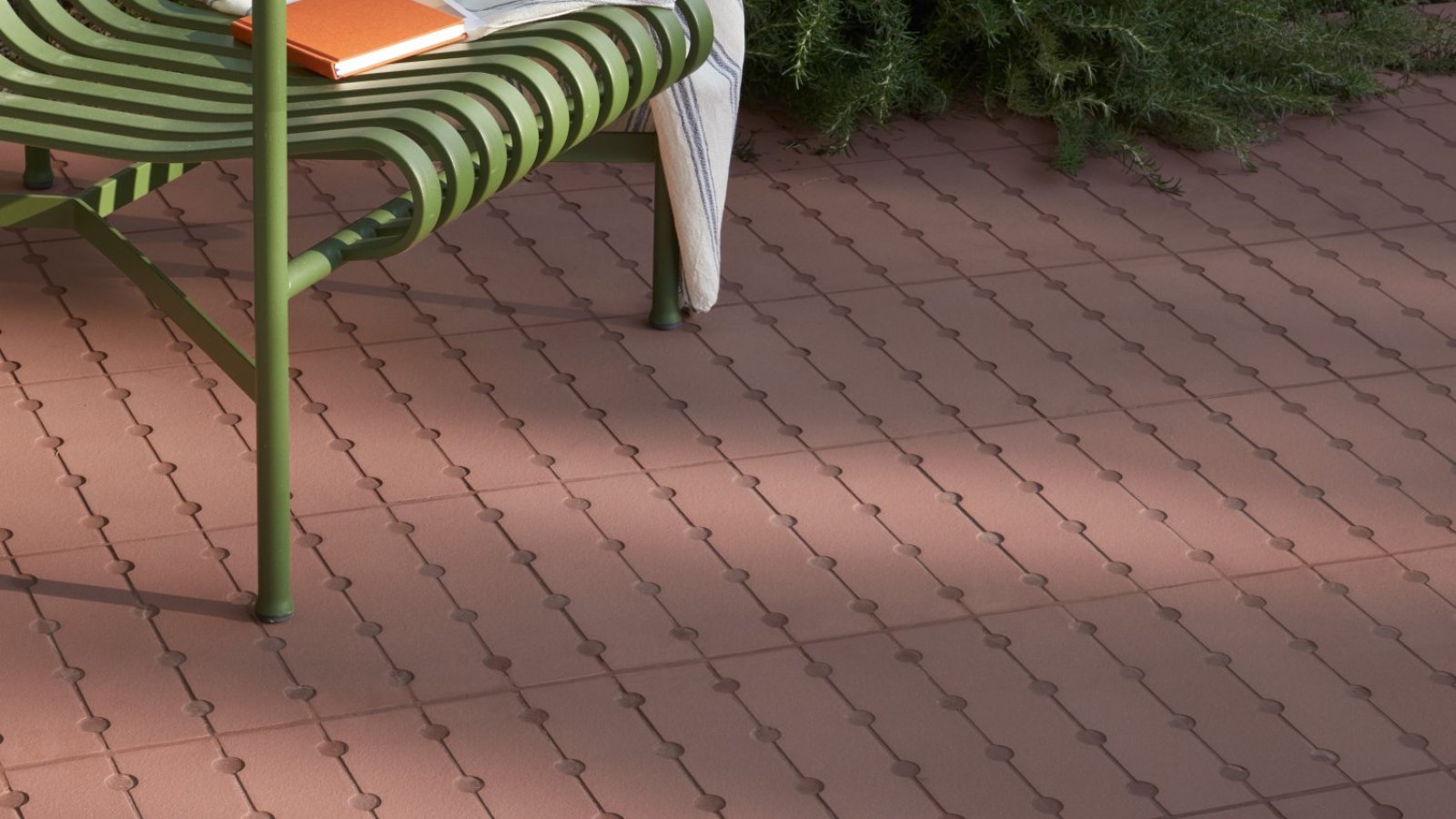
Technical information based on data declared by the manufacturer.

Collection: Osso & Bottone
Producer: Mutina
Design: Ronan Bouroullec, 2024 — registered design no. 015057019-0001/0016 (10/04/2024)
Material: unglazed porcelain stoneware, full-body coloured mixture — UNI EN 14411 App G (BIa) UGL
Thickness: 10 mm (0.39 in)
Sizes: Osso L 7.5×23.1 · Osso S 3×27.5 · Bottone L 7.5×32.1 · Bottone S 3×27.5 cm (1.2×10.8 in)
Colours: 5 — Sabbia, Grigio, Rosso, Blu, Verde (mixed coloured earths, V3 shade variation)
Use: floor and wall — indoor and outdoor
Declared values: water absorption 0.15% (ISO 10545/3) — stain class 5 — chemicals class A — frost-proof — R11 (DIN 51130) — C (DIN 51097) — DCOF 0.66 — Pendulum 55 dry / 45 wet (EN 16165-C) — P4 (AS/NZS)
Installation: 4 mm (0.16 in) joint, mandatory for Bottone S and L — cement grout (indoor/outdoor) or epoxy grout (indoor only) — draw from several boxes
Documentation: VOC declaration, HPD, EPD, SVHC and Declaration of Contents on request

La Mercanti Srl — trusted supplier for design and contract projects since 1997.
San Benedetto del Tronto (AP), Italy · +39 0735 753833 · info@lamercanti.com
Supply, quotations, specifications and project support across the UK and worldwide.

Tell us which finishes you'd like to assess

£ 170

Fully redeemable against your first order

FAQ

What do the pendulum figures actually mean here?
PTV 55 dry and 45 wet (EN 16165-C) are the declared slip values — the test that UK practice relies on for external floors. Alongside R11, barefoot class C and DCOF 0.66, they let you specify the same surface for a wet terrace and the room behind it.
Why is the 4 mm joint compulsory on Bottone?
Because the drawing happens in the gap: Bottone's semicircular edge cuts only close into full circles when two pieces sit 4 mm apart. Mutina declares that joint mandatory for Bottone S and L; on Osso the same width is recommended for modular harmony.
Is this collection limited to outdoor projects?
No — it is Mutina's first collection born for the outdoors, but the finish was researched precisely so it would feel right inside as well. Many schemes run one colour from the café floor to the courtyard, letting the threshold disappear.
How do the colours behave in weather and wear?
The five shades are not surface glazes but mixed coloured earths running through the full 10 mm body. Declared performance: 0.15% absorption, stain class 5, class A resistance to acids and alkalis, and frost resistance for exposed British winters.
Which grout should be specified outside?
Cement-based grout works indoors and out; epoxy grout is for interiors only. Colour is a design decision: tone-on-tone lets the sculpted shapes whisper, a contrasting grout turns the circles and bones into graphics. Samples can be ordered, with the cost fully credited on order confirmation.

Specifying Osso & Bottone for a terrace that gets rained on

Five steps to take Mutina's outdoor-born collection from datasheet to signed-off scheme, joints included.

Start from the slip data
Anchor the spec to the declared values — Pendulum 55 dry / 45 wet, R11, DCOF 0.66 — and match them to each area: external circulation, pool surrounds, thresholds.
Pick bones or buttons
Osso lays a quiet, tapered field; Bottone adds circular punctuation at every joint. Choose one language per area so the two motifs never compete in the same view.
Write the joint into the spec
State the 4 mm joint explicitly — mandatory on Bottone S and L — together with the grout type: cementitious outside, epoxy only indoors.
Choose the grout colour on a sample panel
The pattern lives in the joint, so judge tone-on-tone against contrast on a real panel, outdoors, in daylight — not on screen.
Plan quantities by shape
Each format has its own pieces per square metre, so calculate per shape and draw from several boxes during laying to blend the V3 shade variation.

You May Also Like