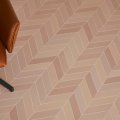
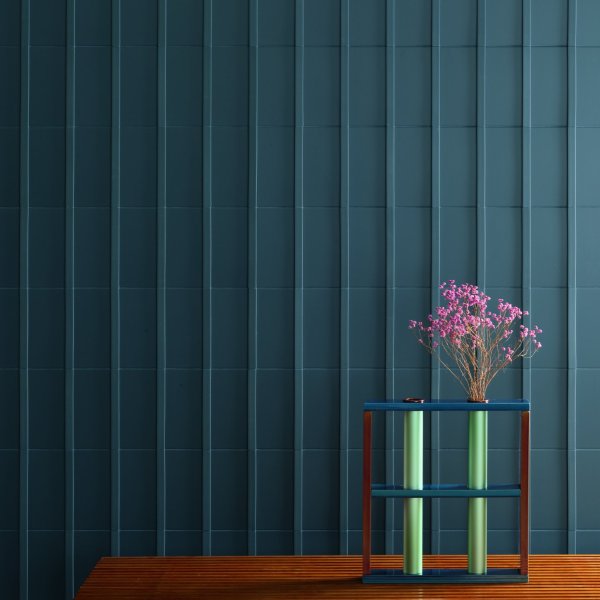
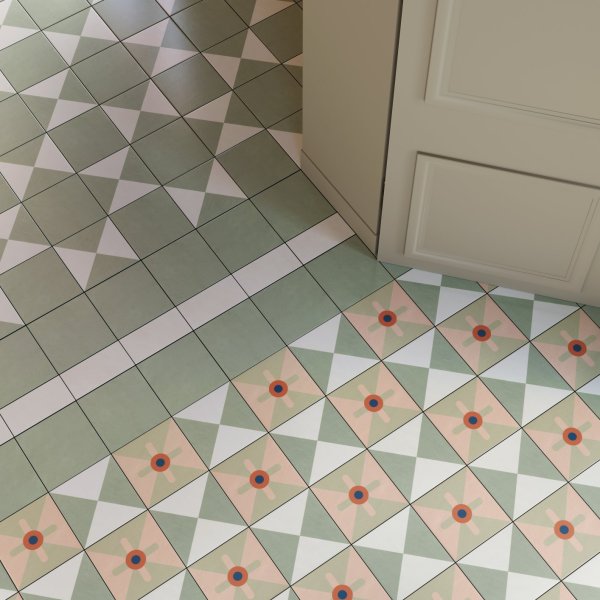
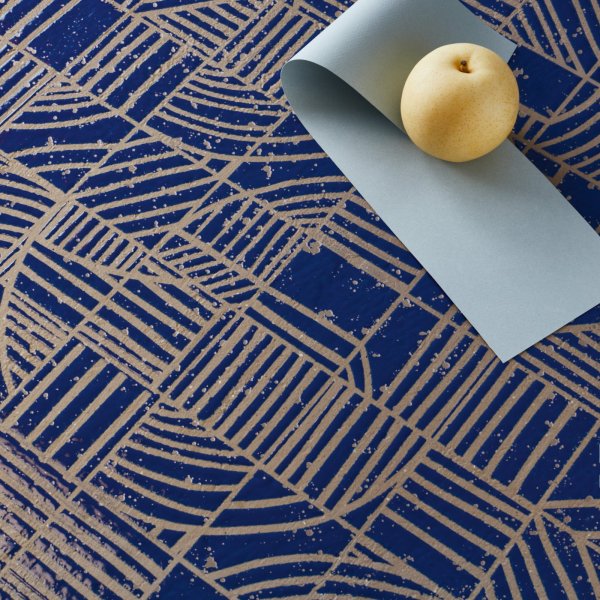
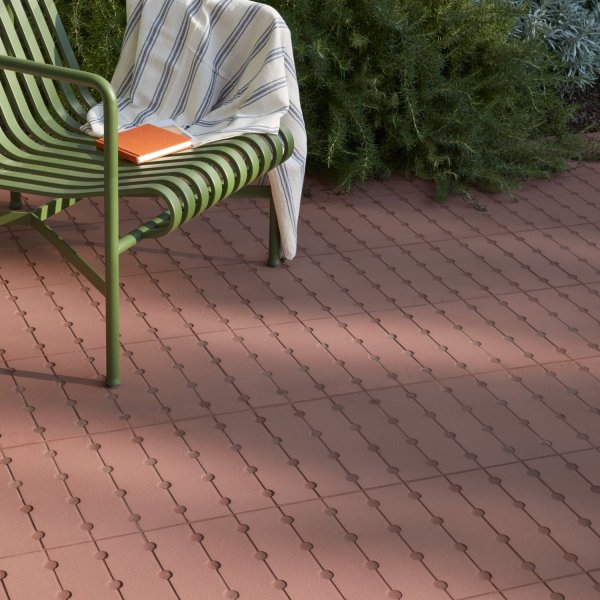
Mews tiles by Barber and Osgerby in Fog cladding a meeting room wall

Mews by Mutina — a London address in porcelain

Mutina

Barber Osgerby

Lead
Lead Available now
£ 397

Let's discuss your project

Trade terms for professionals and design studios

Some collections borrow a mood; this one has an address. Mews takes its name from the narrow lanes of London's historic centre, and Mutina's own catalogue is explicit about the inspiration: the urban landscape, history and textures of the English capital. Even the palette is written in London vocabulary - Fog, Soot, Pigeon, Chalk, Ink, Lead - before opening into Green, Pink and Light Blue.

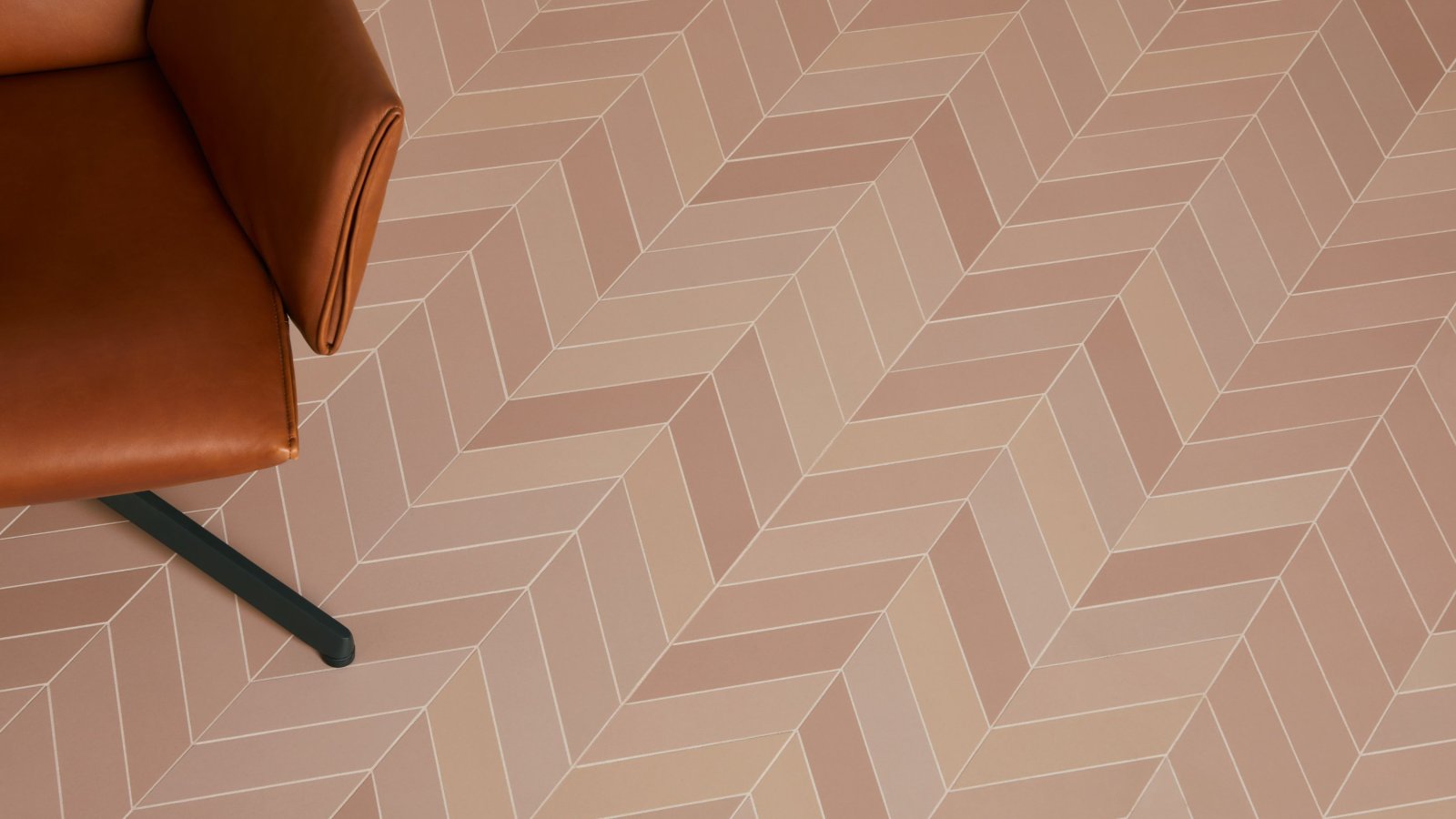
Edward Barber and Jay Osgerby, whose studio has worked from East London since 1996, put it plainly: «We aimed to capture the natural tones and variations in the light and shade that are present in our surroundings, the landscape of London». The method behind the poetry is industrial discipline - each of the nine colours is a random blend of 15 shades, every piece cut identical to the next, so herringbone tile fields, grids and borders close with 2 mm joints and no improvisation.

For workplaces and hospitality the numbers hold up to the romance: 0.04% water absorption, stain resistance class 5, R10, frost-proof for courtyards and roof terraces, with matching steps, corners and skirting. Wallpaper* Design Award and EDIDA both arrived in 2014, but the better verdict is simpler: this is the rare tile whose name tells you exactly what it will do to a room.

Technical information based on data declared by the manufacturer.

Collection: Mews
Manufacturer: Mutina
Design: Edward Barber & Jay Osgerby, 2013 — registered design no. 002336909-0005/0012; range extended 2023
Awards: Wallpaper* Design Award 2014, EDIDA 2014
Material: glazed homogeneous porcelain stoneware (UNI EN 14411 App. G, group BIa), 9 mm (0.35 in) thick
Formats: 5.5x45 cm (2.2x17.7 in) — 11x11 cm (4.3x4.3 in) — chevron 5.5x39.4 cm (2.2x15.5 in) — chevron 5.5x19.6 cm (2.2x7.7 in)
Trim pieces: step 33x45x4.5 — corner tile 33x33x4.5 — skirting 3.8x45 cm (1.5x17.7 in)
Colours: 9 (Chalk, Fog, Pigeon, Lead, Ink, Soot, Green, Pink, Light Blue), each a random blend of 15 shades — V4 shade variation
Use: floor and wall, indoor and outdoor (frost-proof, ISO 10545-12)
Technical data: water absorption 0.04% (ISO 10545-3) — stain resistance class 5 (ISO 10545-14) — R10 (DIN 51130) — DCOF 0.80 — resistant to thermal shock and chemicals
Installation: 2 mm (0.08 in) joints (3 mm (0.12 in) for chevron), mix tiles from several boxes
Sustainability: 13.8-15.3% recycled content (LEED v4.1) — VOC emissions class A+ — ISO 9001, ISO 14001

La Mercanti Srl — trusted supplier for design and contract projects since 1997.
San Benedetto del Tronto (AP), Italy · +39 0735 753833 · info@lamercanti.com
Supply, quotations, specifications and project support across the UK and worldwide.

Tell us which finishes you'd like to assess

£ 170

Fully redeemable against your first order

FAQ

What does the name Mews actually refer to?
To the narrow lanes of London's historic centre - the converted stable rows the city calls mews. Mutina states the inspiration openly: the urban landscape, history and textures of the English capital, translated by Barber & Osgerby into nine shaded colours.
Is Mews suitable for a heritage refurbishment?
Very much so. The 2x18 listel, the 4x4 square and the two chevron pieces sit naturally in Victorian and Edwardian conversions, and the muted palette - Fog, Pigeon, Lead - works with brick, timber and painted panelling rather than against them.
Can Mews tiles run outside onto a terrace or courtyard?
Yes. The collection is frost-proof to ISO 10545-12 with 0.04% water absorption, so the same floor can continue from a workspace onto a roof terrace or rear courtyard, keeping R10 slip resistance.
Why do Mews tiles vary slightly in tone?
Each colour is a deliberate random blend of 15 shades, declared as V4 variation. Installers draw from several boxes at once, and the result is a softly shaded field rather than a flat colour - it is the collection's whole point.
Which documents are available for specifying Mews?
The technical sheet, LEED v4.1 recycled-content declaration (13.8-15.3%), VOC class A+ report and ISO certifications can all be downloaded from the article page - ready to drop into a specification pack.

Specifying Mews for a workplace: from shade card to site

A practical sequence for architects and facilities teams bringing Mews into offices, member clubs or hospitality floors - choosing shades under real light, planning the herringbone and keeping the surface honest for years.

Read the palette against the building
Shortlist two or three colours and order physical samples (their cost is credited in full when the order is confirmed). Judge them against the existing brick, joinery and paintwork, in morning and afternoon light.
Choose the bones of the layout
Decide early between herringbone, stack bond or a mixed field: the two chevron lengths and the 2x18 listel behave differently in narrow corridors and open floors, and the choice drives cutting and ordering.
Blend boxes like the factory intends
Instruct the contractor to draw tiles from several boxes simultaneously - the 15-shade blend only reads correctly when it is mixed on site, checked with a straight edge as laying proceeds.
Keep the joints disciplined
Specify 2 mm joints, or 3 mm with Y-shaped spacers for chevron fields, with a cement or epoxy grout close to the tile tone - the geometry stays sharp and the shading does the talking.
Hand over with the right habits
Write neutral detergent into the cleaning contract and ban waxes and sealants. Certificates and environmental declarations are downloadable from the article page for the O&M manual.

You May Also Like