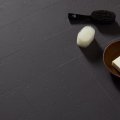
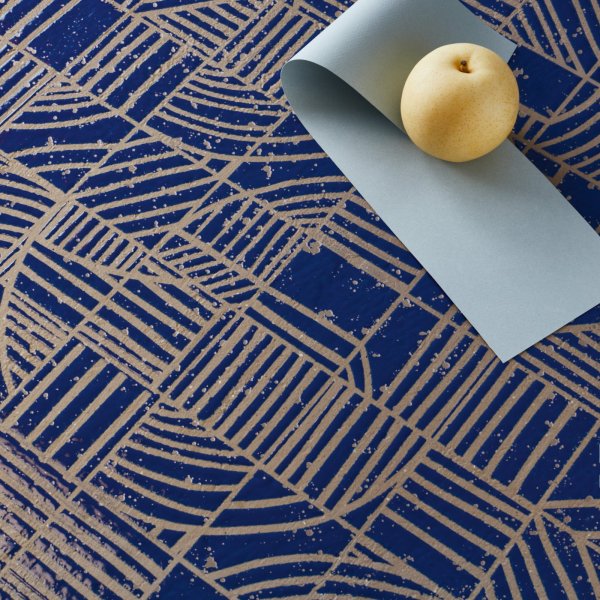
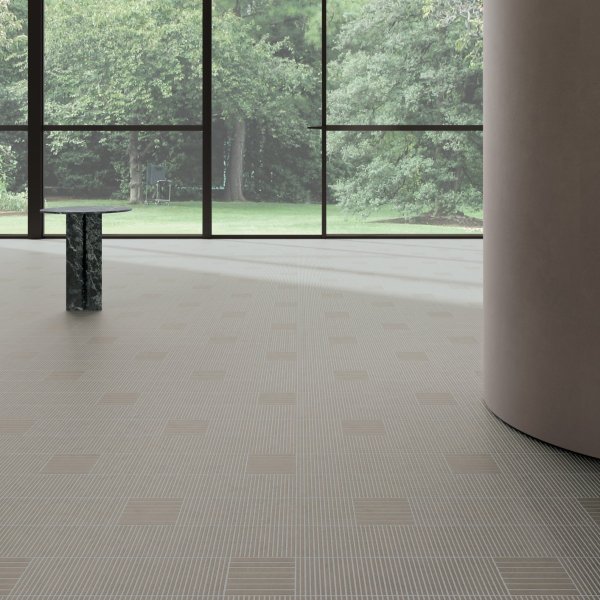
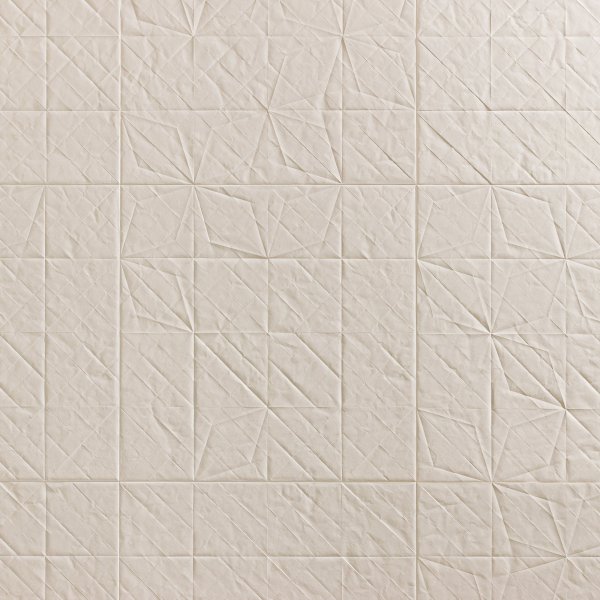
Kosei extruded porcelain surface by Mutina

Kosei by Mutina — obsidian, tamed for the floor

Mutina

Vincent Van Duysen

Storm
Storm Available now
£ 152

Let's discuss your project

Bespoke: size, colour, finish

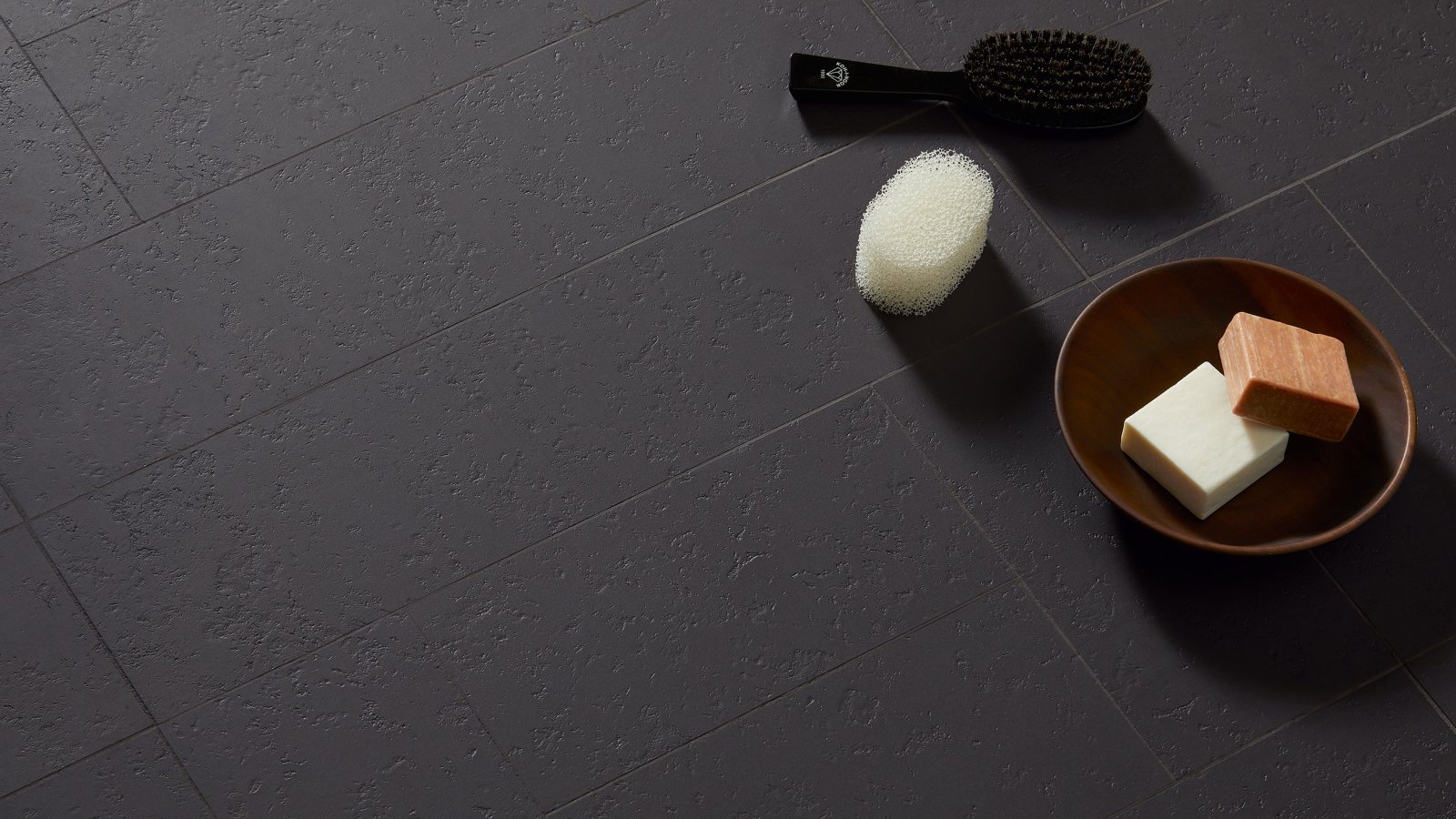
Obsidian has fascinated builders since the Stone Age — volcanic glass, homogeneous, amorphous, formidably hard — but nobody ever tiled a bathroom with it. Kosei gets close enough: surfaces inspired by obsidian and volcanic glass, made of extruded, unglazed porcelain — «soft earth, shaped by a drawing process» — with a velvety touch no glaze can imitate. The design is by Vincent Van Duysen (2022), the Belgian master of warm minimalism, and the name is Japanese: kosei, composition.

Composition is the point: six perfectly modular formats — 60×60, 15×90, 15×60, 15×30, 15×15 and a Chevron 9.6×56.5 (left- and right-handed) — in five earths: Bone, Storm, Terra, Grey Green, Dark Grey. In the designer's words: «from a homogeneous layout to a very rhythmic and graphic one». Rectified slabs «each exactly the same as the others», V2 minimal variation, and numbers to match the volcanic pedigree: absorption 0.06%, stain class 5, DCOF 0.84, Pendulum 55/45.

Where the glass goes

The glass travels the whole plan: floor and wall, indoor and outdoor (frost-proof) — receptions, boardrooms, bathrooms and showers, terraces and stairs — with dedicated step tread, corner piece and skirting. Datasheet and certificates download from this page.

Technical information based on data declared by the manufacturer.

Collection: Kosei
Manufacturer: Mutina
Design: Vincent Van Duysen, 2022
Material: extruded unglazed porcelain stoneware (UNI EN 14411 App. A, AI UGL), 10 mm (0.39 in) — rectified slabs, velvety surface
Formats: 60×60, 15×90, 15×60, 15×30, 15×15 cm (23.6×23.6, 5.9×35.4, 5.9×23.6, 5.9×11.8, 5.9×5.9 in) — modular with each other — Chevron 9.6×56.5 cm (3.8×22.2 in) (SX/DX)
Colours: 5 — Bone, Storm, Terra, Grey Green, Dark Grey — V2 minimal variation
Special pieces: step tread 33×60×4.5, corner 33×60×4.5, skirting 3.8×60
Use: floor and wall — indoor and outdoor
Declared values: absorption 0.06% — stain class 5 — acids/alkalis class A (high concentration included), pool chemicals class A — frost and thermal shock resistant — slip R10, DIN 51097 B, DCOF 0.84, Pendulum BS 55/45, AS/NZS P3, UNE C2
Installation: 2 mm (0.08 in) joint, cement or epoxy grout; coloured grouts: sales office — Certifications: ISO 14001; VOC, EPD, SVHC, Declaration of Contents on request
Packing: 60×60: 2 pcs/box (0.72 sqm) — chevron: 14 pcs (0.76 sqm)

La Mercanti Srl — trusted supplier for design and contract projects since 1997.
San Benedetto del Tronto (AP), Italy · +39 0735 753833 · info@lamercanti.com
Supply, quotations, specifications and project support across the UK and worldwide.

Tell us which finishes you'd like to assess

£ 170

Fully redeemable against your first order

FAQ

What does obsidian have to do with a porcelain tile?
It is the declared inspiration: surfaces modelled on volcanic glass - homogeneous, amorphous, remarkably hard - and the material keeps the promise in numbers: 0.06% absorption, stain class 5, chemical resistance in class A even at high concentration. The difference is manufacturability: obsidian fractures into blades; Kosei is extruded porcelain - «soft earth, shaped by a drawing process» - rectified to slabs «each exactly the same as the others», with a velvety, unglazed surface where the colour is the body itself. Volcanic character, architectural discipline.
Why is it called Kosei - and what does the name demand?
Kosei is Japanese for «composition», and Van Duysen means it operationally: «I wanted to go deeper into the history of patterns linked to the world of architecture... from a homogeneous layout to a very rhythmic and graphic one». Six modular formats - down to a left- and right-handed chevron - and five earths are the vocabulary; the project writes the sentence. A calm single-format field is Kosei; so is a two-tone chevron corridor. Few collections give a British bathroom and a hotel lobby the same alphabet.
How good is the slip performance, honestly?
Unusually well documented: DCOF 0.84 against the 0.42 reference, Pendulum 55 dry / 45 wet - the wet figure above the 36 low-risk threshold UK assessors look for - plus R10, DIN 51097 class B barefoot, Australian P3 and Spanish C2. That covers interior floors, showers, pool surrounds and outdoor terraces with paperwork to show; submerged or sloping zones, where class C would apply, remain the designer's call. Frost resistance is declared too - British weather is not the obstacle.
How do you compose with six formats and five colours?
Start from tempo, not pattern: a homogeneous layout - one format, one earth - is already the collection at full strength; rhythm is added in doses. 15×90 bands to orient a corridor, a 15×15 field to mark a zone, the chevron where depth is wanted - all formats share their modules and the 2 mm joint, so they mix without cuts. The five earths - Bone, Storm, Terra, Grey Green, Dark Grey - are one volcanic family and coexist by nature. La Mercanti prepares laying drawings and per-format quantities for the project.
What about stairs, outdoors and documentation?
Rare completeness: a dedicated step tread (33×60×4.5) with matching corner piece - stairs, including external ones, speak the floor's language without improvised cuts - plus 3.8×60 skirting. The material is outdoor-born: frost and thermal shock resistant, 0.06% absorption, the slip file above. Documentation: ISO 14001, with VOC, EPD, SVHC and Declaration of Contents on request through La Mercanti. Samples of the five earths ship with costs fully credited at order confirmation.

Taming volcanic glass: Kosei in five steps

Five steps for UK architects and clients: Van Duysen's volcanic collection from reception to terrace - formats, rhythm and real numbers.

Set the tempo
Homogeneous or rhythmic? One format for calm; bands and chevron where the room wants movement - the designer's quote is the method.
Pick two earths
The five tones are one volcanic family: a dominant and an accent usually suffice - sample them in the room's real light.
Use the modularity
60x60, 15x90, 15x60, 15x30, 15x15: shared modules, 2 mm joint - formats mix without cuts or compromise.
Bring the stairs along
Dedicated step tread and corner: staircases, external ones included, match the floor - frost and slip file documented.
Order per format
Packing differs by format (60x60: 0.72 sqm/box; chevron 0.76): La Mercanti converts the laying drawing into quantities and wastage.

You May Also Like