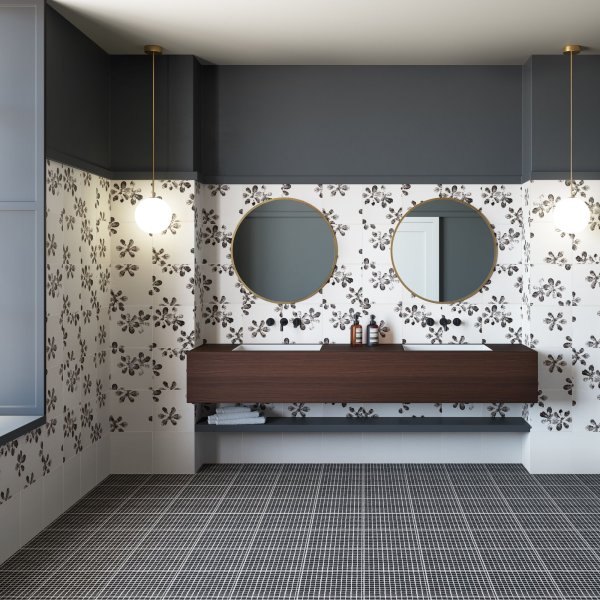
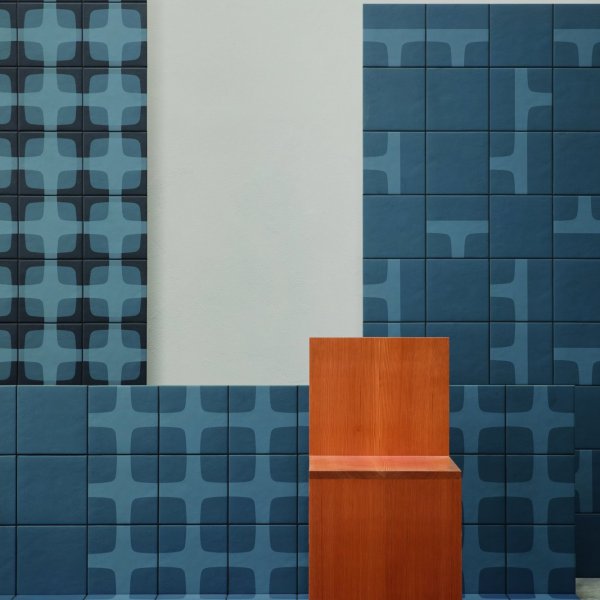
Bas-relief porcelain wall by Mutina with sculpted Bas-Relief texture

Bas-Relief by Mutina — relief tiles protected by two registered designs

Mutina

Patricia Urquiola

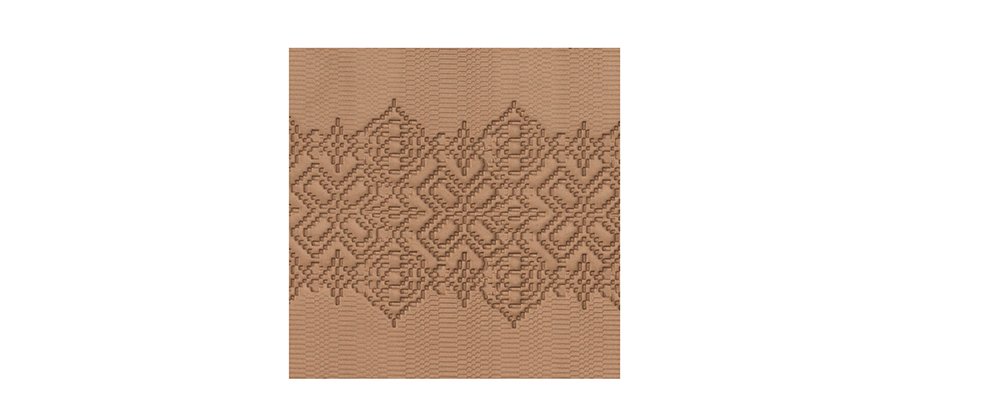
Garland Cipria
Garland Cipria An icon of Italian design
£ 486

What did you have in mind?

Trade terms for professionals and design studios

When a tile pattern is worth copying, its maker registers it. Bas-Relief carries two registered designs, filed in September 2011 — a quiet legal fact that says more than any brochure: this surface was new enough to protect. Patricia Urquiola drew it for Mutina in 2010, pushing beyond Déchirer into what she calls a more austere, less romantic exploration of relief and incision.

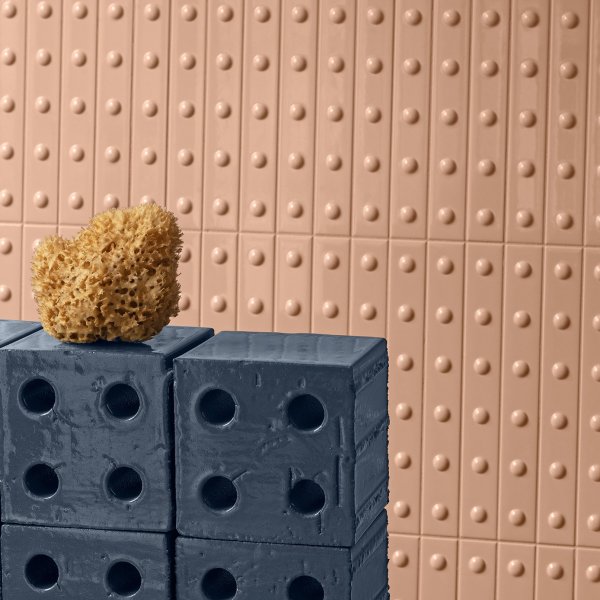
The originality is physical. The tiles are artisanally extruded porcelain — unglazed, colour in the clay body — cut by hand, with a declared ±2 mm tolerance and tonal variations the manufacturer lists as intrinsic qualities, each piece shipped under a peel-off silicone film that keeps grout out of the carving. Four textures in three neutral tones (Bianco, Cipria, Nero): Code, austere, repeating across the surface like a cipher; Patchwork, overlapping reliefs that never repeat; Garland, a floral motif redrawn digitally; Cloud, air bubbles caught and fixed in an abstract pattern. The relief reaches different depths, so raking light turns every wall into chiaroscuro.

Where it goes

The three 18×54 textures are wall coverings, indoors and out; Code (26.5×18) alone is declared for floors too, with R11 and DCOF 0.56. Absorption 0.07%, stain class 5, frost resistant — manufacturer data, datasheet downloadable from this page.

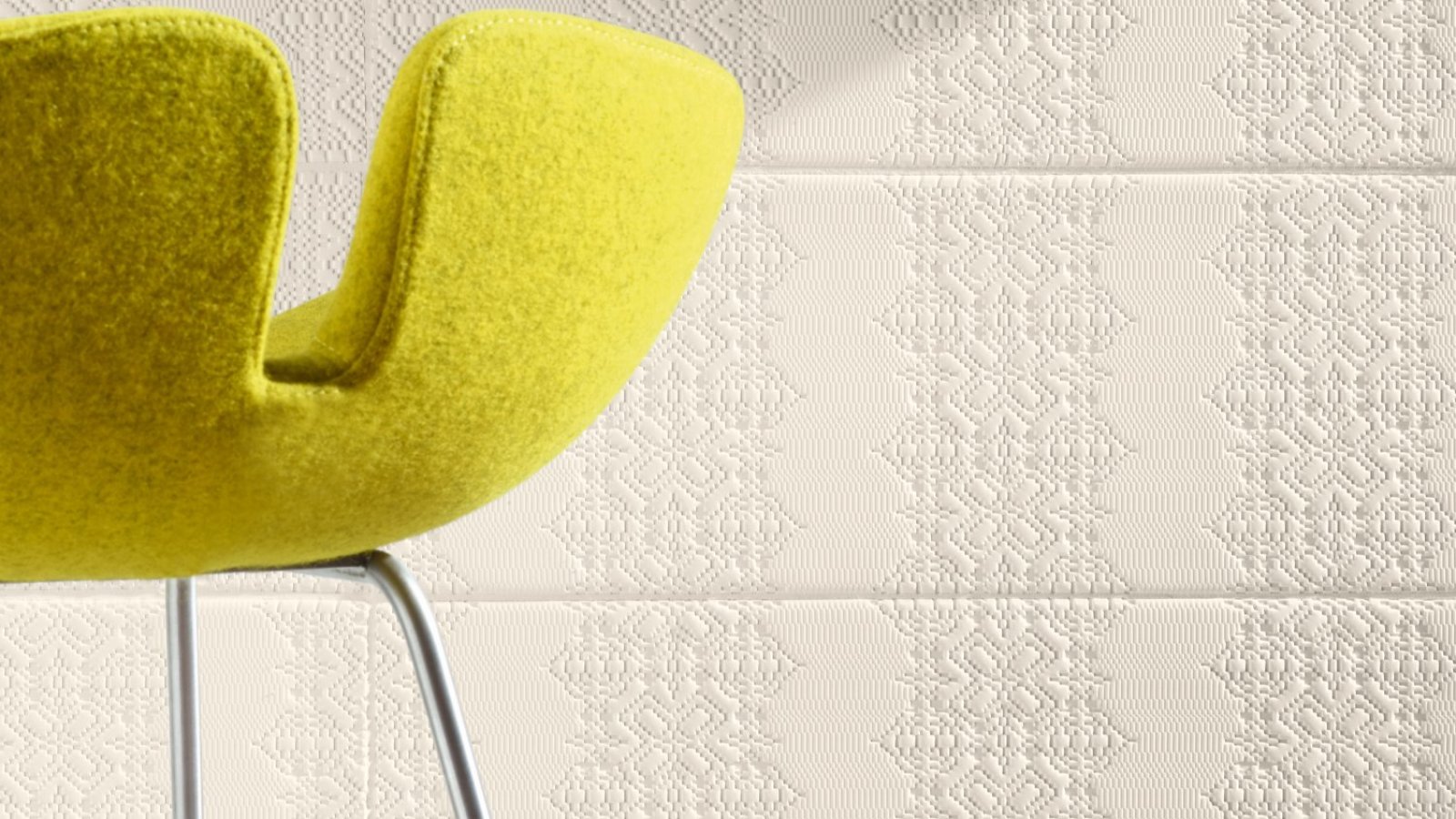
Technical information based on data declared by the manufacturer.

Collection: Bas-Relief
Manufacturer: Mutina
Design: Patricia Urquiola, 2010
Material: artisanally extruded unglazed porcelain stoneware, hand-cut, UNI EN 14411 App A (AI) UGL
Formats: Patchwork, Garland, Cloud 18×54 cm (7.1×21.3 in) (walls only) — Code 26.5×18 cm (10.4×7.1 in) (walls and floors) — 9 mm (0.35 in) thick — ±2 mm (0.08 in) tolerance
Tones: Bianco, Cipria, Nero (12 references)
Registered designs: no. 001912999-0011 and 001913062-004 (2011)
Use: wall cladding indoor and outdoor; Code also flooring
Declared values: absorption 0.07% — stain class 5 — deep abrasion 274.4 mm³ — R11 (DIN 51130) — DCOF 0.56 — frost, thermal-shock and chemical resistant
Documents: HPD and VOC data on request
Installation: slow-setting adhesive, 2 mm (0.08 in) joint with spacer wedges, silicone film removed after grouting — Packing: 18×54: 10 pcs/box (0.97 sqm); 26.5×18: 20 pcs/box (0.95 sqm)

La Mercanti Srl — trusted supplier for design and contract projects since 1997.
San Benedetto del Tronto (AP), Italy · +39 0735 753833 · info@lamercanti.com
Supply, quotations, specifications and project support across the UK and worldwide.

Tell us which finishes you'd like to assess

£ 170

Fully redeemable against your first order

FAQ

What do the two registered designs actually protect?
The relief drawings themselves - filed with the EU in September 2011 as registered designs no. 001912999-0011 and 001913062-004. In practice it means the carved patterns you specify are legally Urquiola's and Mutina's, not a generic texture any factory can press. For projects where design provenance matters - and for clients who ask what makes a wall worth its budget - it is an answer in writing.
How does an unglazed tile hold up compared to a glazed one?
Differently and, in this class, impressively: the colour runs through the clay body, so there is no glaze layer to scratch or craze, and the declared numbers are absorption 0.07% (the norm for its group allows 3%), stain class 5 and deep abrasion 274.4 mm3 against a 275 limit. Care is a neutral detergent in water - no acids, alkalis or waxes, and no steel scourers on any relief surface.
Which texture can go on the floor?
Only Code, the 26.5x18 base: declared for floors and walls, indoors and out, with R11 and DCOF 0.56. Patchwork, Garland and Cloud are wall coverings by declaration - their deeper carving belongs on the vertical. The system is designed as a duet: Code underfoot, one sculpted texture as the feature wall.
What does the hand-made production mean on site?
Three practical things, all from the datasheet: a slow-setting porcelain adhesive so the setter can adjust each hand-cut piece; a 2 mm joint on spacer wedges to absorb the declared plus or minus 2 mm tolerance; and the silicone film left on through grouting, then peeled and sponged clean. Mix tiles from several boxes so the intentional tonal variation spreads evenly.
Can it face British weather outside?
By declaration, yes: all four textures are indoor-outdoor wall claddings, frost resistant to ISO 10545/12 and thermal-shock resistant to ISO 10545/9, at 0.07% absorption. A courtyard or entrance porch can carry the same carved surface as the washrooms inside. Samples come through La Mercanti, with the cost fully credited at order confirmation.

Specifying a carved wall without surprises on site

Five steps for architects and clients bringing Urquiola's bas-relief into washrooms, receptions and meeting rooms - with the artisanal process planned in, not discovered.

Choose the wall the light will carve
Relief lives on raking light: pick surfaces washed by a window or plan a dedicated light. In flat frontal light the carving sleeps.
Cast the four textures properly
Code for floors and quiet planes, Patchwork, Garland or Cloud for the feature wall - one sculpted surface per zone is enough.
Put the declared numbers in the spec
Absorption 0.07%, stain class 5, deep abrasion 274.4 mm3, R11 with DCOF 0.56 for Code floors, frost resistance - straight from the datasheet on this page.
Brief the tiling contractor early
Slow-setting adhesive, 2 mm joints on wedges, boxes mixed, silicone film peeled after grouting: hand-made needs planning, not improvisation.
Order by format, not by guesswork
Walls take 18x54 (10 pcs per box), floors take Code 26.5x18 (20 pcs per box): La Mercanti calculates quantities, wastage and delivery with your contractor.

You May Also Like