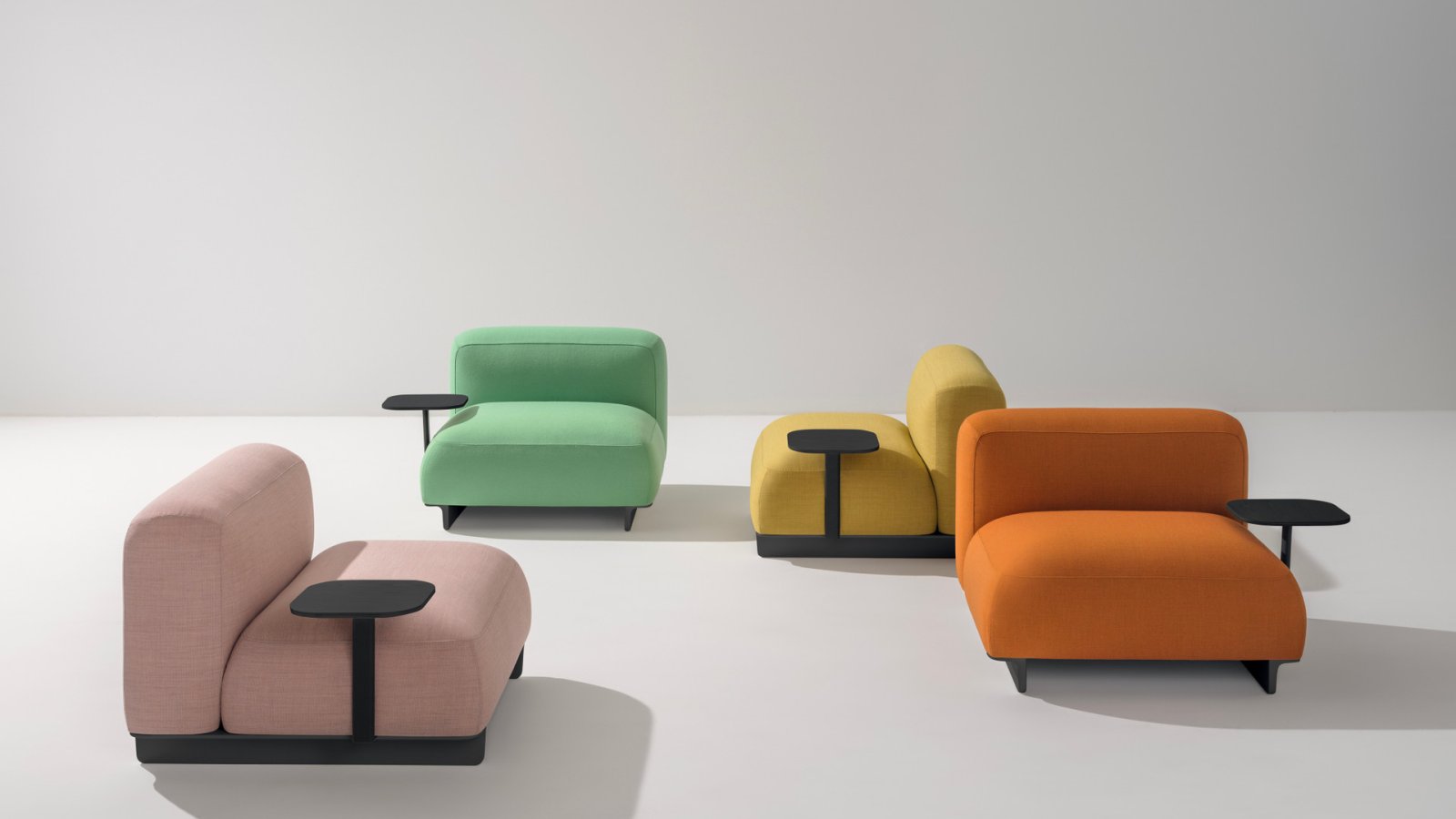
Transparent PET link between two Ralik modules

Two transparent clips hold a whole Ralik island together

Arper

Ichiro Iwasaki

Reception sofa
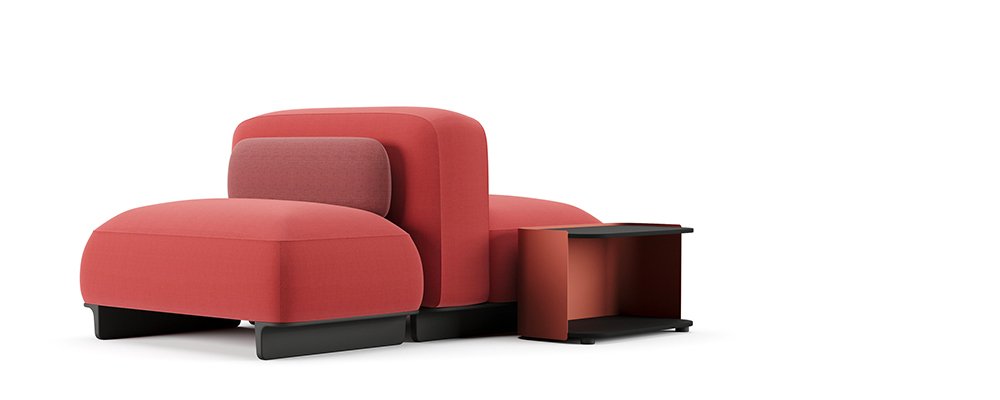
Ralik 7401 Reception sofa
£ 6,261

What did you have in mind?

Bespoke: size, colour, finish

Modular seating usually promises reconfiguration and then hides a bag of bolts in the maintenance cupboard. Ralik ships each module with two PET links, and the manufacturer states plainly that this is enough to build any configuration. No tools, and no lifting: the links go on and come off with the waiting seats where they stand.

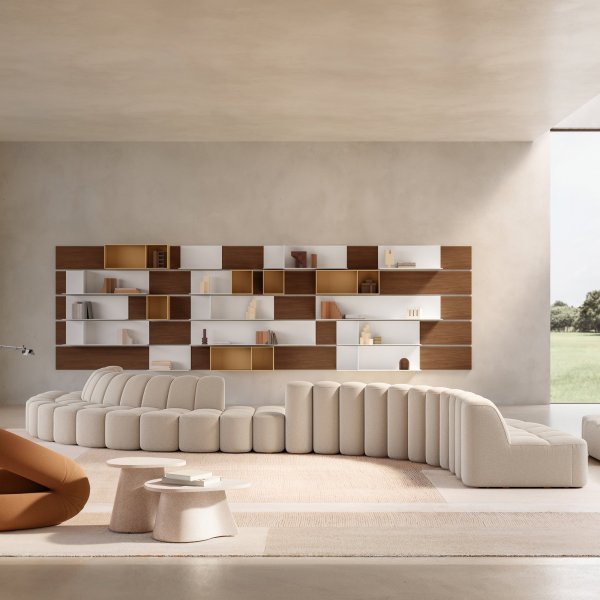
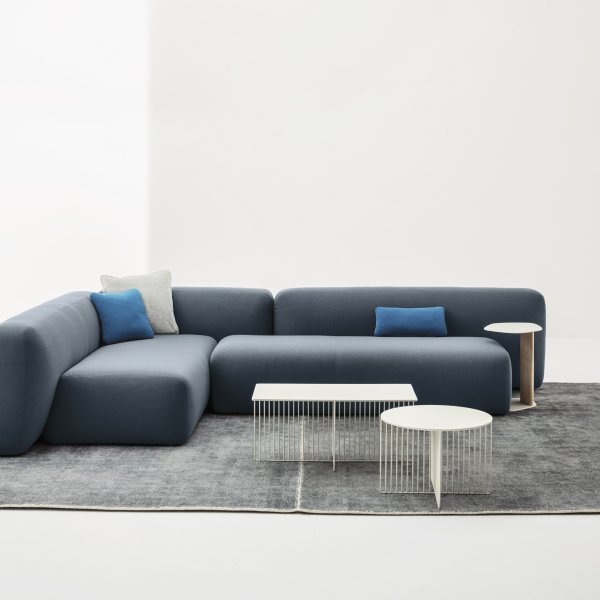
The detail we would put in a specification is the one nobody thinks about: when a link is not in use it clips under the module on a velcro patch, so it does not end up in a drawer three floors away. Each link has a rigid side and an elastic side with a tab, and the rigid part always goes in first. They are transparent, which is why an island of six modules reads as one object rather than as furniture bolted together. Designed by Ichiro Iwasaki. La Mercanti checks the layout before the order goes in.

Technical information based on data declared by the manufacturer.

Collection: Ralik, modular seating system for waiting areas, lounges and shared spaces
Manufacturer: Arper (Monastier di Treviso, Italy)
Design: Ichiro Iwasaki, 2023
Linking system: two transparent PET links per module, no tools required; fitted and removed without lifting the seats; stored under the module on a velcro patch; each link has a rigid part and an elastic part with a tab, rigid part inserted first
Seating modules: art. 7400 one-seat ottoman 88 × 88 × h 40 cm (34.6 × 34.6 × 15.7 in) · art. 7401 one-seat with backrest 88 × 88 × h 66 · art. 7402 two-seat ottoman 146 × 88 × h 40 · art. 7403 two-seat with backrest 146 × 88 × h 66 · art. 7404 one-seat bench 88 × 58 × h 40 · art. 7405 two-seat bench 146 × 58 × h 40
Base: polypropylene made with recycled material, five colours
Upholstery: removable covers in fabric, leather, coated fabric or customer's own material
Cushions: art. 7412 for the one-seat bench 65 × 23,5 × h 12,5 cm (25.6 × 9.3 × 4.9 in) and art. 7413 for the two-seat bench 125 × 23,5 × h 12,5; disc and cord fixing between bench and backrest
Fixed table: art. 7416, 31 × 31 × h 34 cm (2919.7, 12.2 × 12.2 × 13.4 in), right, left or between modules; powder-coated metal support, square plywood top in reconstituted oak
Freestanding table: art. 7417, 53 × 33 × h 44 cm (2920.1, 20.9 × 13 × 17.3 in), gas mechanism for height adjustment
Storage modules: art. 7414 55,5 × 30 × h 31,5 cm (21.9 × 11.8 × 12.4 in) and art. 7415 85,5 × 30 × h 31,5; curved powder-coated sheet metal with plywood shelves in reconstituted oak; not linked to the seats
Seat electrification: kit art. 6001 with two modules of two USB-A sockets each, power supply and six cable clips; module 7 × 7 × 2 cm (2.8 × 2.8 × 0.79 in), input 250 V, output 5 V DC max 2.4 A, cable 1.9 m; fitted under the modules 2 cm (0.79 in) from the front edge
Storage electrification: Pix accessory by Bachmann, USB version, one USB-A and one USB-C, housed in a metal tube acting as cover and cable duct
Use: indoor and outdoor, contract and residential
Intended use: Arper refers non-domestic seating to EN 16139 and non-domestic tables to EN 15372, distinguishing a general level and a severe level; for certified products the company refers to its own documentation
End of life: fully disassemblable, separating upholstery, padding, cellulose-based material, metal, plastic and glides
Awards 2023: Metropolis Likes (USA), Archiproducts Design Awards (Italy), Mixology North23 (UK), Stylepark Selected Award (Germany)

La Mercanti Srl — trusted supplier for design and contract projects since 1997.
San Benedetto del Tronto (AP), Italy · +39 0735 753833 · info@lamercanti.com
Supply, quotations, specifications and project support across the UK and worldwide.

Tell us which finishes you'd like to assess

£ 170

Fully redeemable against your first order

FAQ

How many links does a configuration need?
Each module arrives with two, and the manufacturer states that this is enough for any configuration. The count works because links join modules at the foot, so a chain of six seats does not require twice as many.
Can the layout be changed by the facilities team?
Yes, and that is the point of the system. No tools are involved, the links fit and release without lifting the seats, so an island can become a row on a Friday afternoon without a service call.
Where do unused links go?
Under the module, held by a velcro patch. It sounds trivial until you have looked for a missing connector in a building where the furniture was rearranged eighteen months ago.
Why are they transparent?
So they disappear against any base colour and any cover. A composition then reads as a single object, which is the difference between a designed island and a set of seats pushed together.
Is there a right way round to fit them?
Yes. Each link has a rigid part and an elastic part with a tab, and the rigid part goes in first. It takes one demonstration to learn and stops the elastic side being stretched unnecessarily.

How to reconfigure a seating island in ten minutes

Five steps for a facilities team, no tools required.

Release the links in place
No lifting: they come off with the seats where they stand.
Move the modules first
Set the new footprint before joining anything back up.
Insert the rigid part first
Then the elastic side with the tab clips home.
Store the spare links underneath
The velcro patch keeps them with the module they belong to.
Re-place the tables last
La Mercanti supplies the layout drawings for each configuration.

You May Also Like