
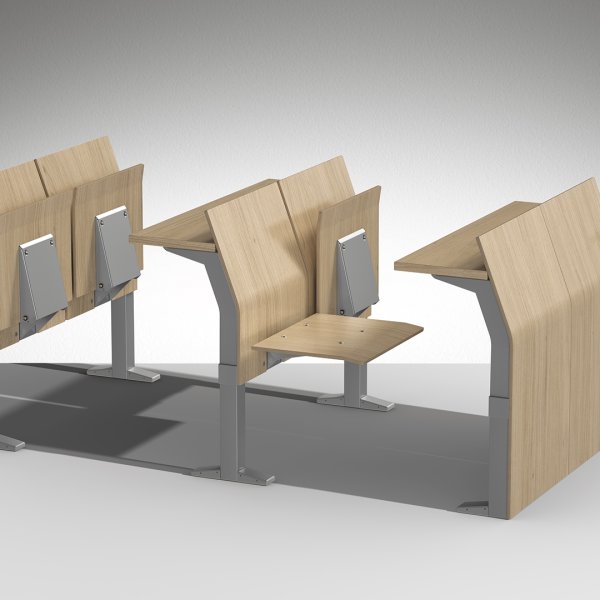
Lamm
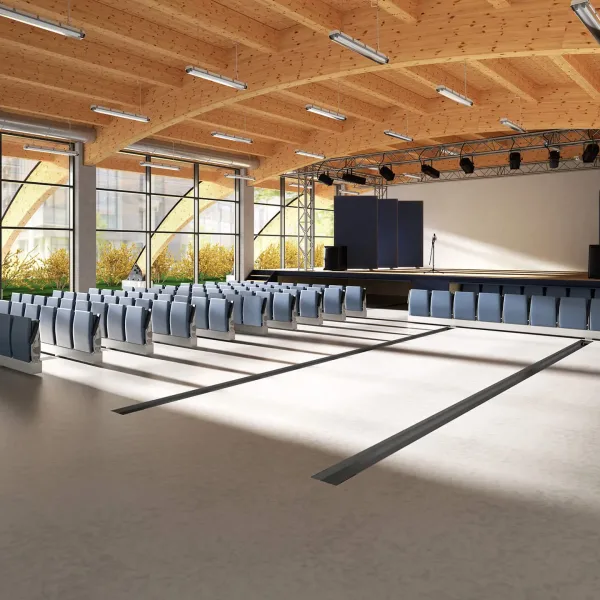
The most valuable square metres in a building are the ones that do two jobs. Lamm has engineered that trick since 1959: rolling floors where entire rows of seats rotate and disappear under the walking surface, telescopic tribunes that fold against a wall, rails that slide rows beneath the stage — one hall, many lives. The maker from Parma produces and installs worldwide: conference and university seating with a Compasso d'Oro pedigree (CLACK, 1989), references from HSBC UK's Birmingham headquarters to Brunel University, and its own acoustic division, Caruso Acoustic, to make the transformation sound as good as it looks.
La Mercanti brings Lamm to UK lecture theatres and civic halls — engineering included, installation by the maker.
The seats rotate and retract below the walking surface: automated mechanics turn an auditorium into a flat floor in minutes — no storage rooms, no manual stacking, no lost seats.
Single accountability: Lamm produces and installs worldwide, from layout and feasibility to commissioning — moving parts and warranties stay in one pair of hands.
Five decisions that make a single room earn twice.
Lecture, banquet, exam, concert: the mix picks the system.
Rolling floor, telescopic or rail — geometry decides.
Minutes by motor beat hours by hand, every week.
The hall must sound right full and empty, flat and raked.
Moving systems live on scheduled service.