Technical information based on data declared by the manufacturer.
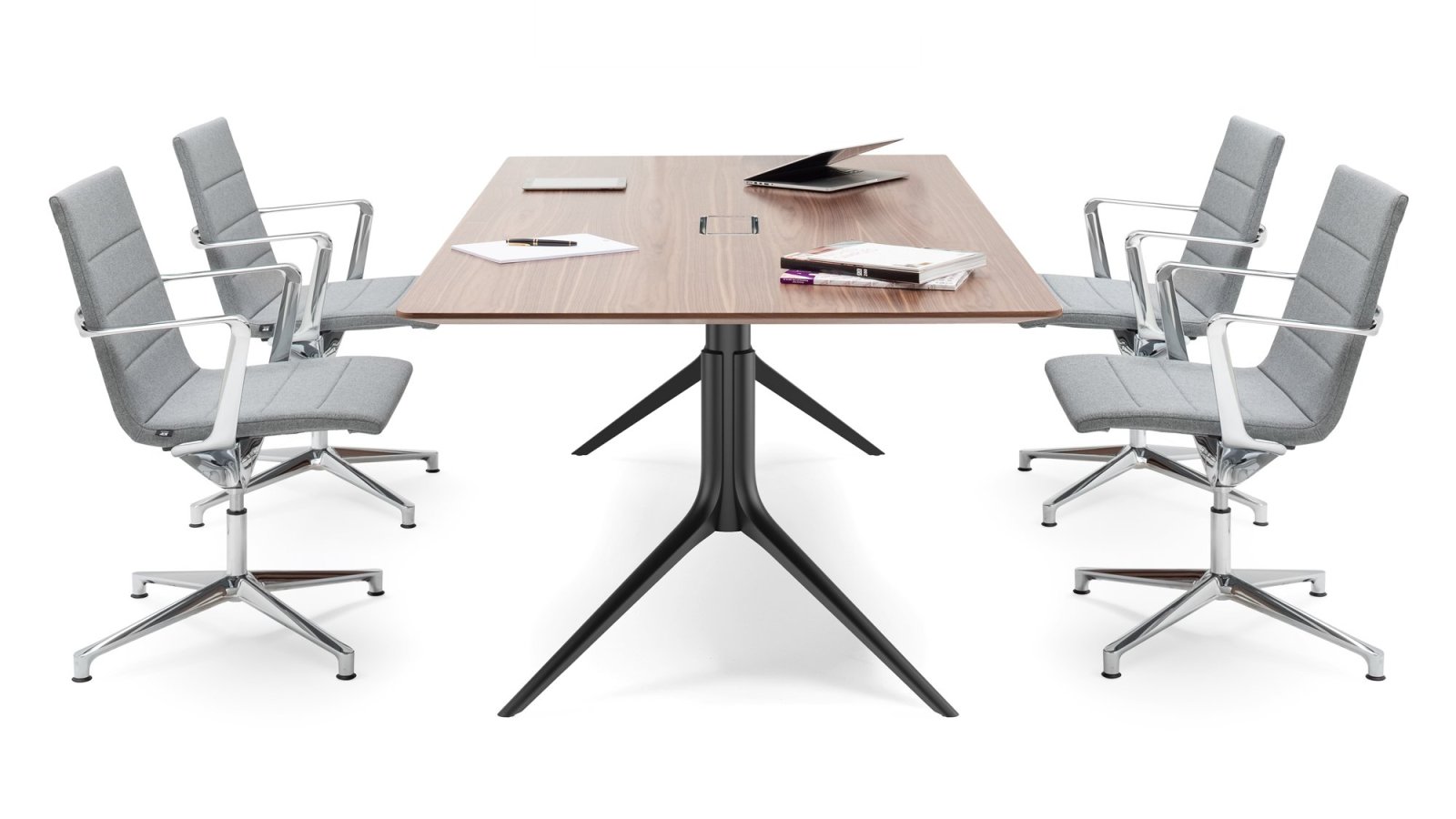
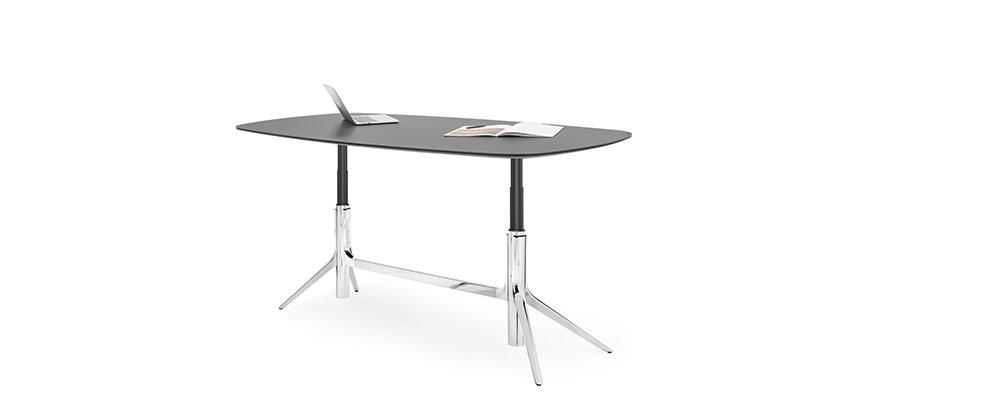
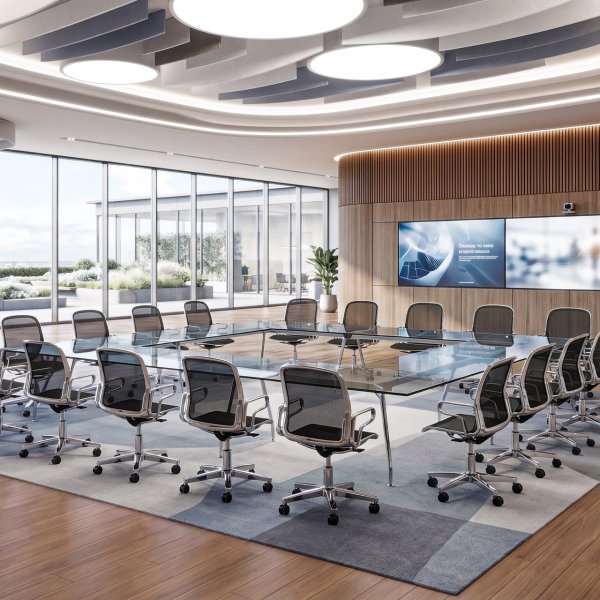
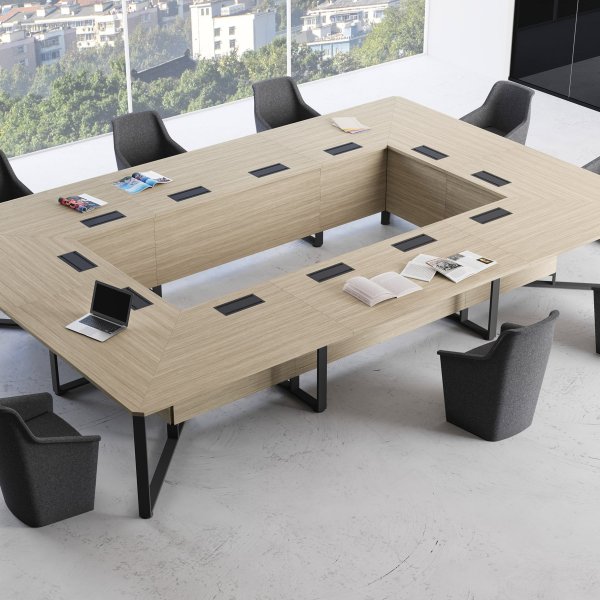
Collection: NoTable, conference tables; Meeting, Desk, Folding and Stand-Up versions
Manufacturer: ICF Office (ICF S.p.A., Vignate, Milan)
Vertical tubes: steel, 80 mm (3.1 in) diameter, chrome-plated or epoxy powder-coated black or white; two, three or four-way connections at various angles
Under-top structure: extruded aluminium longitudinal and transverse profiles joined by sheet-metal connectors, forming an extremely rigid load-bearing frame; black or white epoxy finish
Bases: die-cast aluminium, linear shape, polished, chrome-plated or powder-coated; two sizes to suit the top shapes; 20 mm (0.79 in) adjustable feet
Footrest beam: tubular steel, chrome-plated or painted to match the vertical tube
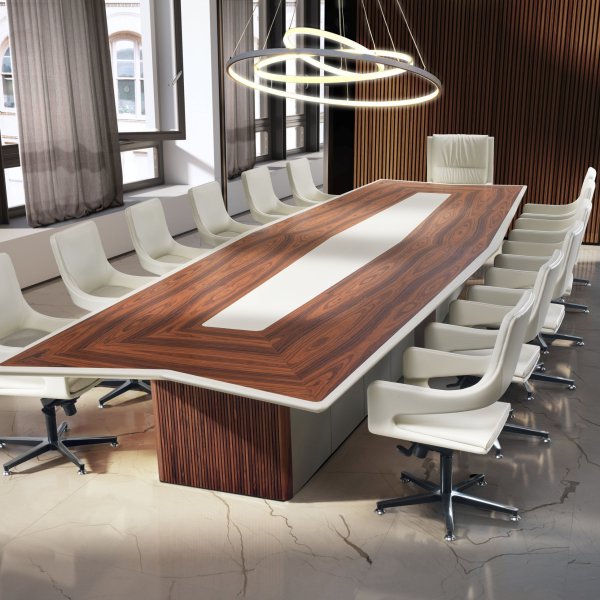
Tops: wood veneer with thin solid-wood edge or bevelled edges; lacquered or white melamine; Fenix or HPL black/full core laminate with shaped edges and rounded corners
Meeting shapes and sizes: square 90 · 120 · 140 · 160 · 200 cm (35.4 · 47.2 · 55.1 · 63 · 78.7 in); round Ø 90 · 120 · 140 · 160 · 210 cm (35.4 · 47.2 · 55.1 · 63 · 82.7 in); barrel from 100 × 200 to 140 × 500 cm (39.4 × 78.7 to 55.1 × 196.9 in)
Top sectors: single sector, two sectors or three sectors depending on size
Codes: NTB.200/201 round, NTB.300/301 square, NTB.400/401 barrel, NTB.421 height-adjustable barrel; desks NTB.501 barrel, NTB.601 rectangular, NTB.701 elliptical, height-adjustable NTB.521, 621 and 721; Folding NTB.830, 930 and 030
Height adjustment (NoTable HA): column of three compact circular parts, minimal bulk and extremely low noise, from 68 to 130 cm (26.8 to 51.2 in); small control panel with raise and lower functions, black or white
Electrification: flap with aluminium frame and central insert in the same finish as the top, 30 cm (11.8 in) long, opening from both sides; painted metal cable tray beneath the top; vertical black fabric duct on request; sockets not supplied
Accessories: continuous grooves along the profiles and aluminium brackets for cable management, electrification trays, baskets, containers and computer supports
Structure finishes: 115 black · 100 white · 55 chrome · 47 polished
Top finishes: melamine 100 white with ABS edge; 005 oak and 043 American black walnut veneers with solid wood or ENT edge; HPL black core and full core 100 white; Fenix black core 100 white, 115 black, 121 light grey, 122 dark grey and 123 warm grey; Fenix full core 100, 121, 122 and 123
Weight and materials: approx. 90 kg (198 lb); wood 62%, aluminium 25%, metal 13%
Recyclability: approx. 100% when components are completely and correctly separated (figures refer to model NTB.40124)
Certificates: EN 15372:2023 level 2; VOC to AgBB including LCI values and Indoor Air Comfort GOLD (melamine top); CAM (melamine and veneer tops); LEED v4/v4.1 Beta (melamine top)
NoTable Desk: desks on the same foot, column and footrest system: barrel 180–240 × 110 cm (70.9–94.5 × 43.3 in), elliptical 200 × 125 – 240 × 135 cm (78.7 × 49.2 – 94.5 × 53.1 in), rectangular 180–280 × 110 cm (70.9–110.2 × 43.3 in); all prepared for electrification (a 30 × 13 cm (11.8 × 5.1 in) flap in the top finish, on the right as standard) and available height-adjustable
Care and maintenance: melamine, HPL and Fenix with a soft cloth dampened with warm water and a mild, non-strongly alkaline detergent, never silicone-based products; wood veneer with a damp soft cloth, never solvents or abrasive pastes, drops and steam dried immediately; glass with glass-specific products, never acids or silicone; aluminium with water and neutral soap: chrome keeps its shine, polished aluminium oxidises naturally
NoTable Folding: rectangular tops 140 to 210 cm (55.1 to 82.7 in) long and 80 to 100 cm (31.5 to 39.4 in) deep, in melamine or veneer; Ø 60 mm (2.4 in) castors with safety brake; synchronised release handle in Ø 10 mm (0.39 in) metal tube; tops stack front to front