
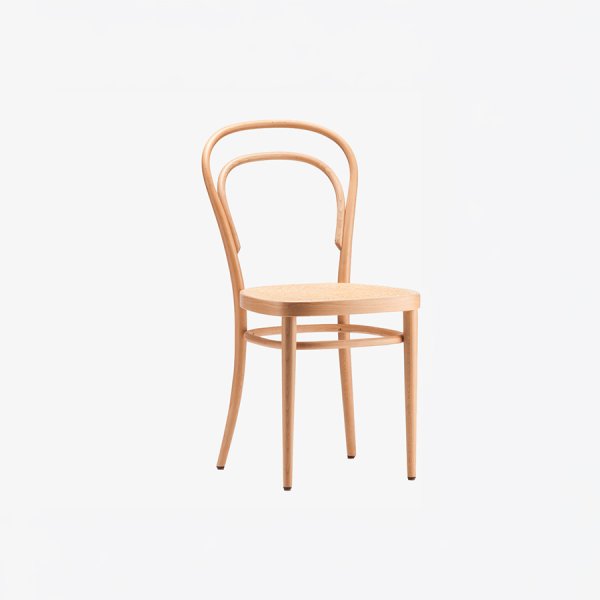
Bentwood chair
£ 1,147
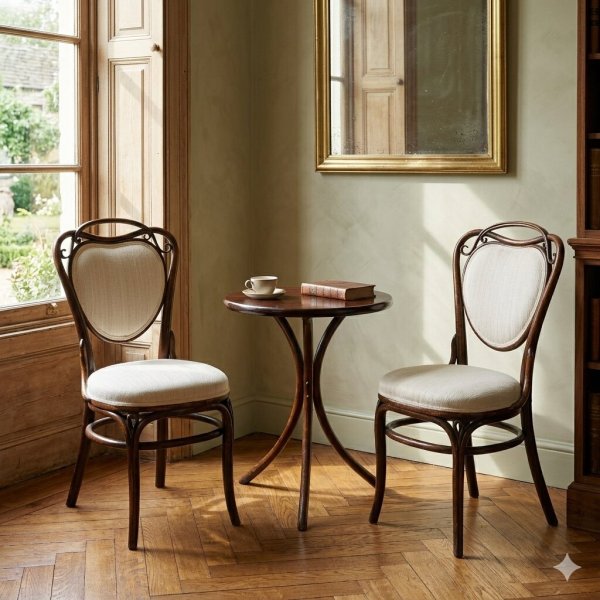

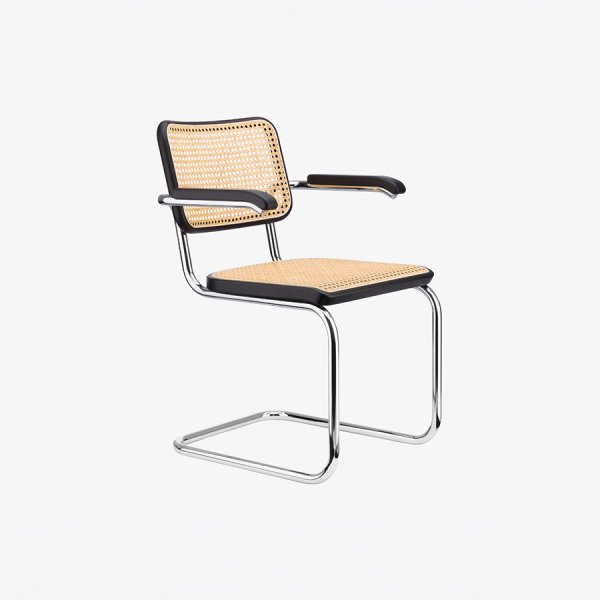
Seventy years after the bentwood No. 14, Thonet learned to bend a second material. In 1930, having taken over Standard Möbel, the company began producing the tubular steel designs of Marcel Breuer, and out of that moment came the S 32 and S 64: cantilevered on the principle Mart Stam had set in motion, yet seated in Vienna cane, a direct line back to the bentwood workshop. The S 35 armchair was shown the same year at the Deutscher Werkbund's “Section Allemande” in Paris, and through the 1930s Thonet was the largest producer of tubular furniture by the avant-garde architects, from Mies van der Rohe to Le Corbusier and Charlotte Perriand.
That steel is still formed at Frankenberg an der Eder, the company's headquarters since the end of the war, where every piece is now made to order, frame and upholstery chosen from bentwood, cane, leather, fabrics or mesh. Each chair passes an individual quality check before it ships, and the company holds ISO 9001 and ISO 14001 certification. La Mercanti suggests these cantilevers for meeting rooms and boardrooms, where chairs are moved around all day and a piece of design history sits comfortably at the table.
Yes, and the service is free. Thonet's experts identify the model, the period and the catalogue in which a piece appeared, working from good-quality photographs that show the stamps and labels, usually found on the seat frame or underneath. The images must show the piece as it is, unedited. The answer is given to the best knowledge of Thonet's history but without liability, and demand means it can take a while: worth doing before buying or restoring.
Two in four years. In 2021 the 214 won the German Sustainability Award Design in the “Icons” category, and in 2024 the German Ecodesign Award gave it the special “Timeless Design” prize in the Product category. Thonet links both to what the chair has stood for since 1859: durability, repairability, flat-pack shipping and a careful use of renewable timber. For a specifier, that is a sustainability argument with a long track record behind it.
Bentwood from 1859, tubular steel from 1930 and pieces by today's designers can share one working floor. Five steps for bringing Thonet classics into an office that is used every day.
Thonet's own list of design icons includes the cantilever chairs S 64 V, S 33 and S 43. In our view they work hardest around a meeting table, where chairs are pulled in and out all day and a light frame is easy to move.
The 214 and the 209, which Thonet calls the architects' favourite, come from the coffee house. We would place them in the office café, the canteen or a client lounge, where people sit for a conversation rather than a working day and the chair is seen from every side.
The S 285/2 desk and the B 9 side and nesting tables (the B 9 is described by Thonet as the first tubular steel furniture) carry the same language onto the working surface. A single piece in a private office or reception is often enough to tie the classic chairs into the plan.
Thonet works with Sebastian Herkner, whose 118 references the 214, and has worked with Stefan Diez, Naoto Fukasawa and Piero Lissoni among others. Mixing their pieces with the classics from the same catalogue keeps the floor current while staying within one family of craft.
Everything is made to order at Frankenberg, so frame and upholstery can be chosen from bentwood, cane, bentply, leather, fabrics and mesh. We suggest fixing the layout first and the materials afterwards, judging each one by the wear it will face.