
Gallotti & Radice
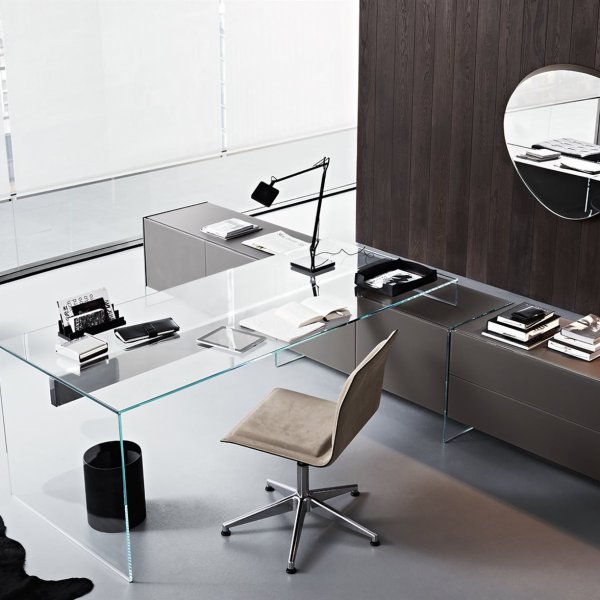
Most furniture brands treat glass as a finish for one product line. At Gallotti&Radice it is the whole vocabulary, and the office range shows it: seven families — meeting tables, desks, bookcases, storage units, seating, drawer units and desk accessories — drawn so that a director's floor can be furnished from end to end without changing manufacturer halfway through the job.
That consistency is what makes a scheme hold together. The reception counter, the boardroom table and the cabinet behind the desk share the same tempered glass language and the same metalwork, from polished or satin stainless steel to anodised aluminium and lacquered finishes. Names also last: Air has been the office family since 2008, Akim, Koy and Lord sit in the boardroom. A floor specified now can be extended in three years without a compromise. La Mercanti takes care of the specification, the quotation and the delivery for offices across the United Kingdom and further afield.
Since 1956, when Pierangelo Gallotti and Luigi Radice opened an artistic workshop for glass decoration at Cermenate, north of Milan. Seventy years on, the company still works from the same address and is still run by the two families. For a specifier the useful part is continuity: a firm that has never treated glass as a passing trend keeps its designs, its finishes and its know-how available far longer than a seasonal collection.
Rather easily, which surprises people. Glass has no pores, so it absorbs nothing and needs no periodic treatment: a soft cloth and a neutral cleaner are enough, while abrasive powders and blades are the only real enemies. Satin and painted surfaces read fingerprints differently from clear glass, so if a boardroom is used all day it is worth asking to see both before choosing.
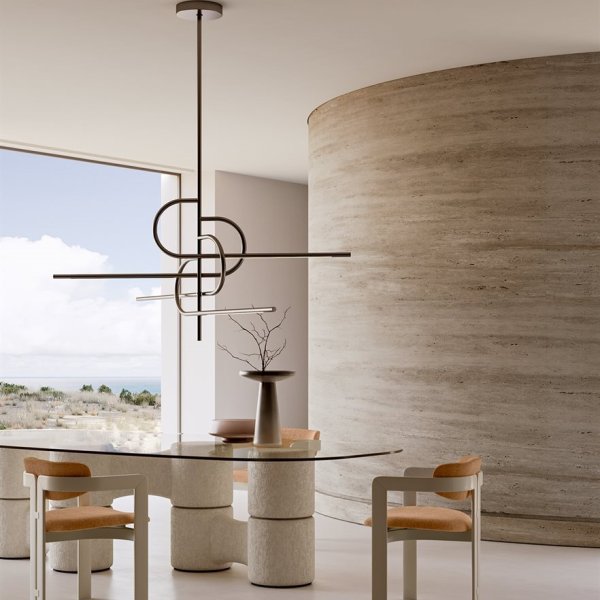
Clear, extralight or smoked changes the way a room reads far more than the shape of the table. Five steps to reach the decision with your eyes rather than a catalogue.
North-facing rooms and glazed façades behave very differently. Note where daylight arrives and what the table will reflect: a dark wall behind a clear top produces a very different image from the same top over a pale floor.
Clear glass keeps the slight green cast typical of the material, extralight removes it for a neutral read, and the smoked grigio Italia takes the surface towards grey. It is a decision about atmosphere, not about quality.
Polished stainless steel adds brightness, satin calms it down, anodised aluminium and lacquered metal in white or black let the structure disappear. The metal is what ties the table to the door handles and the lighting track.
A transparent desk shows everything below it. Modesty panels, cable routes and the position of drawer units are decided at this stage, not once the furniture is installed.
Ask for the glass and metal samples that matter to the scheme; their cost is credited in full when the order is confirmed. La Mercanti sends them together with the manufacturer's drawings so the client compares real surfaces, not photographs.