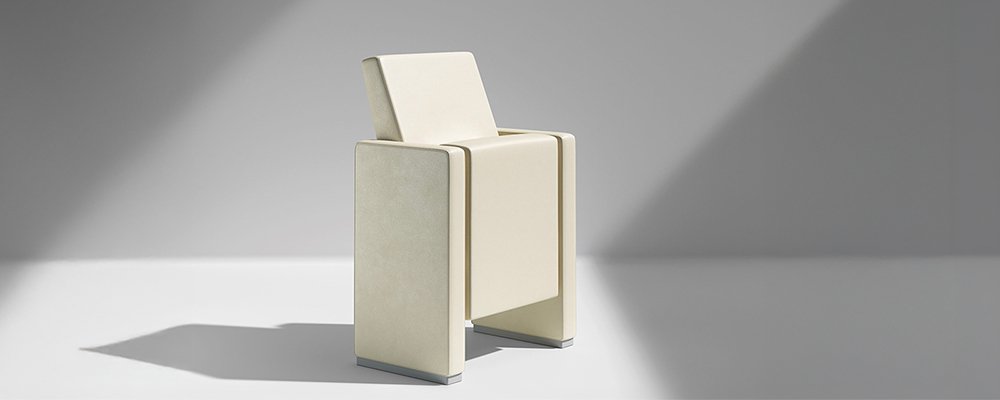
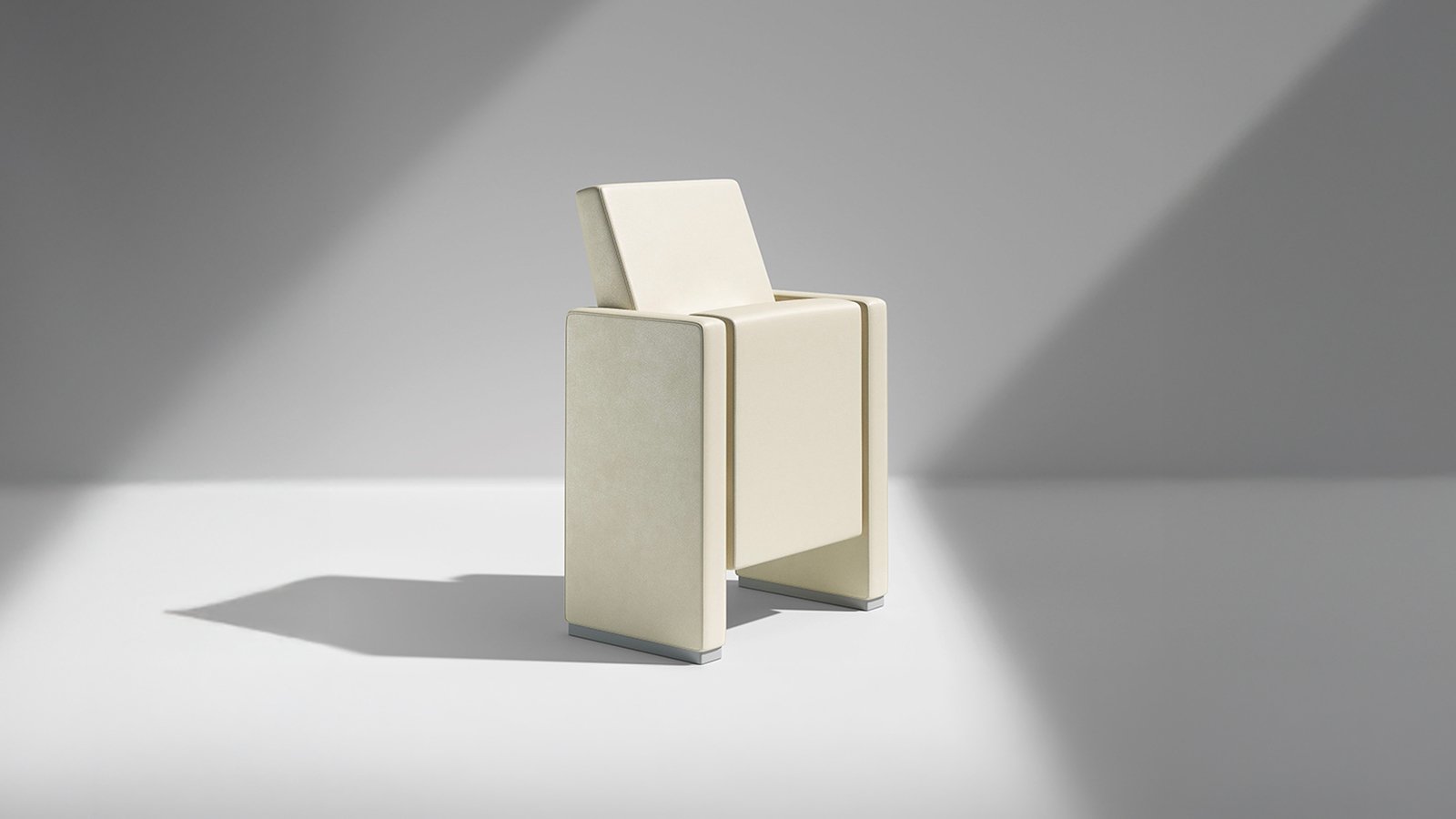
Auditorium seating Chrono by Ares Line with the backrest lifted off for servicing

Seat and back that come off without a tool: Chrono by Ares Line for auditoriums and theatres

Ares Line
Chrono
Chrono An icon of Italian design

Let's discuss your project

Trade terms for professionals and design studios

A seat cover tears on a Saturday night. In most fixed seating that means a row out of use until someone with the right spanner turns up. Chrono reverses that order: Ares Line declares seat and backrest tamper-proof and removable without tools by the venue's own maintenance staff: the damaged element comes off, the spare goes on, and the row is back in service before the next performance. It is the first thing we point out when a venue asks us about theatre and auditorium chairs.

The chair those parts belong to was drawn by BaccoliniDesign with generous padding and clean, decided lines; the backrest tilts away from the chair body, which gives a closed row its lightness in profile. A Master side measures 44 cm (17 3/8 in) deep when closed and 70 cm (27 1/2 in) with the seat down, and the tip-up runs on a damper. Components separate easily and are fully recyclable: the same logic as the no-tool removal, carried to the end of the chair's life.

Beyond the auditorium, Chrono furnishes congress centres and conference halls. The side can be ordered in the Long version, 6 cm (2 3/8 in) deeper; the backrest in Plus with headrest for steep rakes; the seat in Acoustic; and with a tablet folding out of the side the same row serves lecture rooms. La Mercanti hands Chrono over with the removal sequence written down, so a torn seat is a job for the venue's own staff and not a call to us.

Technical information based on data declared by the manufacturer.

Collection: Chrono
Manufacturer: Ares Line S.p.A., Thiene (Vicenza), Italy
Design: BaccoliniDesign
What it is: chair for auditoriums, theatres, congress centres and conference halls, with generous padding, clean lines and a backrest leaning out of the body of the chair at an angle
Sides: Master, monolithic and upholstered · Wood, with wooden facing and removable upholstered armrest · Long (Master or Wood), 6 cm (2 3/8 in) deeper
Seat: Master, upholstered · Wood, upholstered with exposed wooden panel · Acoustic, upholstered with exposed acoustic wooden panel
Backrest: Master, upholstered · Wood, with the same exposed wooden panel at the rear · Plus, upholstered and enlarged · Plus with headrest, enlarged with headrest
Mechanism: seat with damper for a silent tip-up and a cushioned rebound; seat with micro-springs on request
Maintenance: backrest and seat tamper-proof and removable without tools by maintenance staff; components easily separable and fully recyclable
Accessories: Top (removable upholstered armrest) · Wooden Top (removable wooden armrest) · Media Top (armrest prepared for multimedia) · Steel Back (painted sheet-steel rear of the backrest) · Wooden Back (wooden rear of the backrest) · Logos (custom embroidery) · Numbering (embroidered seat and row numbers) · Microsprings · Back Stitching (stitching on the backrest) · End-Row Light · In-Seat Power · Tablet · Back Table
Tablet in the side: anti-panic, folding into the side; surface 761 cm² (118 sq in), black HPL 8 mm (5/16 in) thick; also available for left-handers
Back table: type 1, laminate top 20 or 30 mm (3/4 or 1 3/16 in) thick, anti-panic mechanism with cover over the rods, quick automatic closing to the vertical position; supports for flat floors or tiers
Wheels and Back System: retractable wheels that come out of the side for sideways movement; backrest that rotates and lowers to the compact position; requires a Master or Wood side without tablet
Provisions on project: In-Seat Power (side prepared for a power socket) and Multimedia, with cabling integrated in the structure
Acoustics: configurable acoustic performance, certified to ISO 354
Materials: FSC®-certified wood
Product standards: EN 12727 level 4 · EN 15372 level 3
Reaction to fire: compliant with many national standards; for Italy, Classe 1IM
Minimum Environmental Criteria: compliant with the Italian CAM for furniture
Installation: recommended maximum tier height 40 cm (15 3/4 in) with the Master backrest and 60 cm (23 5/8 in) with Plus with headrest; maximum rake 5°; curved rows with a radius over 20 m (65 ft 7 in) for the 54/56 pitch (minimum 100 seats), from 5 to 20 m (16 ft 5 in to 65 ft 7 in) for the 56 pitch (minimum 100 seats), under 5 m (16 ft 5 in) for the 54/56 pitch with double side
Seat pitch: 54 or 56 cm (21 1/4 or 22 in); seat width 47 or 49 cm (18 1/2 or 19 1/4 in); side thickness 7 cm (2 3/4 in)
Heights: 90 cm (35 3/8 in) overall, 108 cm (42 1/2 in) with Plus with headrest · side 65 cm (25 5/8 in) · seat 45 cm (17 3/4 in)
Depths: 44 cm (17 3/8 in) closed · 70 cm (27 1/2 in) with the seat open · 74 cm (29 1/8 in) with the tablet in use · Long side: 50 cm (19 3/4 in) closed, 80 cm (31 1/2 in) once the tablet is open
Projects cited by Ares Line: IMA Auditorium, Ozzano dell'Emilia (2022, 260 seats) · Confcommercio Campania conference hall, Naples (2026, 35 seats, 72 m²) · Expo Center Ekaterinburg (5,300 seats with Zero9 and Zero7; seven seat pitches from 52 to 62 cm (20 1/2 to 24 3/8 in), on project)
Warranty: 7 years, declared by Ares Line

La Mercanti Srl — trusted supplier for design and contract projects since 1997.
San Benedetto del Tronto (AP), Italy · +39 0735 753833 · info@lamercanti.com
Supply, quotations, specifications and project support across the UK and worldwide.

Tell us which finishes you'd like to assess

£ 170

Fully redeemable against your first order

FAQ

How much writing surface does the side tablet actually give?

More than any other tablet in the Ares Line 2025 catalogue: 761 cm² (118 sq in) of black HPL, 8 mm (5/16 in) thick, with an anti-panic movement. The catalogue adds that these tablets close completely into the side, leaving the passage between rows free. For a congress hall that means the writing rows can be laid out at the same pitch as the rows without, because a closed tablet adds nothing to the depth of the chair.

What does the row behind see when the lights come up?

Whatever the specification asks for. Chrono offers two accessories for the back of the chair: Steel Back, a painted sheet-steel panel, and Wooden Back, a wooden one; the Wood backrest version shows its wooden panel there as standard. At the IMA auditorium in Ozzano the rear was specified in exposed wood on all 260 seats, which is a choice about how the hall reads from the stage as much as about wear.

Which fire-reaction standards does Chrono comply with outside Italy?

Ares Line declares compliance with many national reaction-to-fire standards, and names the Italian reference, Classe 1IM, explicitly. For a hall in the United Kingdom the certificate is requested from the manufacturer against the standard the project specifies, and La Mercanti attaches that document to the submission rather than paraphrasing it. The point for a procurement team is that the declaration exists on the product, not on a generic fabric sheet.

Is there a deeper side for halls where people sit for three hours?

Yes: the Long side, available on both the Master and the Wood version, is 6 cm (2 3/8 in) deeper. Closed, the chair measures 50 cm (19 3/4 in) instead of 44, and with the tablet open 80 cm (31 1/2 in) instead of 74. Those two figures go onto the section before the row spacing is fixed, because a deeper side is bought with the depth of the row.

Can the backrest carry a visible stitch instead of a plain cover?

It can. Back Stitching is a listed accessory: a stitching on the backrest that gives the cover a drawn line where most auditorium chairs show nothing. When a row is closed the backrest is the face the audience walks past, so the stitch sits exactly where it is seen. It can be combined with the Logos embroidery and with embroidered seat and row numbers, all three worked into the fabric rather than applied on top.

Fitting out the armrests of Chrono: Top, Wooden Top, Media Top and In-Seat Power

The sequence for specifying the armrests of a row of Chrono: the Wood side with its removable armrest, Top and Wooden Top, the Media Top for wired rows, the In-Seat Power provision and the cabling inside the structure.

Start from the Wood side

Where a row of Chrono is ordered with the Wood side, each chair already carries an upholstered armrest that can be taken off: the wooden facing stays, the armrest lifts out. Decide first which rows get the Wood side, because the armrest accessories below sit on top of that choice rather than replacing it.

Choose Top or Wooden Top

Two removable armrests are listed as accessories: Top, upholstered, and Wooden Top, in wood. One hall can mix them, an upholstered armrest in the stalls and a wooden one in the rows where the Wood side is specified, so the armrest matches the surface beside it instead of contrasting with it.

Reserve Media Top for wired rows

Media Top is the armrest prepared for multimedia. Ares Line designs its chairs to take multimedia systems, and the catalogue shows what the manufacturer can develop on project, from a sliding tablet to a microphone in the armrest; for Chrono the declared element is the prepared armrest, so the rows that will carry equipment are the rows that get Media Top.

Prepare the side for In-Seat Power

In-Seat Power is a side prepared for a power socket, and it is done on project, in the factory. Mark the seats on the layout before the order, row by row: the provision is built into the side, and the socket arrives where the drawing said it would, not where an extension lead can reach.

Route the cabling inside the structure

The manufacturer states that the cabling is integrated in the structure of the chair, so nothing runs along the floor in front of the row. The last step is to hand the hall's electrician the positions of the Media Top and In-Seat Power seats, because the feed has to reach each one through the chair, not around it.