Already have something in mind?
Trade terms for professionals and design studios
Already have something in mind?
Trade terms for professionals and design studios
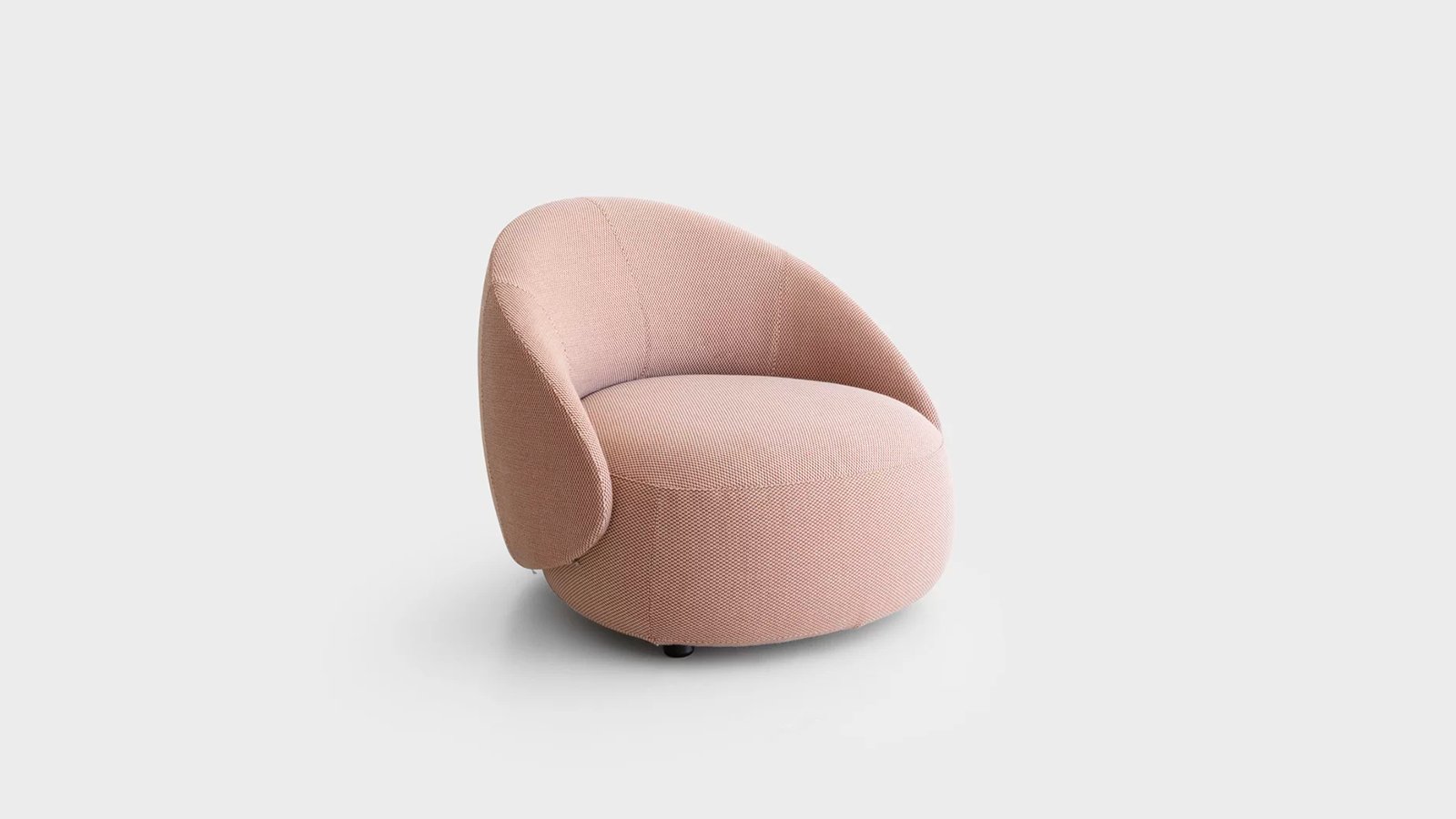
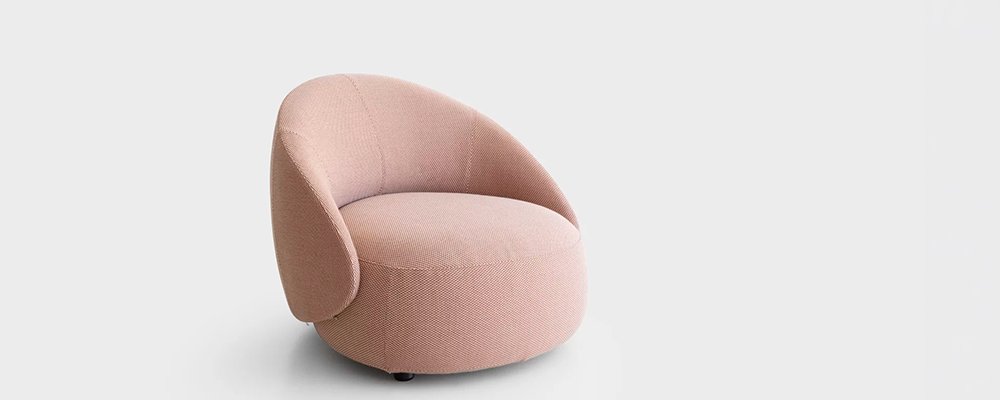
In 2024, ten years after the first pouffe, Anderssen & Voll gave KIPU a backrest. Lapalma calls it ergonomic and sums up its job in three verbs: it supports the body, protects it and softly embraces it. The seat underneath is still the rounded pouffe of 2014, which is why KIPU Club looks like a close relative of the loose pieces around it, and why it earns a place in any plan of seating for visitors.
On the drawing the back is a shell that wraps the seat on three sides and runs down to the rear edge. The Club measures 87 × 87 cm (34 1/4 × 34 1/4 in) and stands 74 cm (29 1/4 in) tall, with the seat 40 cm (15 3/4 in) off the floor. Lapalma presents it as perfect alone and generous in pairs or groups, and adds, with a straight face, that ‘registrations are open’. Our view is simple: a pouffe suits a two-minute wait, but for a long phone call or a chapter of a book people want something behind their shoulders.
The family around it counts six pouffes, from the 48 cm (19 in) mini to two pieces 130 cm (51 1/4 in) across, the Club D07 and the D08 on a swivel base, plus the ED series for outdoor use. We see them together in reception halls, where some visitors pass straight through and others settle in. La Mercanti sets a pouffe and a Club side by side and lets the client sit on both before deciding the mix.

Tell us which finishes you'd like to assess
Three dates tell the story. In 2014 Anderssen & Voll drew the pouffe; in 2024 they gave it a backrest and Lapalma called the result KIPU Club; in 2025 came the D08 on a swivel base, for indoor use, and the ED series for the outdoors. For anyone furnishing in stages, it means a lobby first fitted with pouffes can later take armchairs, and a terrace, in the same shape.
The D03: 130 × 130 cm (51 1/4 × 51 1/4 in) in plan and just 36 cm (14 1/4 in) high, the flattest of the six and, like the D05, the widest. Lapalma describes the KIPU pouffe as ideal also as a coffee table, and this is the size where we take that most literally. Next to a Club, whose seat is a few centimetres higher, it stays just below the armchair, so where people linger it works as perch and surface at once.
Yes: the D01, which Lapalma calls the small pouffe, at 57 × 57 cm (22 1/2 × 22 1/2 in) and 45 cm (17 3/4 in) high. It shares that height with the mini D06 and with the D04 and D05, so it lines up with them in a group. We would use it beside a desk in a private office or at the end of a sofa, where the mini looks lost and a medium piece takes too much floor.
From a pebble smoothed by a river: that is how Lapalma explains the shape chosen in 2014, and its own headline speaks of pouffes like coloured stones. In the drawing on the sheet the plan is a rounded triangle, with three seams meeting at the centre. Every side can serve as the front, so a group laid out on a plan can be turned freely until the gaps between the pieces feel right.
Anderssen & Voll, a Norwegian design studio based in Oslo and founded in 2000 by Torbjørn Anderssen and Espen Voll. Lapalma credits the studio with both chapters of KIPU: the pouffe of 2014 and the backrest added ten years later. An architect writing a specification can therefore attribute every piece of the family, outdoor series included, to the same two designers.
KIPU can be upholstered in several ways, and every cover is removable. Five steps through the options Lapalma offers, from fabric grades and leather to the client’s own cloth and the outdoor series.
Lapalma sorts the KIPU fabrics into grades A to D, and the collections shown include Hallingdal 65, Main Line Flax, Capture and Steelcut Trio 3. The grade groups the cloth, not the colour, so it helps to shortlist two or three collections first and only then open the colour cards with the client.
Every indoor code, pouffes and armchairs alike, can be covered in Soft-leather or in the faux leather Valencia, and the armchairs also in coated fabric. Leather is a natural material, and the care notes point out that small irregularities within the standard belong to it. Outdoors, the ED series has its own dedicated fabrics.
For each code, indoor and outdoor, Lapalma also provides for upholstery in a fabric chosen and supplied by the client. It is the neat way to tie the pieces to the rest of a project: the curtain fabric of a hotel, or the colour a company already uses on its walls and signage.
A swatch seen under office lighting and the same cloth beside a south-facing window can look like two different colours. Lay the samples where the pieces will stand, at the hour the room is busiest. The care notes add a second reason to look closely: in direct sun the colour of a cover can change over time.
Every cover in the family is removable, indoors and out, which matters wherever many people pass. For terraces, the ED series uses outdoor fabrics in grades A to C, such as Iris or Panama, and each code has waterproof protective covers to pull over the pieces for the weeks they stand unused.