What did you have in mind?
Trade terms for professionals and design studios
What did you have in mind?
Trade terms for professionals and design studios
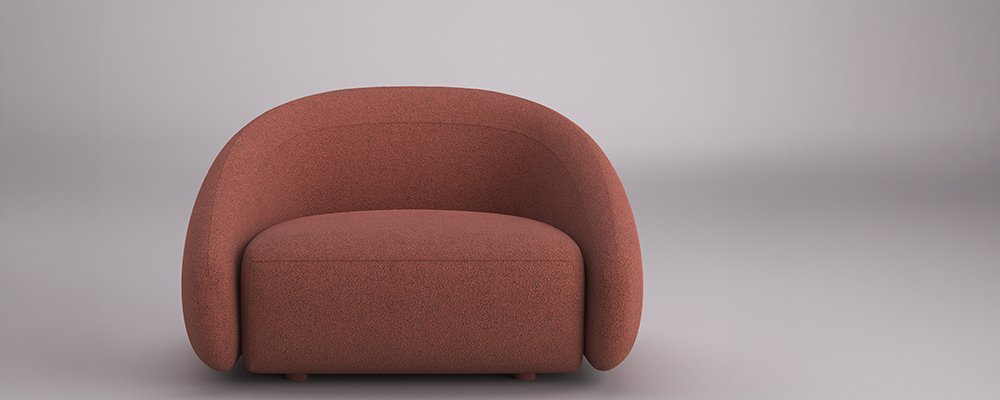
Put a tape across the Apper armchair and it reads 130 cm (51 1/8 in). One person sits in it. Front to back it measures 120 cm (47 1/2 in), like every other piece in the family, so on plan the armchair claims the floor of a small sofa and hands the lot to a single visitor. Antonio Rodriguez designed it for LaCividina in 2024 with full, rounded volumes and a low back that swings round to become the arm in one movement. In a reception that alters the arithmetic. A pair of these, turned towards each other, is enough to tell a client where to wait, and nobody has to share a cushion with a stranger.
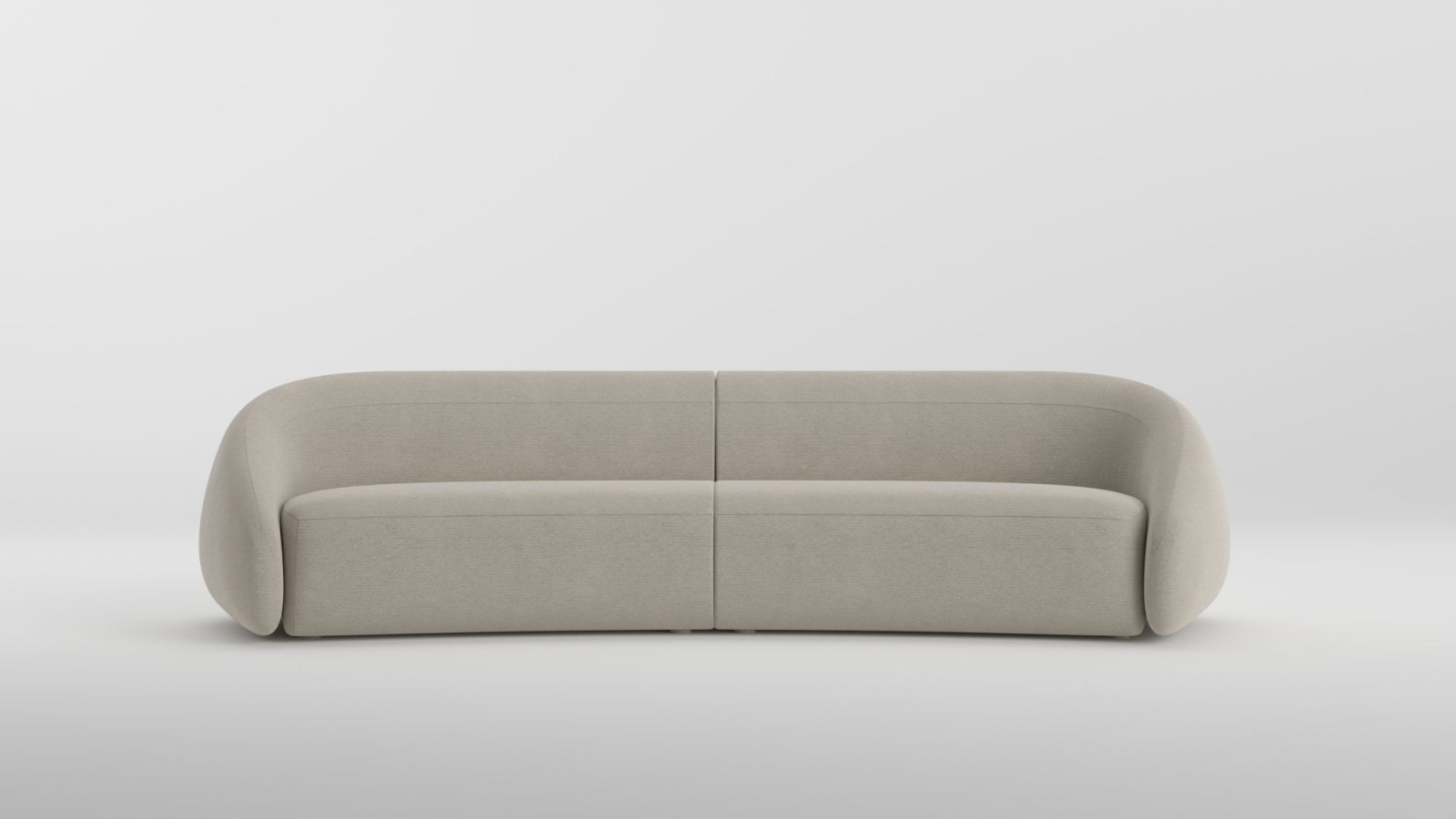
Specified as reception seating, the armchair has one companion: the 3-seater sofa, 240 cm (94 1/2 in) long and cut to the same section. The seat is 42 cm (16 1/2 in) high and the piece stops at 78 cm (30 3/4 in). Inside is solid fir and beech, a frame the maker reinforces for public areas, elastic webbing and flame-retardant foam. Underneath, an ash base, natural or stained graphite, is set so far back that the upholstery seems to hover. Designers who usually shop for lounge sofas will know the proportion.
Where one armchair will not do, the same section carries on as a modular sofa, and how long the wall is decides what to order. A short wall takes two end units, each with an arm, left and right. A longer one adds straight armless units, made in three lengths. Where the plan bends, curved units follow it on a tight curve or a wide one and build crescents and arcs. A dormeuse, deeper than everything else, closes a row on either hand, and enough units together become an island in the middle of a lobby. La Mercanti measures the room around the armchair, not the armchair into the room.

Tell us which finishes you'd like to assess
A family of three. The cover of the LaCividina technical sheet reads Armchair, Sofa, System: a standalone armchair, a standalone 3-seater, and a modular system made of end, straight and curved units plus a dormeuse. All of them were designed together, as one collection.
Two arcs carry a declared length. With the tight-curve centre unit set between two curved ends, the composition measures 390 cm (153 1/2 in); the wider arc measures 445 cm (175 1/4 in). Both appear among the sample layouts in the technical sheet.
Masonite panels and high-density elastic webbing. The construction section of the LaCividina technical sheet lists both by name, after the solid timber of the structure and before the foam. Neither can be seen once the piece is upholstered.
The base is ash, in one of two standard finishes: natural or stained graphite. Natural leaves the timber pale; graphite darkens it, so that a base already set well back all but disappears. The finish is stated on the order.
Yes. LaCividina accepts customer’s own leather, COL in the price list, on request, and asks for a sample of the hide first. La Mercanti forwards the sample and returns with the maker’s answer before the order is placed.
Four digits name a piece; three letters and two digits name a ready-drawn layout. Five steps for reading an Apper quotation line by line before it is signed.
The list opens with 1460 and 1461. The first is the armchair, the second the 3-seater sofa. Neither needs anything else: each is a finished piece with its arms and its base, and each can be ordered alone.
Four codes are end units, each with one arm. 1462 and 1463 are the straight ends, left and right; 1464 and 1465 are the curved ends, left and right again. A run or an arc begins with one of these and finishes with its opposite.
1466 and 1467 are curved centre units, the first on the tight curve r193, the second on the wide curve r450. 1468, 1469 and 1470 are the straight armless units, listed in rising order of length.
The last two four-digit codes, 1471 and 1472, are the dormeuse, left and right. Because the two differ only by hand, mark the side on the plan and compare it with the code written on the quotation.
A code that starts with APP names one of the thirteen sample compositions the maker has drawn, APP01 to APP13, rather than a single piece. Each is assembled from the four-digit units above, so an APP number stands for a whole layout.