You've found the piece. Now the project.
Trade terms for professionals and design studios
You've found the piece. Now the project.
Trade terms for professionals and design studios
Turn towards a second screen and the backrest of black dot turns with you. Sedus fixes it at a single point, through a flexible joint on an aluminium carrier, and calls the result dorsokinetics: patented, fitted to every swivel model, good for 15° backwards and 8° for each sideways lean of the torso. The GS mark from TÜV Rheinland covers black dot, net and air in this task office seating up to 130 kg (287 lb).
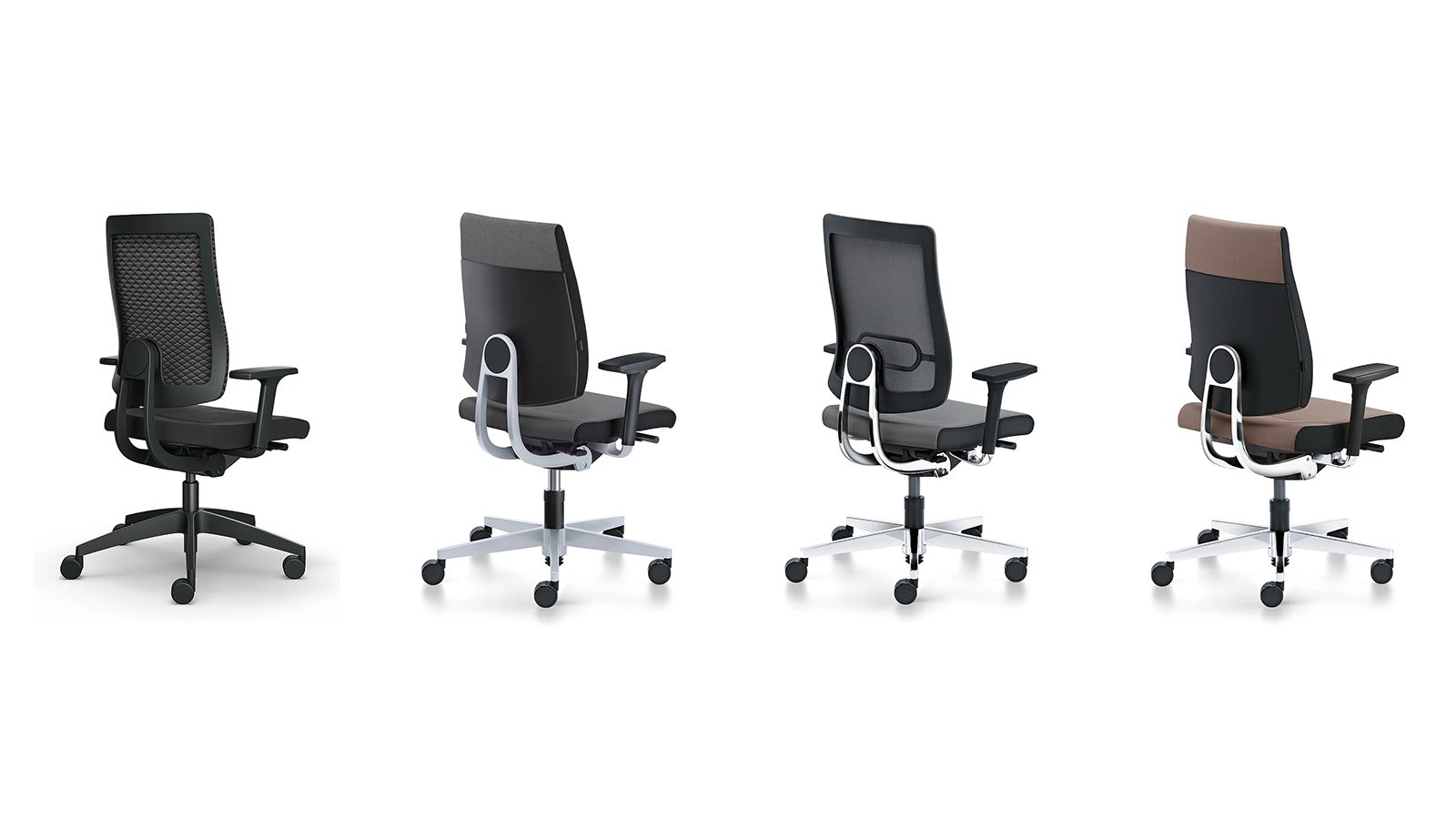
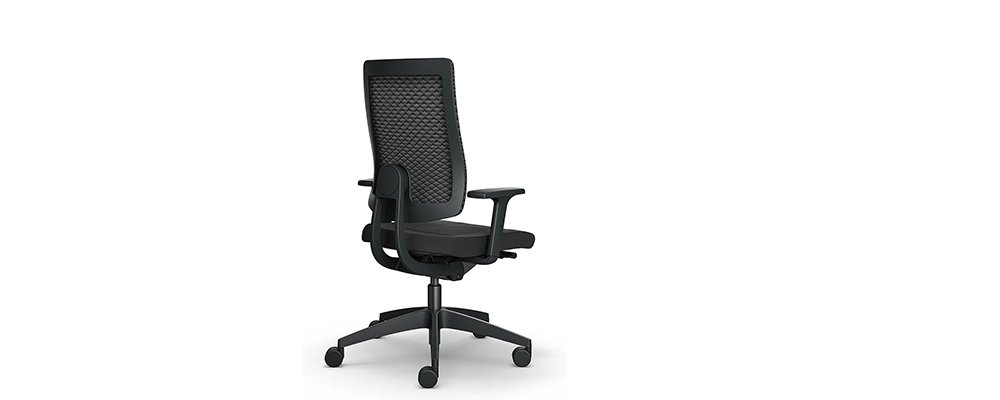
Underneath, the Similar mechanism links seat and back at a ratio of 1:2.7. For open-plan desks the family is easiest to read by its back. The upholstered black dot comes at 520, 590 or 620 mm (20.5, 23.2, 24.4 in), for people who want padding. net has a breathable membrane with a memory effect, crease-free and easy to clean. air has AIR KNIT, a quilted 3D knit in five colours, for those after the look of mesh with more comfort. 24, in membrane or upholstered, is for seats in continuous use, up to 150 kg (331 lb). The newest, black dot next, presented at Orgatec, has a renewed design, builds dorsokinetics into the back and offers membrane, 3D or upholstered backs with two mechanisms: one for desk sharing, one for fixed desks.
Guests take the four-leg visitor chair or the cantilever, upholstered or in membrane, and black dot and net have counter chairs. La Mercanti has the chair tried at the desk where the person actually twists round to the second screen.

Tell us which finishes you'd like to assess
It changes the finish of a second part too, because the backrest carrier always matches the base. Aluminium comes in black, light or polished; polyamide in black or light grey. On air, polyamide is the standard and black aluminium the option. Model colour is a separate choice, black or light grey, so base and frame are best decided together, with the floor and the desk legs in view.
Seven versions plus a counter. Five are swivel chairs: black dot, net, air, 24 and the new next. Two are visitor models, one four-legged, one cantilevered. The counter version comes on top, for black dot and net, and next has a counter variant of its own. Ratings differ: 130 kg (287 lb) on black dot, net and air, 150 kg (331 lb) on 24, 110 kg (243 lb) on counter and visitor models, which also accept 150 kg (331 lb) for occasional use.
Up to five chairs on either frame, with one difference. The four-leg model stacks in both the upholstered and the membrane version; the cantilever stacks only on request, so that choice belongs in the order itself. Glides come in steel, plastic or felt. A meeting room that gets cleared and rearranged often therefore points towards the four-leg frame.
Two are on record. The swivel chair received the iF product design award in 2007, and black dot 24 was a Nominee at the German Design Award 2016. The wording matters: the first is an award, the second a nomination, and each belongs to one model rather than the whole family. Anyone quoting them in a tender or on a project page should therefore name the model alongside the year.
Yes, GREENGUARD is among the certificates listed for black dot, and the Sedus environmental sheet cites it under low-emitting furniture. For a specifier that means a named certificate on indoor emissions rather than a general promise. It sits beside other material facts: a TÜV test for harmful substances, OEKO-TEX 100 and foams made without CFCs. La Mercanti can confirm which of these apply to the model chosen.
The lumbar support and the optional headrest are the two settings closest to the spine. Both are moved by hand, starting with the backrest unloaded, and both are worth repeating for each new user.
On a black dot the lumbar support is adjusted with no weight against the backrest, so sit forward first and leave a gap behind you. The instructions are explicit on this: do not lean on the back while the support is moving. Stay at your normal seat height, because the target in the next step depends on how you actually sit at the desk.
Slide the support up or down within its range of 80 mm (3.1 in). The point Sedus names is the third and fourth lumbar vertebrae, where the forward curve of the spine is greatest. At that height the backrest stabilises the natural S-shape in every sitting position. If the support sits above or below that area, move it again before going on to anything else.
Net and air can have an optional depth adjustment of 10 mm (0.4 in). Turn the inlay to increase or decrease the support against the lower back, in small steps, and sit back after each one to feel the difference. Where the option is not fitted, this step does not apply. On those two models the lumbar support can also be added later, in the channels inside the backrest frame.
The optional headrest belongs to high-back versions. Push it to the height you want: the range is 80 mm (3.1 in) and the movement is continuous. Then set the tilt, up to 25°, so that it meets the neck when you lean back. It comes in black vinyl on fabric chairs and in the chosen leather on leather chairs.
The coat hanger is an option that only comes with the headrest, so the two are decided at the same moment. Use it for a jacket, then check that the backrest still moves as you lean back and that the headrest has stayed at the height you set. If a colleague takes over the chair, lumbar and headrest are the two settings to repeat.